Beyond Robotaxis: PIX Advances a New Global Model for City Robotics
 Macron hosts Saudi crown prince for visit ranging from esports to Mideast

 Jamieson gets Trump call after ending 14-year golf title drought

 Norwegian King Harald's health has 'deteriorated': palace

 Man City snatch late win in Maresca debut, Iraola's Liverpool rescue dramatic draw

 Trump takes starring role at Washington's IndyCar debut

 Villa boss Emery says it's down to Watkins to explain absence

 Duplantis labours to 'super difficult' pole vault win at Silesia Diamond League

 Max smash at zany Zandvoort: Three stories from the Dutch GP

 Brennan sprints to Vuelta stage two victory, Pogacar keeps red

 Duplantis conquers pole vault at Silesia Diamond League

 France's badminton gold winners set for obscurity back home

 Brighton start Premier League season with rout of 10-man Villa

 Maresca makes winning start with Man City after dramatic fightback

 Mo'unga returns for All Blacks against Johannesburg Lions

 Belgian sprinter Philipsen wins Renewi Tour

 'A day for French badminton' as Lanier triumph gives them golden double at world champs

 Kane voted German footballer of the year

 'New season, new trim': Man City star Haaland chops off flowing locks

 Lanier clinches badminton world title in France's golden double
 After Wildberries, Ukraine launches drone campaign on Russia's Ozon

 Padikkal, Gill half-centuries take India to 187-3 at tea

 Cummins hails 'sharp' Australia as they get back to winning ways

 Bangladesh eye more Australia Tests to hit next level

 Thousands expected at Sweden climate demo as election looms

 Starc heroics put Australia on brink of victory over Bangladesh

How a Physical AI-Driven City Robotics Model Is Creating Scalable, Sustainable Urban Services Worldwide
CALIFORNIA CITY, CALIFORNIA / ACCESS Newswire / February 2, 2026 / Recent attention around Robotaxi programs, including growing public interest in Zoox's purpose-built autonomous vehicles showcased at CES 2026, highlights how far autonomous driving technology has progressed in controlled urban environments.
As artificial intelligence increasingly moves from virtual applications into real urban environments, the focus of autonomous mobility discussions is shifting from technological capability to questions of scalability, sustainability, and long-term urban value.
In recent discussions around Physical AI - systems that perceive, reason, and act in the physical world - autonomous vehicles are increasingly viewed not only as transportation tools, but as intelligent infrastructure capable of delivering continuous services.
Against this backdrop, a new category is emerging beyond Robotaxis: City Robotics.
PIX Moving ("PIX Moving"), a Physical AI-based city robotics company, is among the companies advancing this shift. Rather than focusing on replacing human drivers with Robotaxis, PIX is building autonomous mobile spaces designed to integrate into urban systems and address practical challenges such as labor shortages, service accessibility and sustainable operations.
"Autonomous driving is only meaningful when it can operate reliably and sustainably within real cities," said Angelo Yu, Founder and CEO of PIX Moving. "Our focus is not on replacing drivers, but on building autonomous mobile spaces that deliver long-term services and measurable value as part of city infrastructure."
Today, PIX's city robotics solutions have been deployed across more than 30 countries and regions worldwide, spanning Europe, North America, Asia and beyond.
From Autonomous Vehicles to City Robots
PIX defines itself as a city robotics company built on Physical AI. Its core idea is that autonomous driving is not an end product, but a foundational capability, similar to electricity or connectivity that enables a wide range of urban services.
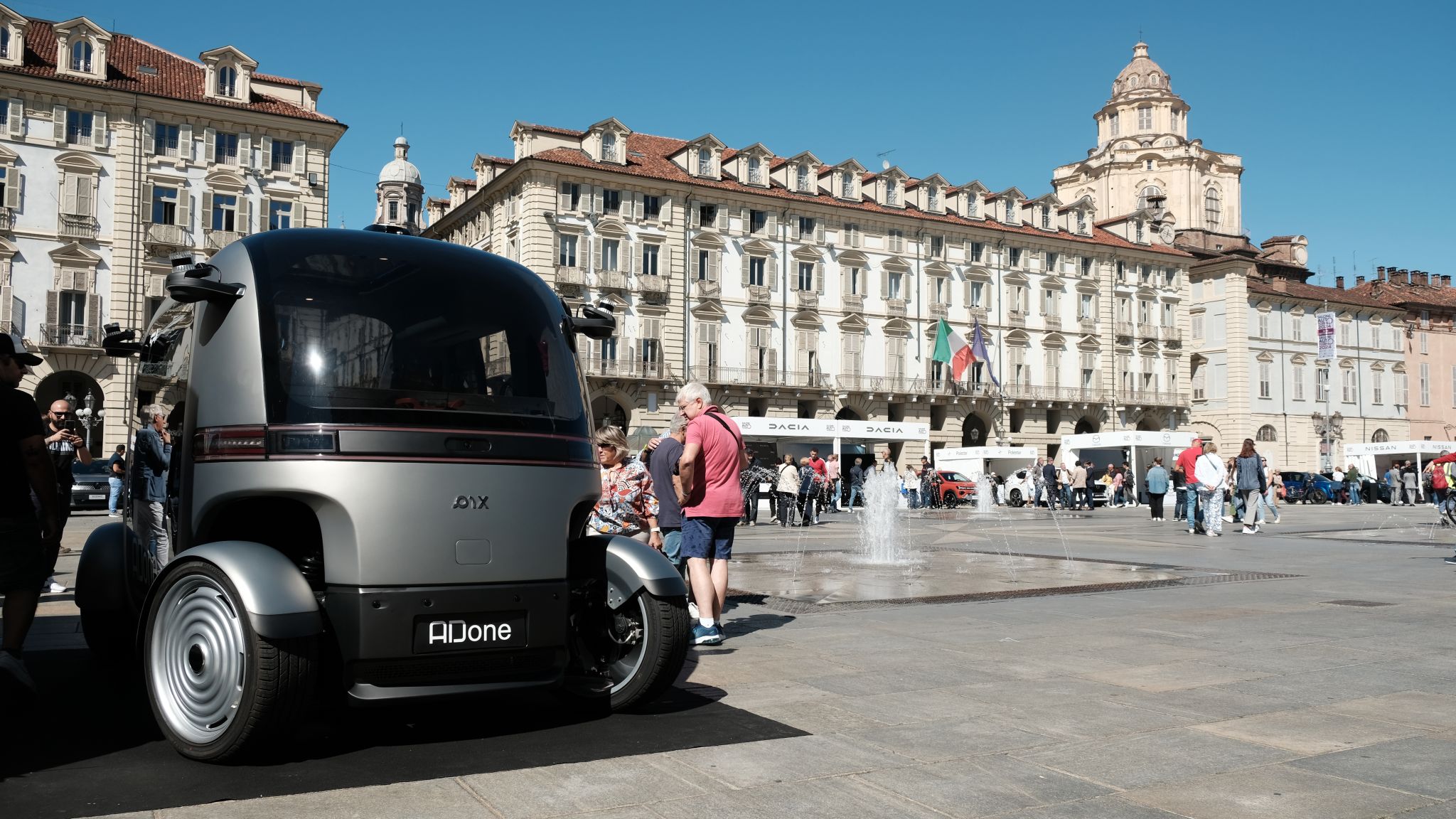
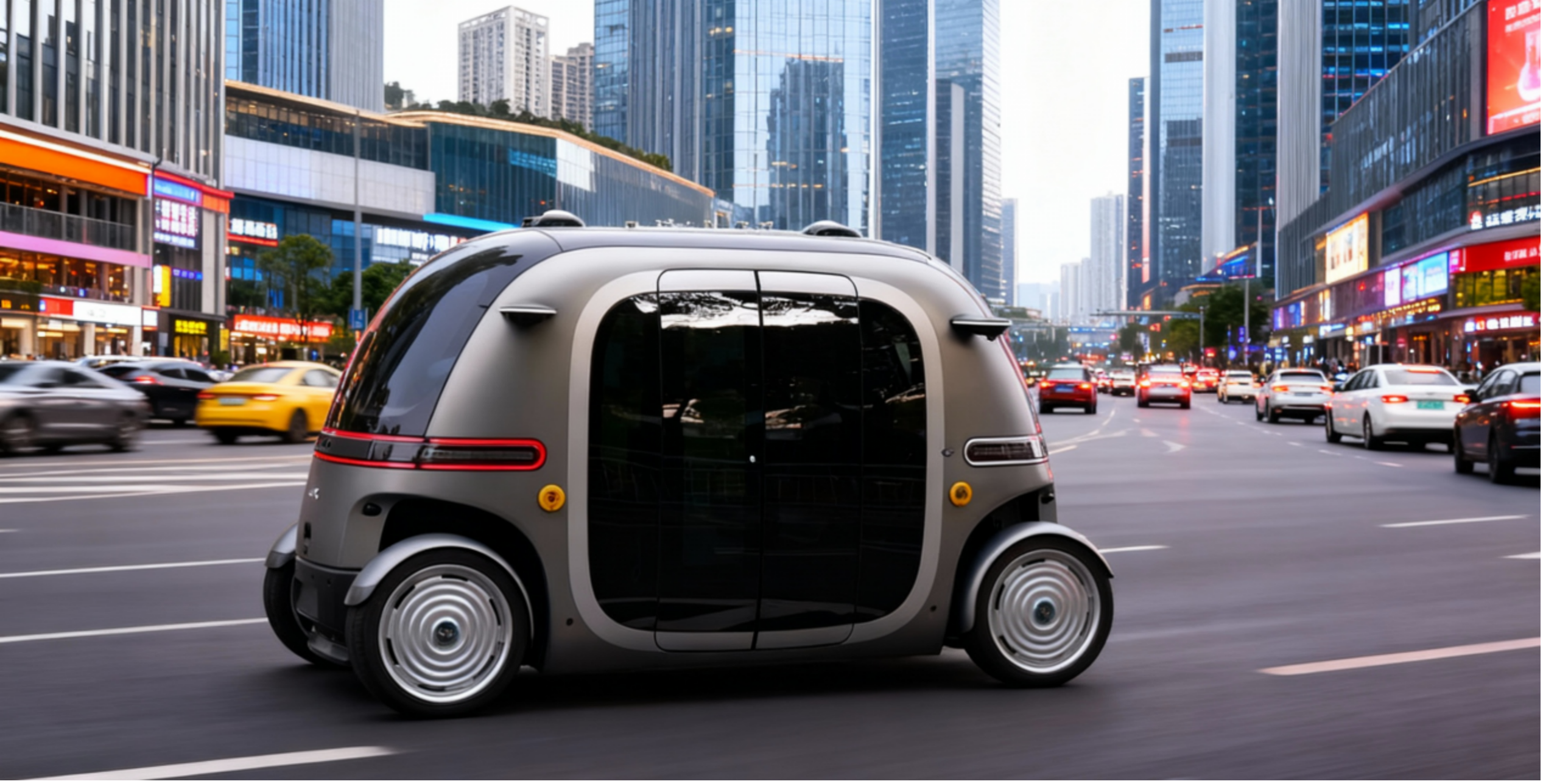
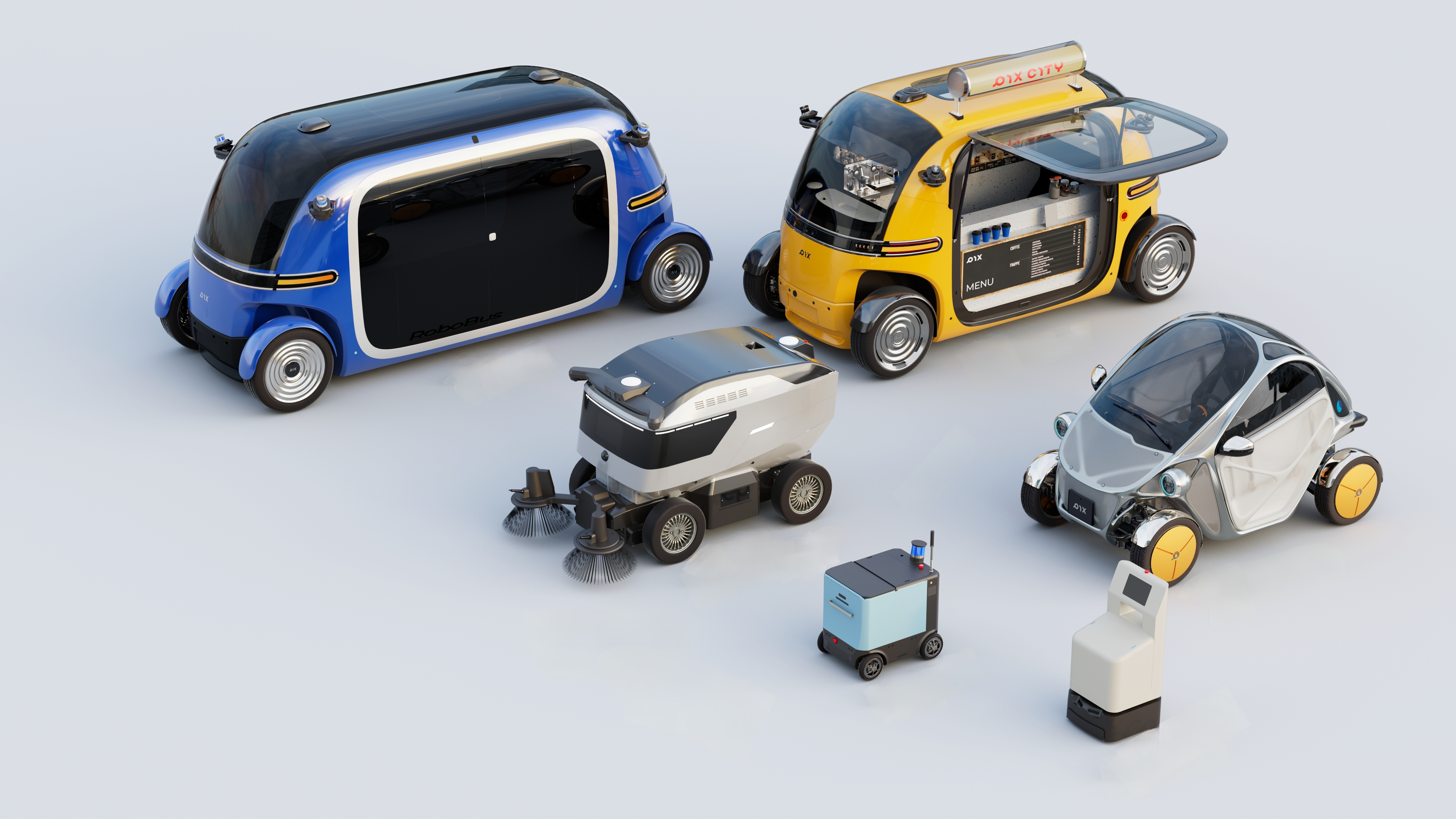
Instead of designing a single-purpose Robotaxi, PIX has developed a proprietary robotics chassis platform that supports modular, reconfigurable mobile spaces. On this platform, PIX deploys different city robots depending on real-world needs, including autonomous shuttles (RoboBus), mobile retail units (RoboShop) and other service-oriented configurations.
These vehicles are designed not only for point-to-point mobility, but also to function as service spaces such as mobile offices, retail points, community hubs, or on-demand facilities that can be dynamically scheduled and deployed within cities.
This approach shifts the focus from "how to drive" to "what autonomous spaces can do."
Addressing Real-World Needs Before Full Automation
PIX's strategy is rooted in pragmatic deployment. The company views the primary value of autonomous systems today as augmenting human labor, particularly in regions facing structural labor shortages.
In markets such as Japan, Europe, and parts of North America, shortages of bus drivers, retail staff, and service personnel are becoming increasingly acute. PIX initially targeted overseas markets and selected Japan that is known for its stringent safety, regulatory and operational standards as an early deployment environment.
In rural Japan, PIX's RoboBus has been used to supplement public transportation systems affected by driver shortages, supporting mobility for aging communities and helping maintain essential local services.
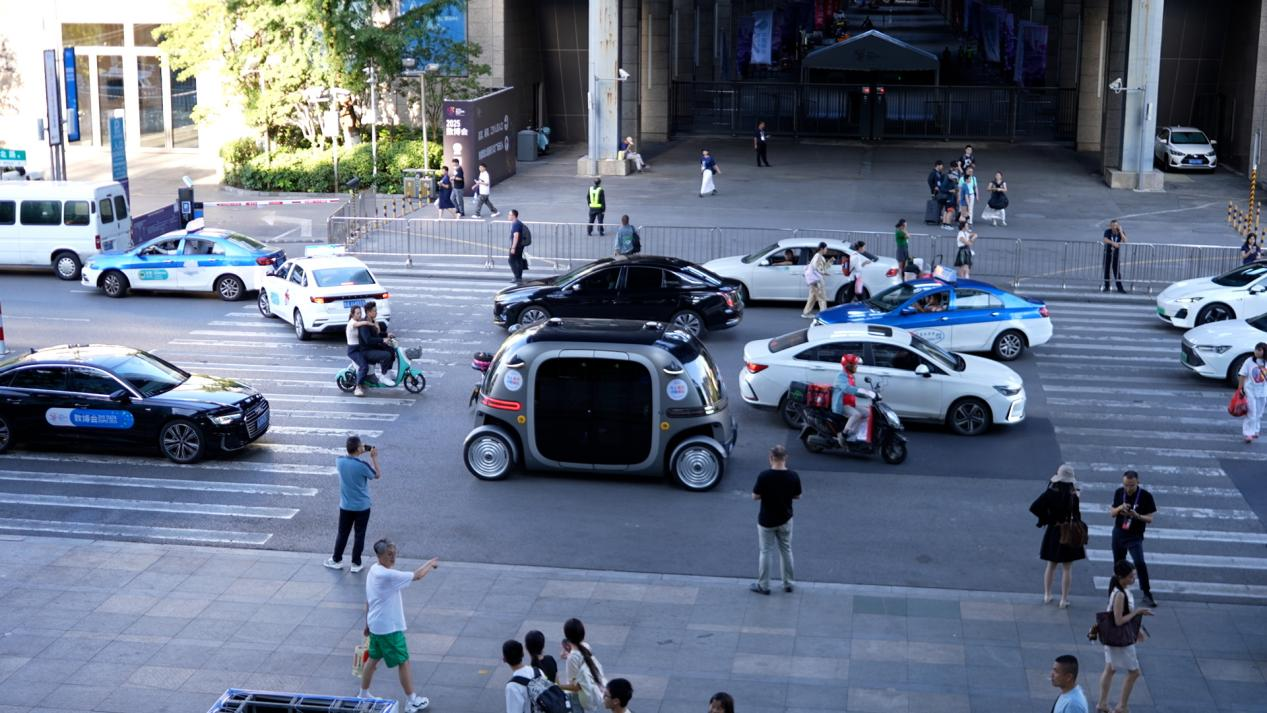
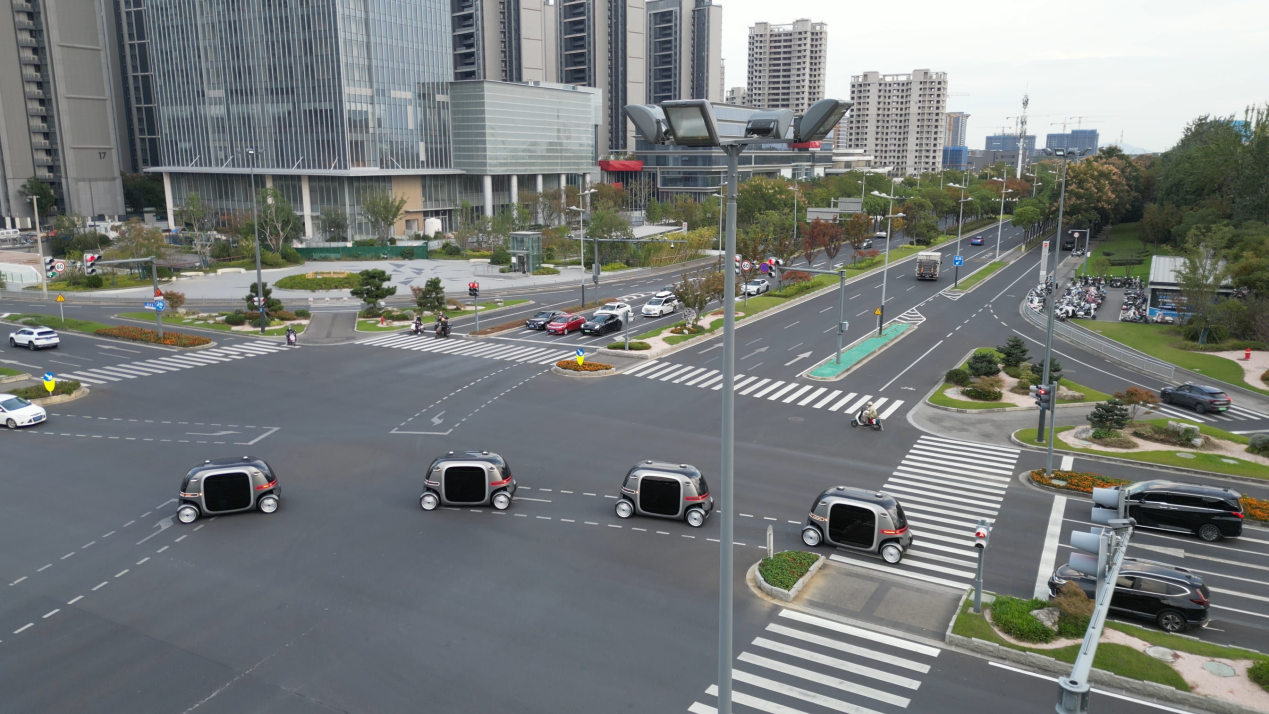
Beyond Japan, PIX's city robots are now operating in diverse scenarios including public road services, community shuttles, campuses, industrial parks, and tourism zones, demonstrating the adaptability of its mobile space model across different urban contexts.
A Distinct Path from the Robotaxi Model
While Robotaxi developers largely pursue full driver replacement and point-to-point passenger transport, PIX follows a different trajectory.
PIX emphasizes service value and operational sustainability, deliberately avoiding the cost-efficiency pressures and utilization challenges associated with large-scale Robotaxi fleets. Its objective is not to compete within an existing mobility market, but to create a new category of city services enabled by autonomous mobile spaces.
This strategy is supported by PIX's access to mature manufacturing ecosystems and global supply chains, enabling faster deployment and clearer scaling pathways across international markets.
Physical AI as Urban Infrastructure
To support city-scale deployment, PIX has developed a unified Physical AI system capable of perception, decision-making and execution across distributed fleets of city robots. Within this system, autonomous driving serves as the foundation through which Physical AI delivers continuous services to urban environments.
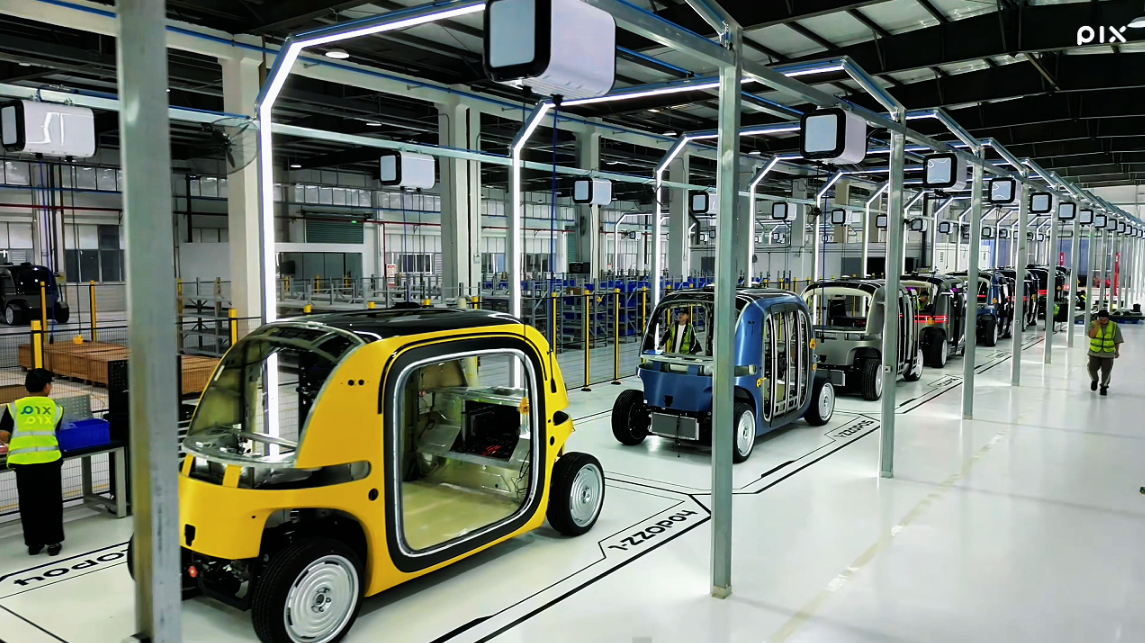
This technological approach extends into manufacturing. PIX applies large-scale metal 3D printing and mold-free digital manufacturing processes to consolidate traditional automotive components into integrated structures. As a result, the number of parts per vehicle is reduced by over 70%, while tooling costs are reduced by more than 90%.
These methods significantly shorten development cycles and enable a "design global, manufacture local" model, allowing vehicles to be produced and adapted quickly for different regional requirements.
PIX currently operates intelligent manufacturing facilities in Guiyang and Huzhou, China, as well as Chigasaki, Japan, forming a closed-loop system from R&D and prototyping to mass production and local deployment.
A Robot-as-a-Service Business Model
From a commercial perspective, PIX has transitioned beyond traditional hardware sales toward a Robot-as-a-Service (RaaS) model focused on positive unit economics.
Rather than measuring success by vehicle mileage or disengagement rates, PIX evaluates each deployment based on whether individual routes or vehicles can achieve operational breakeven through diversified revenue streams. These may include mobility services, onboard retail and advertising, and space-based service offerings.
In early 2025, PIX launched a city robotics commercial pilot in China in partnership with a regional infrastructure operator, with performance metrics centered on route-level sustainability and long-term operational viability.
According to PIX, this focus on economic durability ensures that each deployment contributes to a repeatable and scalable business model.
Global Validation and Strategic Backing
PIX's development trajectory has been supported by a series of strategic and institutional investors aligned with its global expansion. Early backing from Silicon Valley-based SOSV provided international exposure, while subsequent strategic investment from Japan-listed TIS Corporation led to the establishment of a joint venture and local manufacturing in Japan.
Today, PIX's growing international footprint spanning over 30 countries reflects increasing validation of its city robotics model across diverse regulatory, cultural and operational environments.
Looking Ahead
In PIX's vision of future cities, autonomous vehicles are no longer isolated transport tools, but intelligent infrastructure nodes that can be dynamically deployed and reconfigured to meet changing city needs.
As the concept of city robotics moves from technical feasibility to sustainable operation, PIX positions itself not simply as a vehicle manufacturer, but as a provider of scalable, revenue-generating urban services powered by Physical AI.
This shift - from vehicles to city robots - may define the next phase of autonomous technology in real-world cities.
About PIX Moving
PIX Moving is a Physical AI-based city robotics company focused on developing autonomous mobile spaces that integrate into city environments. Through its modular robotic chassis platform and Robot-as-a-Service (RaaS) model, PIX delivers scalable, sustainable city robotics solutions across global markets. PIX's products have been deployed in more than 30 countries and regions worldwide.
Media Contact
Nancy Lee
International Business Director
PIX Moving
Email: [email protected]
Tel: +86-18111991219
SOURCE: PIX Moving
View the original press release on ACCESS Newswire
Y.Kobayashi--AMWN