Mercedes new electric VLE: Price and performance?
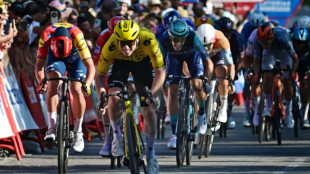 Brennan sprints to Vuelta stage two victory, Pogacar keeps red
 Duplantis conquers pole vault at Silesia Diamond League

 France's badminton gold winners set for obscurity back home
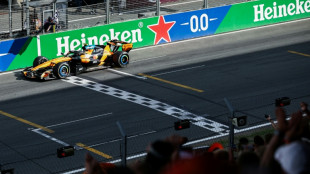
 Brighton start Premier League season with rout of 10-man Villa

 Maresca makes winning start with Man City after dramatic fightback

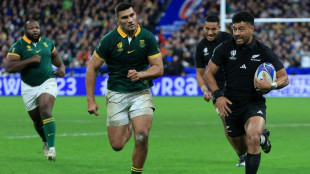 Mo'unga returns for All Blacks against Johannesburg Lions

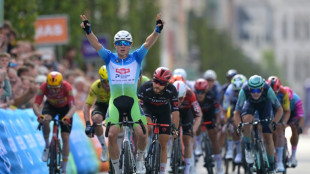 Belgian sprinter Philipsen wins Renewi Tour
 'A day for French badminton' as Lanier triumph gives them golden double at world champs

 Kane voted German footballer of the year

 'New season, new trim': Man City star Haaland chops off flowing locks

 Lanier clinches badminton world title in France's golden double

 After Wildberries, Ukraine launches drone campaign on Russia's Ozon

 Padikkal, Gill half-centuries take India to 187-3 at tea

 Cummins hails 'sharp' Australia as they get back to winning ways

 Bangladesh eye more Australia Tests to hit next level

 Thousands expected at Sweden climate demo as election looms

 Starc heroics put Australia on brink of victory over Bangladesh

 Austrian mountain town finds niche in AI boom

 Messi scores but Miami slump continues with loss to Toronto

 Sydney marathon unveils medal with wrong stadium
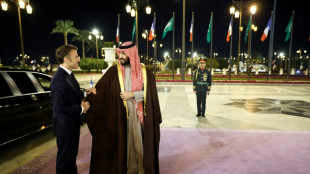 Macron hosts Saudi's MBS for visit ranging from esports to Mideast

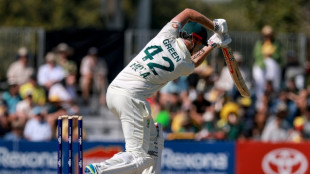 Australia in control with 146-run first innings lead over Bangladesh

 World No. 3 Pegula beats defending champ Swiatek to reach Cincy final
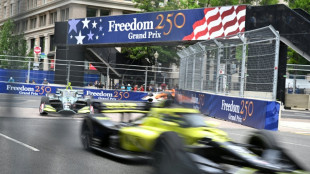
 Wyndham Clark surges clear at BMW Championship

 Maresca says Man City must fill Rodri void after Barca switch

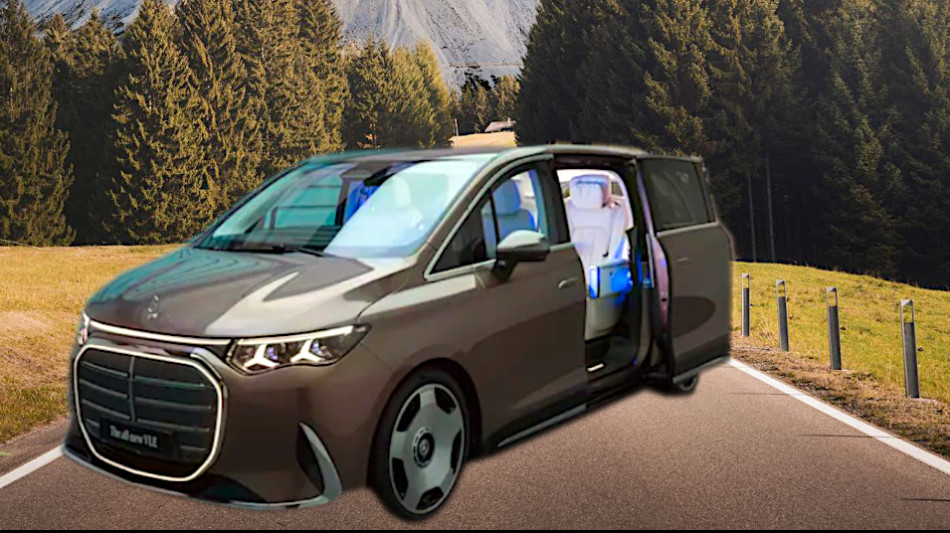
Mercedes is not simply pushing the V-Class into the electric age; it is changing the vehicle’s very character. With the VLE, the familiar people carrier becomes something much closer to a rolling grand limousine. That is the real message behind this reboot. In the future, Mercedes will draw a clearer line between the VLE, positioned roughly on E-Class territory, and the even more luxurious VLS at the top end. This restart is therefore aimed not only at European families or hotel shuttles, but at a global market in which large luxury vans have long since become status objects.
The technical leap is just as significant. The VLE is the first model to sit on a dedicated electric van architecture and it brings precisely the ingredients Mercedes wants to associate with its upper-class passenger cars: 800-volt technology, very fast charging, air suspension, rear-axle steering, a much more digital cockpit and an interior that feels more like a lounge than a traditional van. Up to eight seats, a highly flexible rear compartment, generous luggage space and strong towing credentials are all meant to prove that this is not merely a beautifully staged product, but a genuinely usable one. Mercedes wants to dissolve the old compromise: the VLE is supposed to be a business shuttle, a family car, a travel vehicle and a prestige product all at once.
That inevitably puts range at the centre of the debate. On paper, the package is convincing: a large battery, a modern EV-first platform, strong aerodynamics, rapid charging and a clear attempt to present long-distance usability as something tangible rather than theoretical. All of that supports the idea that the official WLTP claim is not just marketing theatre. Even so, it would be a mistake to read that figure as an everyday guarantee. A vehicle of this size already weighs roughly three tonnes before passengers or luggage are added, and the heavier versions push total weight significantly higher still. Add several occupants, baggage, winter temperatures, climate control, large wheels and brisk motorway speeds, and the usable range will naturally fall. The VLE does not defeat physics; it simply shows how far current engineering can reduce the traditional drawbacks of large electric vehicles.
The price debate is even sharper. This is the point where brand ambition and buyer expectations collide head-on. Depending on version and equipment, the VLE currently enters the market from just under 80,000 euros to around 88,000 euros, while heavily specified versions move well beyond 100,000 euros and can climb considerably higher. That places the VLE far away from the pricing logic of the traditional V-Class and also beyond the previous EQV. Anyone viewing it primarily as a family van will see that threshold as very high. Anyone assessing it as an electric chauffeur shuttle or luxury representative vehicle will more quickly understand why Mercedes is no longer benchmarking it against vans, but against large premium sedans and exclusive people movers.
That same tension is reflected in many public online discussions. The dominant reaction is not a rejection of the technology itself, but scepticism about the target audience. Many voices argue that Mercedes is emotionally distancing the van from its traditional buyers and styling it more for prestige and chauffeur markets than for everyday European users. The main criticisms concern the high price, the heavy luxury staging and the fear that a fundamentally practical vehicle may lose its grounding. At the same time, there is genuine approval as well. The most common positive argument is that Mercedes is not merely electrifying an existing combustion van this time, but rethinking an electric vehicle from the ground up, with better aerodynamics, higher comfort and much faster charging.
In the end, the new electric van is neither a gimmick nor a bargain. Its range deserves to be taken seriously as real technical progress, but it remains a standardised value that will shrink noticeably in everyday use depending on conditions. The price is partly justified if the VLE is judged as a high-end, technology-heavy flagship with a clear premium and shuttle orientation. It becomes much harder to justify if one still has the earlier V-Class in mind as a comparatively grounded space carrier with a Mercedes badge. Mercedes is therefore not simply launching an electric V-Class. It is launching an electric statement vehicle – and that distinction will decide whether the VLE is seen as visionary or simply too expensive.