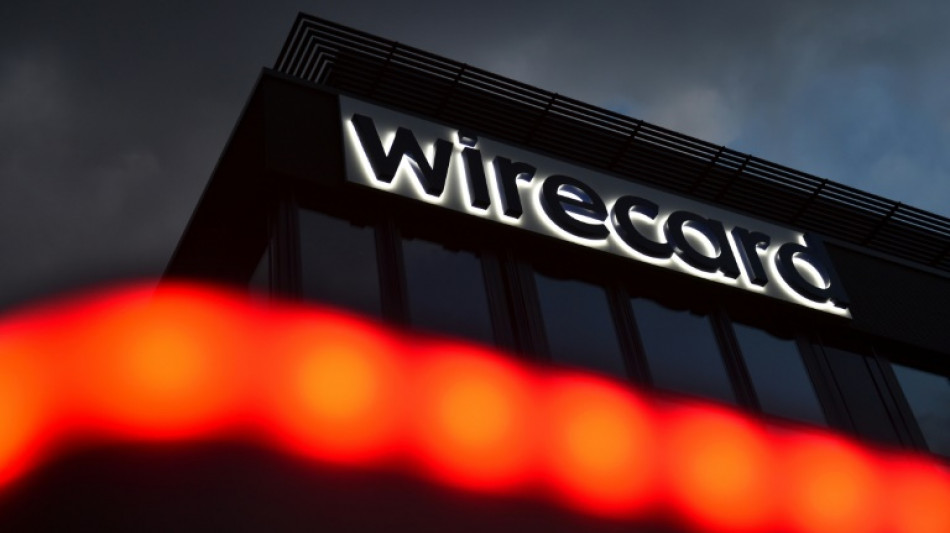
Huge Wirecard fraud trial opens in Germany / Photo: Christof STACHE - AFP/File
 Trump names Stephen Miller as White House chief of staff after midterm losses

 Restored Albanian tower houses anchor new rural tourism trail

 Sonia Gandhi reflects on family tragedy and reluctant political career

 Pope Leo begins three-country South American tour in Uruguay

 Khawaja says entire Australia camp knew of 2018 ball-tampering plan

 November Foraging Guide: Edible Mushrooms and Critical Safety Protocols

 Microsoft Updates Xbox PC App with 60% Faster Startup and Redesigned Interface

 Early Polar Vortex Disruption Creates Uncertain Winter Outlook for Pennsylvania

 How to Enjoy Luxury Experiences on a Budget

 Pakistan Demands Grant-Based Climate Finance at COP31 to Avoid Debt Trap
Germany's mammoth Wirecard fraud trial opens on Thursday, with ex-CEO Markus Braun and two former executives in the dock over their roles in the country's biggest-ever accounting scandal.
The trial in Munich comes two and a half years after digital payments firm Wirecard collapsed in spectacular fashion after admitting that 1.9 billion euros ($2 billion) missing from its accounts didn't actually exist.
Chancellor Olaf Scholz, who was finance minister at the time, described the scandal as "unparalleled" in Germany's post-war history.
Notably absent from the courtroom will be Wirecard's former chief operating officer Jan Marsalek, a shadowy figure with ties to foreign intelligence agencies.
Marsalek evaded arrest in 2020 by staging a daring escape from Austria by private jet. He was reported earlier this year to be hiding out in Russia.
Wirecard's veteran CEO Braun, in custody since July 2020, faces charges of commercial gang fraud, breach of trust, accounting fraud and market manipulation.
The 53-year-old denies the allegations and claims to be a victim of the fraud, painting Marsalek as the mastermind.
His co-accused are ex-accounting boss Stephan von Erffa and Oliver Bellenhaus, the former head of Wirecard's Dubai subsidiary.
Bellenhaus has admitted wrongdoing and will act as a key witness for the prosecution.
If found guilty, the trio risk lengthy prison sentences.
The opening day of the high-profile trial, held in a sprawling prison building in Munich, will mainly consist of prosecutors reading out the 90-page indictment.
The court has scheduled 100 trial dates for the complex case.
- Fake transactions -
The prosecution's case centres around the claim that Wirecard executives inflated the company's earnings, starting at least as far back as 2015, by inventing revenue streams from transactions with a web of partner companies.
These so-called Third Party Acquirer (TPA) companies in Dubai, the Philippines and Singapore accounted for a huge chunk of Wirecard's sales and profits according to its books.
But "all the accused knew" that the revenues from these TPA businesses "didn't exist", the indictment reads, adding that the defendants used forged documents to hide the trickery.
The goal was "to increase the company's financial strength and make it more attractive to investors and customers", prosecutors allege.
Founded in 1999 as an outfit processing credit card payments for porn and gambling websites, Wirecard rose to become a respectable player in the booming "fintech" (financial technology) sector.
A favourite with investors, it entered Germany's blue-chip DAX index in 2018 and at its peak was valued at more than 24 billion euros, outweighing giant Deutsche Bank.
Despite occasional speculation of wrongdoing at the company, Wirecard continued its meteoric rise.
- FT investigation -
But its troubles began in earnest in 2019 when the Financial Times published a series of explosive articles detailing accounting irregularities.
The scam finally unravelled when long-time auditor EY uncovered a 1.9-billion-euro hole in its accounts in June 2020.
The cash, which made up a quarter of Wirecard's balance sheet, was meant to be sitting in trustee accounts at two banks in the Philippines.
But the Philippines' central bank has said the cash never entered its monetary system and both Asian banks, BDO and BPI, denied having a relationship with Wirecard.
Wirecard's share price tanked and it filed for insolvency soon after, leaving behind three billion euros in debt that creditors are unlikely to recover.
The company's downfall sent shockwaves through Germany and prompted an overhaul of finance watchdog Bafin, which was heavily criticised for ignoring early warnings about Wirecard.
Many people simply "didn't want to believe that fraudsters were at work" at a company long hailed as a German champion, said Volker Bruehl, a professor at the Center for Financial Studies in Frankfurt.
"The Wirecard scandal has damaged Germany's reputation as a financial centre."
O.Karlsson--AMWN

