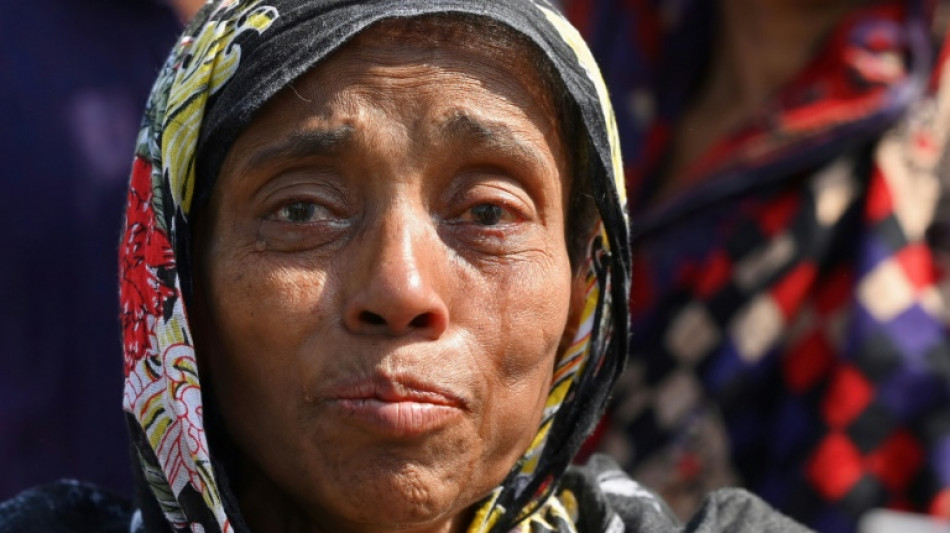
Tears, protests 10 years since Bangladesh factory tragedy / Photo: Munir uz ZAMAN - AFP
 Post-election pressures complicate US and Israeli decisions on Iran

 UN members approve talks on treaty protocol against environmental crime

 Family-run West Sussex beach café prepares for first winter season

 CT scans reveal health and burial clues from Egypt’s Braided Lady mummy

 Oxford faces complaints over lecturer’s classroom attire

 Kyren Wilson and John Higgins reach International Championship snooker final

 New Zealand and Tonga meet for place in Rugby League World Cup final

 Reports of unsafe AI-toy responses renew calls for child-safety rules

 Juneau food network combines difficult supply routes with deep sharing traditions

 India climbs green-transition ranking after first emissions decline in 25 years

 Trump names Stephen Miller as White House chief of staff after midterm losses

 Restored Albanian tower houses anchor new rural tourism trail

 Sonia Gandhi reflects on family tragedy and reluctant political career

 Pope Leo begins three-country South American tour in Uruguay

 Khawaja says entire Australia camp knew of 2018 ball-tampering plan

 November Foraging Guide: Edible Mushrooms and Critical Safety Protocols

 Microsoft Updates Xbox PC App with 60% Faster Startup and Redesigned Interface

 Early Polar Vortex Disruption Creates Uncertain Winter Outlook for Pennsylvania

 DEA Marijuana Rescheduling Hearing Closes With Government Not Meeting Its Burden Of Proof?

Hundreds of workers in Bangladesh shouted slogans for justice and survivors wept at the ruins of a factory that made clothes for Western shoppers and collapsed 10 years ago killing more than 1,130 people.
The Rana Plaza tragedy on April 24, 2013 was one of the world's worst industrial disasters, highlighting the global fashion industry's reliance on factories in developing countries where working conditions are often poor.
Early on Monday morning, survivors including some who lost limbs or were disabled placed wreaths at a memorial at the site of the former nine-storey Rana Plaza complex that made products for brands like Mango and Primark.
"Ten years have passed, but what happened to the killers?" the workers shouted as they slowly walked to the memorial in the industrial town of Savar outside the capital Dhaka.
"It is a scandal that 10 years have passed and yet the garment factory owners and the factory building owner have not been punished for the murders of 1,138 workers," Nilofa, a 32-year-old survivor, told AFP, as tears rolled down her cheeks.
"I barely got anything. My leg was crushed and I can't work in factories. My husband left me five years ago as he does not want to bear my medical expenses," she said.
Shila Akhter, 42, showed the brace she has to wear permanently after the disaster ruptured her spinal cord.
"We want full compensation and lifelong medical treatment as we've lost the ability to work," she said.
"The government should know what we have been going through. Some survivors are forced to beg on the streets."
- Slow justice -
Union leaders acknowledged improvements in fire and factory safety across the world's second-largest apparel exporter after China, with fewer deadly accidents in recent years.
But they slammed the government for the slow pace of legal proceedings, including against Sohel Rana, the Rana Plaza owner who is one of 38 people indicted for murder over the tragedy.
He allegedly forced employees to work despite a crack appearing in the building a day before the collapse. His trial resumed last year but prosecutors say a verdict may take years.
"Fewer than 10 percent of the witnesses have been cross-examined," prosecutor Bimal Samadder told AFP.
Following the disaster, two watchdogs were set up to improve standards. Wages of the country's four million workers -- mostly women -- were also tripled.
Bangladesh garment factory owners, a powerful group as the sector accounts for around 84 percent of the country's exports, say they have invested some $2 billion to make their plants safe.
Laura Bourgeois at advocacy organisation Sherpa warned however of factory managers' potential to influence worker interviews during safety inspections and of "rigged" factory audits.
P.Martin--AMWN