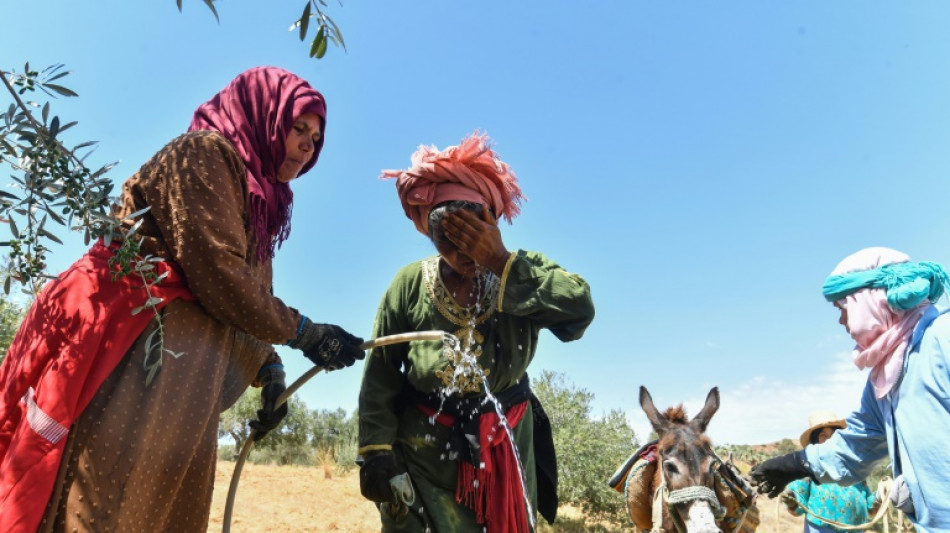
A Tunisian village's fight for running water / Photo: FETHI BELAID - AFP
 Belgium Signs Contract for 20 Rheinmetall Skyranger Air Defence Systems

 RBI Data Reveals Divergence in Credit Card Spending and Debit Card Cash Withdrawals

 Panthers expected to begin 2027 NRL season away from new stadium

 Sweet As app launches restaurant discovery platform
 Phoenix Restaurants Offer Thanksgiving Dinner to Go for Pickup
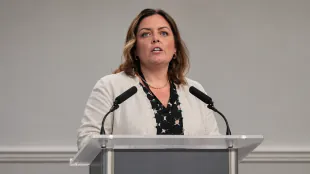
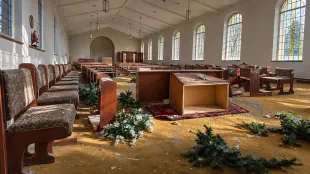 Mayo school appeals for information after convent and chapel vandalism
 Virginia overwhelms Arkansas 91-72 behind balanced scoring

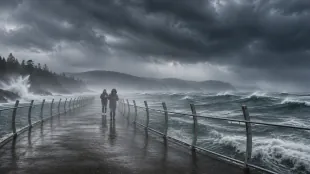 Second major storm brings destructive winds and outages to British Columbia
 Godzilla Minus Zero leads North American box office with $31.6m

 Advocate calls for coordinated support for children facing trafficking

 Medicare Open Enrollment Ends Dec. 7: Review Your Coverage Options
 US Treasury order targets bank transfers linked to crypto exchange MEXC
 Nvidia CEO Controversy Sparks Fears of Tighter U.S. AI Chip Curbs for Samsung and SK hynix

 Villeneuve teases James Bond casting at Los Angeles museum gala
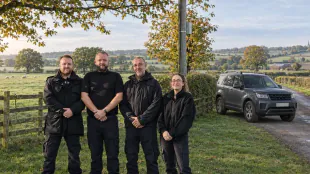 Nottinghamshire launches specialist rural crime policing team

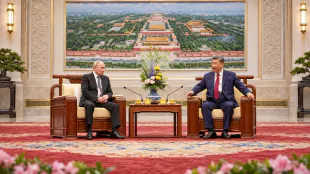 China confirms talks over possible Xi-Putin-Trump summit

 Rail journey offers a slower route to a Berlin city break

 Arsenal control title race as Manchester United fall into bottom three

 Suspected Krakow gunman dies after attack that killed six

 Carrick backs Dalot after hostile reception from Manchester United fans

 Aston Villa Defy History With Rare Victory at Old Trafford

In front of a small mosque in central Tunisia, women queue at one of their village's last water sources, a pipe meant for crop irrigation, but now a lifeline in the parched area.
"We just need something to drink," said Ribh Saket, 56, under the punishing summer sun as she placed a jerrycan beneath a makeshift tap hooked into the water supply.
Like its neighbour Algeria and large areas of the Mediterranean region, Tunisia suffers from "alert drought conditions", according to the European Drought Observatory.
But while drought and rising temperatures impact the region as a whole, repercussions are felt twofold in rural areas, where poverty rates tend to be higher.
Tunisia's national water grid supplies almost all of the country's urban areas, but only about half of the rural population.
The other half largely rely on wells built by local agrarian associations officially working under the agriculture ministry.
"We've been marginalised," said Saket, whose village of around 250 families had one such well.
But it was shut down in 2018 due to unpaid electricity bills -- a common issue among agrarian associations -- and the villagers were left without pumps to extract the water for their community in the Sbikha area, about 30 kilometres (18 miles) north of Kairouan city.
Since then, the families said they have been relying on water from wells originally dug up by local farmers to irrigate their lands.
None of these wells have been authorised by the state as they are often contaminated with pollutants and unfit for human consumption due to improper construction and testing.
- 'Unsustainable' -
Flashing a scar that ran the length of his abdomen, Ali Kammoun, 57, said he has had two surgeries due to waterborne diseases.
"Half of us have kidney issues," his neighbour, Leila Ben Arfa, said. "The water is polluted, but we have to drink it."
The 52-year-old said she and other women "bring the jerrycans on our backs".
Tunisia, in its sixth year of drought, ranks as the world's 33rd most water-stressed country, according to the World Resources Institute.
The World Bank says by 2030 the Middle East and North Africa will fall below the "absolute water scarcity" threshold of 500 cubic metres yearly per person.
That amount is already below 450 cubic metres per inhabitant in Tunisia.
More than 650,000 Tunisians, mainly in the countryside, have no running water at home, with almost half of them living far from a public water source, according to a 2023 United Nations report.
Bottled water, costing around half a Tunisian dinar (16 cents) per litre, remains a luxury for the families whose governorate is Tunisia's poorest.
"We need to find a solution," said Djaouher Kammoun, a 26-year-old farmer who has been sharing his well water with other villagers.
"Most families come to fetch water while we're working, and sometimes we can't do both," he said, describing the system as unsustainable.
According to the National Agricultural Observatory (ONAGRI), about 60 percent of wells across the country are privately dug and unauthorised.
But while the practise may provide a temporary -- albeit unhealthy -- solution for some, it exacerbates water scarcity.
A 2022 study by ONAGRI found that Tunisia's deep aquifers were being exploited at 150 percent their rate of recharge, and groundwater aquifers at 119 percent.
-'Many have left'-
"Today we are in the same spiral, the same vicious circle, with the same problems," said Minyara Mejbri, Kairouan coordinator at the Tunisian Forum for Economic and Social Rights (FTDES).
The villagers have protested, blockaded roads, and complained multiple times -- all to no avail.
"The governorate said we already had access to drinking water," said Saief Naffati, a 34-year-old who has been leading his community's efforts to solve the crisis.
"They told us if we protest, we should own up to it, because the National Guard would arrest us."
At their wit's end, many have left the village, Naffati added.
Among them is his brother, Raouf, now living in the coastal city of Hammamet.
Saleh Hamadi, a 55-year-old farmer also struggling with distributing his well water, said "at least 150 families have left".
"Most of our youth have moved away, leaving their elders on their own," he said.
"In 2024, why is this still a problem? Why are we still thirsty?"
X.Karnes--AMWN


