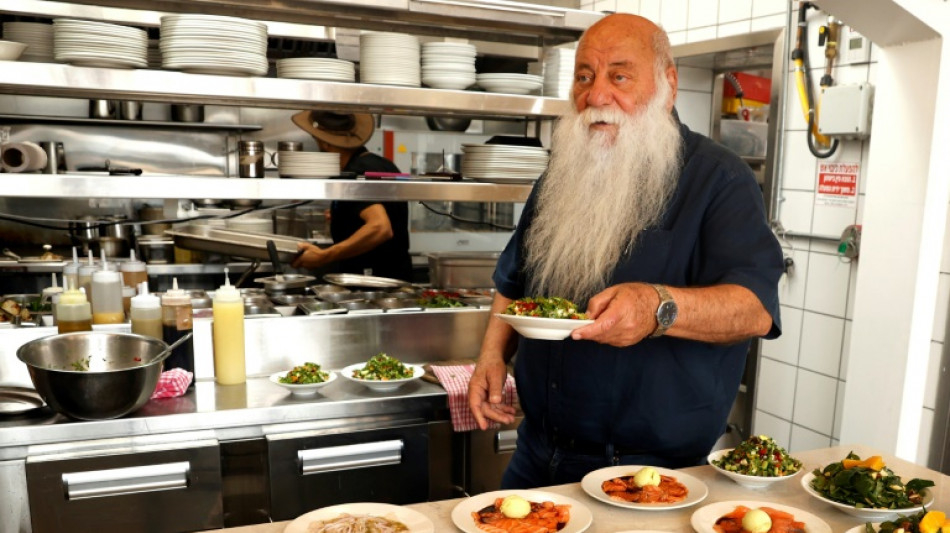
Year after riot, Israeli chef rebuilds on sensitive foundations / Photo: JACK GUEZ - AFP
 'I live in fear': 1.5 million Pakistani children sexually exploited online

 Cowboys beat Commanders, Vikings down Bears as star QBs injured
 Braves clinch division title as Red Sox reach MLB playoffs
 Bordeaux-Begles hammer Stade Francais despite Jalibert injury

 Milan and Juventus end blips with home wins

 Bridgeman wins PGA Biltmore title with sizzling 61

 Williams injured as Bears shut down by Vikings

 US warns of rapid escalation in Middle East war

 Germany's far-right AfD celebrates another state election win

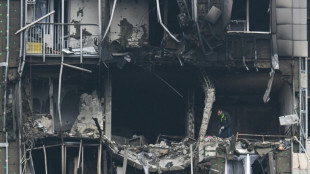 Russia vows revenge for election-day attacks as poll shows ruling party win

 Spaun late shows snatches PGA Championship win

 Conceicao strikes as Juventus beat Atalanta

 Britain, Zverev-inspired Germany, Spain complete Davis Cup finals

 Man Utd salvage Fulham draw as pressure mounts on Carrick

 Spanish civil war drama 'The Black Ball' wins at Toronto festival

 Germany's Merz shaken by far-right and far-left gains in state votes

 Macron welcomes Canada's Carney to French Atlantic territory
 Fiorentina frustrate Napoli with Serie A draw, Como upset

 Five-star Man City top Premier League after Sunderland thriller
 Ukrainian drones hit Moscow on last day of Russian elections
 Multi-Asset Trading Venue Monochrome Exchange Announces IEO of Its Native Token, $MCR
 South Korea break Japan hearts to win Asian Games basketball gold
 Acosta takes first victory at Austrian MotoGP
 PSG president Nasser al-Khelaifi under investigation in France for conflict of interest
 China swim sensation, 13, sets Games record after Japan win early

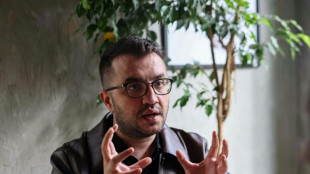
On May 4 of last year, star Israeli chef Uri Jeremias was at a meeting of inter-faith leaders where his hometown of Acre was applauded as a "symbol" of Jewish and Arab co-existence.
Exactly a week after that gathering, Arab rioters torched his seafood restaurant Uri Buri and a nearby luxury hotel, the Efendi, which Jeremias also owned. The attacks in the north-coast city were part of unprecedented intercommunal violence that shook Israel's mixed communities one year ago.
Nearly three decades earlier, Jeremias had opened Uri Buri in Acre's majority-Arab Old City. The travel site Tripadvisor named it the 19th best restaurant in the world last year.
He has always employed Arab Muslims, several of whom are now among his most senior staff.
Jeremias told AFP that he -- and Acre's community leaders generally -- had grown "very satisfied" with what they believed were harmonious Jewish and Arab relations in the Old City, a UNESCO world heritage site where the remains of a Crusader town lie almost intact.
But Jeremias, known for his Father Time beard, said his hometown had failed to recognise its rising numbers of struggling youths, some with fraught family lives, and others out of school, who were vulnerable to radicalisation.
"We didn't see the transparent people, the people that were not so happy," he told AFP.
The violence perpetrated by both Jews and Arabs in mixed Israeli cities in May, 2021 was sparked by a convergence of crises.
Palestinians had clashed with police across Israeli-annexed east Jerusalem, including at the sensitive Al-Aqsa mosque compound.
At the start of an 11-day war, Hamas Islamists who control Gaza fired rockets at Jerusalem on May 10 in response to the Al-Aqsa clashes, triggering Israeli retaliatory bombardment of the blockaded strip.
The intercommunal violence began the next day, ultimately leaving two Arabs and two Jewish people dead. Businesses from both communities, mosques and synagogues were targeted from Haifa in the north to Jaffa further south.
- 'Threatening silence' -
Jeremias has a long track record of hiring disaffected youths -- Jewish and Arab -- with no professional training to work in his restaurant and hotel, which he said made the Efendi and Uri Buri a target.
"I would be offended if I wouldn't be the target," as they wanted to harm mutual coexistence, he said. "I, in a way, was a symbol for it."
He was supposed to be off on May 11. But given the crises unfolding nationwide he wanted to pass by the restaurant, if only for a bowl of soup to support his staff.
Jeremias recalled that a "threatening silence" hung over the Old City when he entered.
As he finished his soup, four masked men carrying crowbars shattered the restaurant's high arched windows.
"Then they went away so I thought they have expressed their anger and now they are going home."
Next, his phone rang. The Efendi was on fire.
By the time he arrived, his neighbours had extinguished the blaze, but an 84-year-old guest would eventually die from smoke inhalation and burns.
With the Efendi blaze contained, a man came running down the narrow cobblestone alley outside the hotel to report that Uri Buri was on fire.
Jeremias raced the 350 metres back to the restaurant and fought the blaze himself, with help from neighbours.
Police, the army and firefighters were deployed to crises elsewhere and did not respond: "Acre was naked," Jeremias said.
As he watched his restaurant burn, Jeremias focused on the future.
"I said the next thing, tomorrow morning, we are going to look for an alternative place."
Soon, Uri Buri was serving its famous salmon sashimi with wasabi sorbet from a temporary site at a grey concrete business park several kilometres from the old walled city, where tables remained in high-demand despite the drab surroundings.
- 'We are the problem' -
While his food continued to find acceptance, Acre's social problems did not. In the immediate aftermath of the violence Jeremias saw worrying signs of denial among local leaders.
"People were saying the rioters aren't from Acre, and all kinds of excuses not to look at the problem in the face and say we are the problem."
But he personally resolved to learn from what happened.
He stressed that maintaining calm in the city of roughly 50,000 people near Haifa could not be the sole responsibility of the security forces, or municipal authorities.
His restaurant re-opened in January at its historic site a few metres from the sea wall, and Jeremias voices optimism that despite warnings of copycat unrest during Ramadan, the Muslim holy month passed peacefully in Acre this year. Israel and the Palestinian territories saw violence elsewhere.
And, Jeremias stressed, complacency would be a mistake.
"We have to keep our hand on the pulse."
A.Rodriguezv--AMWN