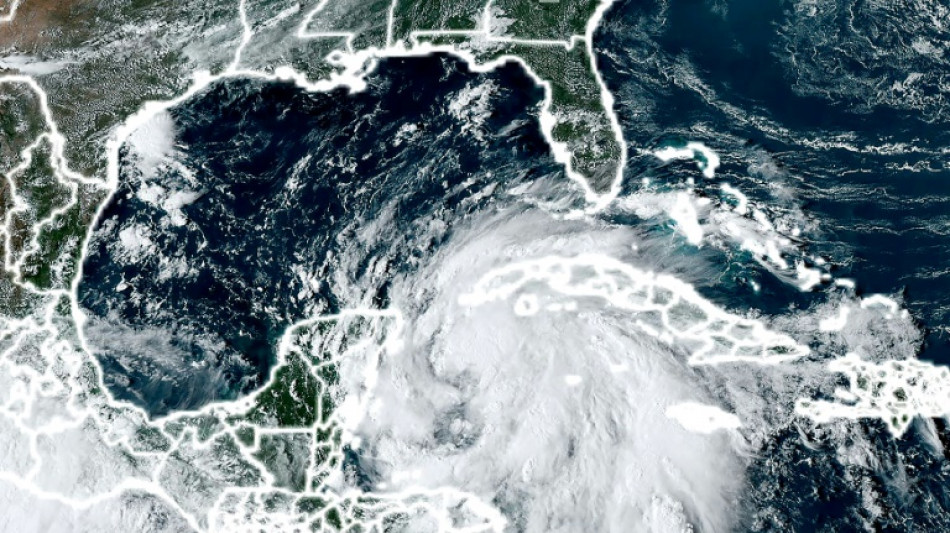
Climate change made deadly Hurricane Helene more intense: study / Photo: - - NOAA/AFP
 Korea's Severe Asthma Patients Blocked from Biologics by Restrictive Reimbursement Rules

 Shanghai Science and Technology Museum Signs Pacts With London and Ottawa Institutions at CIIE

 RBI Data Reveals Divergence in Credit Card Spending and Debit Card Cash Withdrawals

 Panthers expected to begin 2027 NRL season away from new stadium

 Sweet As app launches restaurant discovery platform

 Phoenix Restaurants Offer Thanksgiving Dinner to Go for Pickup

 Mayo school appeals for information after convent and chapel vandalism

 Virginia overwhelms Arkansas 91-72 behind balanced scoring

 Second major storm brings destructive winds and outages to British Columbia

 Godzilla Minus Zero leads North American box office with $31.6m

 Advocate calls for coordinated support for children facing trafficking

 Medicare Open Enrollment Ends Dec. 7: Review Your Coverage Options

 US Treasury order targets bank transfers linked to crypto exchange MEXC

 Nvidia CEO Controversy Sparks Fears of Tighter U.S. AI Chip Curbs for Samsung and SK hynix

 Villeneuve teases James Bond casting at Los Angeles museum gala

 Nottinghamshire launches specialist rural crime policing team

 China confirms talks over possible Xi-Putin-Trump summit

 Rail journey offers a slower route to a Berlin city break

 Arsenal control title race as Manchester United fall into bottom three

 Suspected Krakow gunman dies after attack that killed six

 Carrick backs Dalot after hostile reception from Manchester United fans

 Aston Villa Defy History With Rare Victory at Old Trafford
Hurricane Helene's torrential rain and powerful winds were made about 10 percent more intense due to climate change, according to a study published Wednesday by the World Weather Attribution (WWA) group.
Although a 10 percent increase "might seem relatively small... that small change in the hazard really leads to big change in impacts and damage," said climate scientist Friederike Otto, who heads the research organization.
The study also found that fossil fuels -- the primary cause of climate change -- have made hurricanes like Helene 2.5 times more likely to occur.
In other words, storms of Helene's magnitude were formerly anticipated once every 130 years, but now the probability is closer to once every 53 years, on average.
To conduct the study, researchers focused on three aspects of Hurricane Helene: precipitation, winds and the water temperature of the Gulf of Mexico -- a key factor in its formation.
"All aspects of this event were amplified by climate change to different degrees," Ben Clarke, a co-author of the study and researcher at Imperial College London, told a press conference.
"And we'll see more of the same as the world continues to warm," he continued.
The research by WWA, an international group of scientists and meteorologists who study the role of climate change in extreme weather events, comes as the southeastern US state of Florida prepares for the arrival of another major hurricane, Milton, just 10 days after it was hit by Helene.
- Destruction -
Helene made landfall in northwestern Florida on September 26 as a Category 4 hurricane with winds up to 140 mph (225 kph).
The storm then moved north, causing heavy rain and devastating floods in several states, including North Carolina, where it claimed the highest death toll.
The authors of the study emphasized that the risk posed by hurricanes has increased in scope beyond coastal areas.
Bernadette Woods Placky, chief meteorologist at NGO Climate Central, said Helene "had so much intensity" that it would take time for it to lose strength, but the "storm was moving fast... so it could go farther inland pretty quickly."
This study utilized three methodologies to examine the three aspects of the storm, and was conducted by researchers from the US, the UK, Sweden and the Netherlands.
To study its rainfall, researchers used an approach based on both observation and climate models, depending on the two regions involved: one for coastal areas like Florida, and another for inland areas like the Appalachian mountains.
In both cases, the study found precipitation had increased by 10 percent because of global warming, which is currently at 1.3 degrees Celsius above pre-industrial levels.
To study Helene's winds, scientists looked at hurricane data dating back as far as 1900.
They determined Helene's winds were 11 percent stronger, or 13 mph (21 kph), as a result of climate change.
Lastly, the researchers examined the water temperature in the Gulf of Mexico, where Helene formed, finding it was around 2 degrees Celsius above normal.
This record temperature was made 200 to 500 times more likely due to climate change, the study asserts.
Warmer oceans release more water vapor, providing more energy for storms as they form.
"If humans continue to burn fossil fuels, the US will face even more destructive hurricanes," Clarke warned in a statement.
F.Schneider--AMWN


