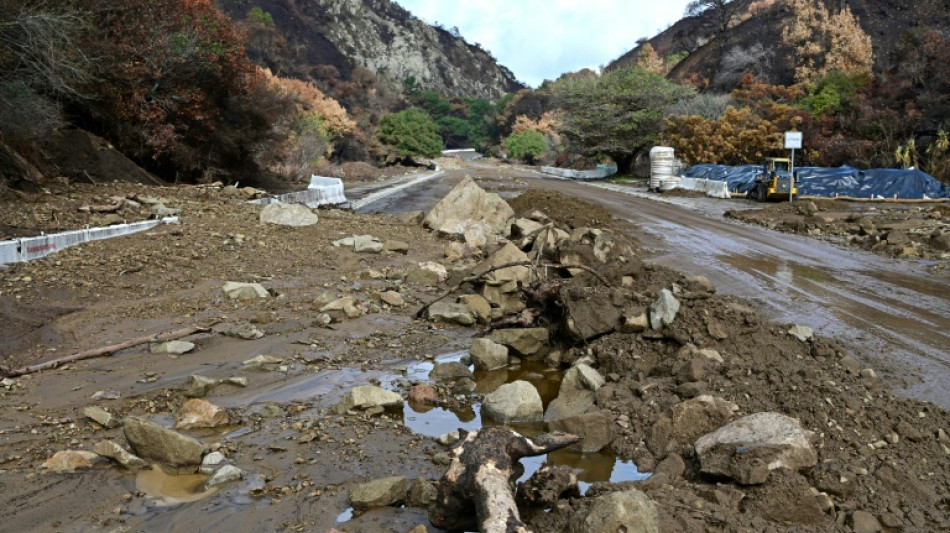
Los Angeles fire zones hit by mudslides after heavy rain / Photo: AGUSTIN PAULLIER - AFP
 Thukukile Zuma Resigns from ANC Johannesburg Leadership Amid Disciplinary Dispute

 CM Mohan Yadav Meets Bohra Spiritual Leader to Discuss Simhastha 2028 and Development

 Eli Crane Defeats Jonathan Nez in Tight Arizona Congressional Race

 Sherilyn Smith Encourages Women to Embrace Scars as Symbols of Resilience

 Belgium Signs Contract for 20 Rheinmetall Skyranger Air Defence Systems

Mudslides blocked roads around Los Angeles on Friday after heavy rain pounded areas burned by last month's wildfires, sending denuded hillsides tumbling.
Parts of Los Angeles got as much as 2.8 inches (7 centimeters) of rain in a day, leaving areas flooded and burn scars in Pacific Pallisades and Altadena strewn with fire debris and rubble.
The Pacific Coast Highway -- a once picturesque road where multi-million dollar properties were razed by January's blazes -- was shuttered, with thick mud blocking the way.
The torrent of water also washed a Los Angeles Fire Department vehicle into the ocean, where it remained Friday, with authorities saying they hoped to pull it out of the surf later in the day.
The fire department official who had been driving the SUV at the time escaped with minor injuries, a spokesman said.
In the Hollywood Hills, home to a mixture of movie stars and working class people, a large mudslide left around 8 inches of debris all over a main road.
And in Altadena, where thousands of buildings were destroyed by the fierce fires last month, a number of vehicles were stranded in debris that washed onto the streets.
The damage came despite extensive preparations by local authorities who had placed sandbags and concrete barriers in places thought to be at risk from the strongest storm of California's winter.
While the area badly needed the rain -- until February there had been no significant precipitation for eight months -- it was always going to be a problem in places affected by the deadly fires.
Hillsides where anchoring vegetation has burned away are not able to absorb water quickly.
The heat of the fires also has the effect of baking and hardening the soil, meaning rain just washes off.
F.Bennett--AMWN