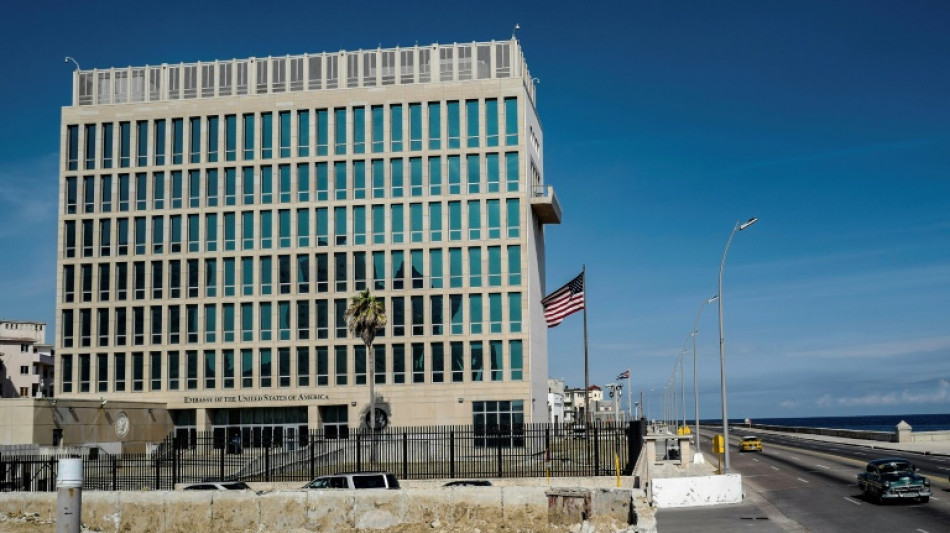
US embassy criticizes Cuba over religious freedom violations / Photo: ADALBERTO ROQUE - AFP
 November Foraging Guide: Edible Mushrooms and Critical Safety Protocols

 Microsoft Updates Xbox PC App with 60% Faster Startup and Redesigned Interface

 Early Polar Vortex Disruption Creates Uncertain Winter Outlook for Pennsylvania

 Edmund Richardson Wins Baillie Gifford Prize for 'Alexander' Biography

 BYD Drops Rotating Screens in New Models Due to Tech Limits

 Ryanair Flight from Rome Makes Emergency Landing in Lisbon After Bomb Threat

The US embassy in Havana on Friday accused Cuba of violating religious freedom, just days before the start of the Summit of the Americas in Los Angeles, to which Cuba has not been invited.
During unprecedented anti-government protests last July, "state forces committed acts of violence, arrested and harassed leaders from numerous religious communities taking part in peaceful demonstrations throughout the country," said the embassy on Twitter.
The tweet makes reference to the US State Department's annual report on religious freedom around the world.
It also mentioned US Secretary of State Antony Blinken's decision last November to place Cuba on a special watch list of countries where religious freedom is of particular concern.
The embassy cited several examples, such as Catholic priest Jose Castor Alvarez, who was beaten by security forces "when he offered help to an injured person during a protest" and of pastor Lorenzo Rosales, "sentenced to 10 years in prison for participating in a march."
The criticisms come just three days before the Summit of the Americas begins in Los Angeles.
As host, the US did not invite Cuba, Nicaragua and Venezuela, three countries it sees as undemocratic.
Several Latin American leaders have said they would boycott the event in "solidarity" with the excluded countries.
P.Mathewson--AMWN

