Between Empire and Desire: Arabella Pascal's Zanzibar Breaks the Romance Mold
 Russia labels 'Mr Nobody Against Putin' teacher a 'foreign agent'
 Whale filmed giving birth, with a little help from her friends

 E-commerce in the crosshairs at WTO in digital taxes battle

 Oil climbs, stocks fall as markets see no end to war

 Iran warns civilians as Trump says talks 'going well'
 Putin hopes Iran war will shift focus from 'crimes' in Ukraine: German FM

 Police probe firebomb attack on Russian centre in Prague

 Belgium's Goffin to retire at end of season

 German state railway loss widens, passengers warned of trouble ahead

 Back-to-back World Cup titles a 'dream' for Argentina, says Tagliafico

 Mexico searches for missing boats ferrying aid to Cuba

 Iran Guards warn civilians after Trump pushes Hormuz deadline
 Global mohair supply flourishes in South Africa's desert

 Indonesian kids brace themselves for social media ban
 Piastri outshines Mercedes duo to go fastest in Japan practice

 Gabon battles for baby sea turtles' survival

 Mexico's navy says two boats ferrying aid to Cuba are missing

 Nepali rapper to be sworn in as new prime minister

 Myanmar travellers ride the rails as fuel prices rise

 Tech-equipped Indigenous firefighters protect Thai forests
 Mercedes' Russell fastest in first practice for Japan GP

 AI used to make 'fetishised' images of disabled women

 Parents sacrificed all for 15-year-old India prodigy Suryavanshi

 Newcomers could threaten Christiania's hippie soul, locals fear

 German 'green village' rides out Mideast energy storm
Love, Power, and a Trace of Blood in the Sand - Arabella Pascal
NAPERVILLE, IL / ACCESS Newswire / October 10, 2025 / Historical romance often walks hand-in-hand with illusion; lace-curtained parlors, moonlit balls, stolen kisses. But Zanzibar (2nd Edition), the heart-stopping opener of The Highgate Trilogy by Arabella Pascal, burns that illusion to ash. This is not a courtship; it's a confrontation. Pascal drags the genre into uncharted waters, placing her heroine Charlotte Earnshaw on the fault lines of empire, identity, and survival. The romance simmers; but it's the reckoning that scorches.
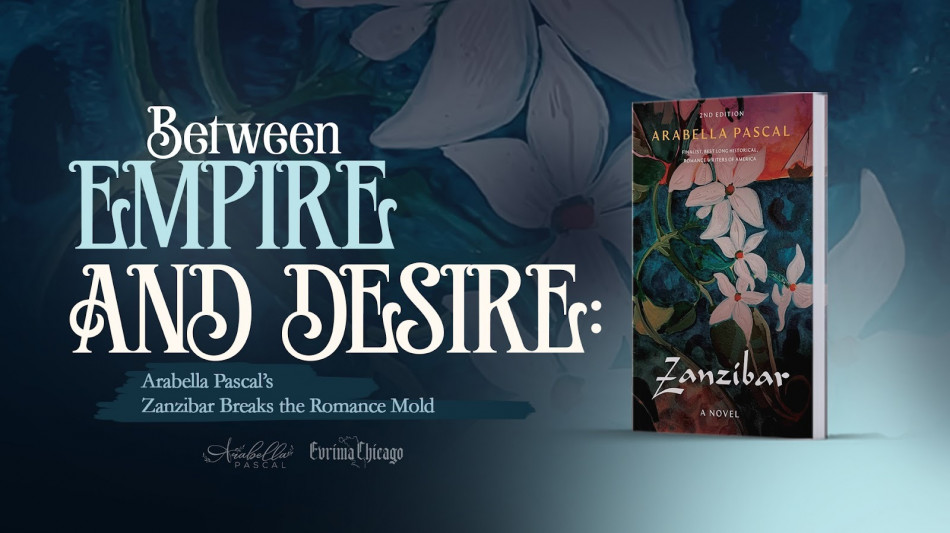
Set against the lush savagery of 1880s East Africa and the brittle civility of Victorian England, Zanzibar doesn't ask how love can overcome. It asks how love can survive.
Charlotte and the Crown of Darkness Thorns
Charlotte Earnshaw isn't built for ballrooms. She is willful, impetuous, preferring to cling to her vanishing childhood; entirely unprepared for the shadow kingdom of Zanzibar's royal court. There, power is coded into silk robes, intrigue cloaked by gentility, serving a prince who is both captor and mirror. What begins as a tale of entrapment evolves into something far more harrowing: a story of awakening.
Pascal doesn't write Charlotte as an object of pity but as a woman clawing for selfhood. This prince may see her humanity, but he also demands her surrender. Love here is a terrain mined with peril. Even tenderness carries the risk of immolation.
The Casablanca Effect
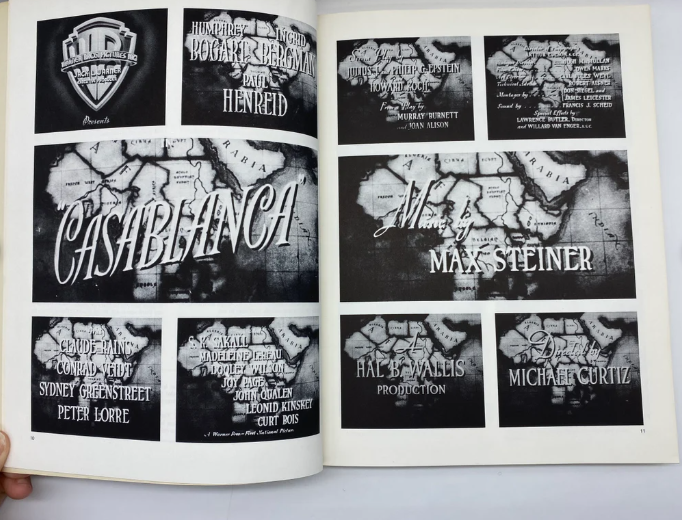
Like Casablanca, the 1942 classic that cast Rick Blaine into Vichy-controlled Morocco, Zanzibar flirts with the allure of exoticism while subverting the colonial gaze. But Charlotte's battle is personal. She's not trying to escape a war; she's trying to define it.
There are no villains in white suits here; just systems of power that can twist desire into domination. Pascal doesn't offer easy resolutions, only harder questions. Who are we when the world demands we become unrecognizable to survive?
The Syndicate
Zanzibar doesn't just whisper about imperialism; it names its architects. The Syndicate, an elusive, global force controlling trade, espionage, and assassinations, is the bloodline running through Pascal's trilogy. Charlotte's father is entangled in its secrets. Lydia Ashford-our hunter-heroine in Mistral-is marked by its reach.
Pascal isn't interested in caricatured evil. Her villains don't twirl mustaches; they sign treaties. Empire, in this book, is not a costume; it's a condition. And no one escapes clean.
What Charlotte Wore
In the bonus essay What Charlotte Wore, Pascal dismantles 19th-century fashion like a forensic analyst. Corsets become metaphors; hemlines, hieroglyphs. The tighter Charlotte is laced, the more she's suffocated. It's not just about beauty; it's about control. In Pascal's hands, clothing becomes the velvet glove of colonial domination.
To wear a dress, in Zanzibar, is to accept the dictates of culture. To remove it is not liberation; but transformation.
A Love Story That Refuses to Apologize
Since its re-release, Zanzibar (2nd Edition) has drawn praise, unease, and debate. Over 60% of Goodreads reviewers called it "genre-defying." Literary critics have placed it alongside Kate Grenville's The Secret River and Andrea Levy's The Long Song; novels that look empire squarely in the eye.
The audiobook, narrated by Gary Appleton, and accounting for nearly half of current sales, magnifies the human condition through a colonial lens as Pascal delves into the heart's equal yearning for liberation and possession.
Lydia Arrives Like a Ghost
While Charlotte commands the pages of Zanzibar, she is not alone. Lydia Ashford-fugitive, heiress, and shadowed by the powerful Syndicate-emerges like a seductive whisper. We don't know her yet. But we feel her.
In Mistral, she will take the reins. But here, she simply haunts the story. And that is enough to disturb the sand beneath Charlotte's feet.
The Quiet Rebellion of Arabella Pascal
Arabella Pascal doesn't just write novels. She writes daggers wrapped in silk. Zanzibar proves she can fuse the gothic allure of Rebecca, the moral anguish of The Constant Gardener, and the narrative daring of Outlander; yet make the result entirely her own.
It's not an easy read. It's not meant to be.
This is a story that kisses you before pushing you off the ledge.
Charlotte Earnshaw walks barefoot through colonized territory. And with each step, Pascal dares us to ask: in a world built on lies, can love still tell the truth?
Disclaimer - Evrima Chicago
The content provided in this article, "Between Empire and Desire: Arabella Pascal's Zanzibar Breaks the Romance Mold", is for informational and literary commentary purposes only. The views expressed reflect a narrative analysis of Arabella Pascal's fiction and related historical themes.
Not Historical, Political, or Cultural Doctrine
This article does not represent academic historiography or political analysis. While inspired by real-world colonial contexts, the interpretations are grounded in fictional storytelling. Readers should consult qualified historians or cultural experts for authoritative information.
Fictional Context & Creative License
Zanzibar (2nd Edition) is a work of fiction. Any parallels to real events, people, or institutions are coincidental or used for dramatic effect. The Syndicate, characters, and plotlines are part of Arabella Pascal's imagined universe.
Use of Historical Settings and Imagery
Descriptions of 19th-century East Africa and Victorian England are filtered through a literary lens. While care is taken to reflect historical mood and detail, the setting supports a larger thematic exploration; not academic reconstruction.
Reader Discretion Advised
Themes in Zanzibar include colonialism, power dynamics, trauma, and morally complex relationships. These are intended to provoke thought and conversation, not to glamorize or trivialize historical suffering.
Copyright & Attribution
Quotations from Zanzibar and any supplementary essays (e.g., "What Charlotte Wore") are cited for review purposes under fair use. All rights to Arabella Pascal's creative work are fully reserved by the author and her publishing partners.
No Endorsement of External Interpretations
Any reader, reviewer, or critic responses are their own and do not represent the positions of Evrima Chicago or Arabella Pascal. The literary interpretations herein are editorial and non-binding.
Publisher Note
Evrima Chicago is the official Media and PR Contact for Arabella Pascal. We are committed to producing high-integrity literary and cultural coverage. For interviews, speaking engagements, or feature rights regarding Zanzibar or The Highgate Trilogy. For editorial inputs [email protected] Learn more about Arabella Pascal on Google.
For rights & recommendations:
Waa Say (Dan)
[email protected]
PR & Media contact:
Team PR
[email protected]
Evrima Chicago
SOURCE: Evrima Chicago LLC.
View the original press release on ACCESS Newswire
L.Davis--AMWN