
Sannabis S.A.S., a Colombia Licensed Cannabis Operator, Addresses U.S. Marijuana Rescheduling and Potential Implications for International Medical Cannabis Travel and Trade
 Snooker great O'Sullivan makes history with highest-ever break

 India to tackle global obesity with cheap fat-loss jabs

 China swim sensation Yu, 13, beats multiple Olympic medallist

 Israel strikes 'decimated' Iran as war roils markets

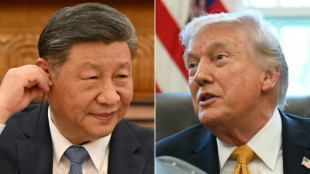 Trump's Mideast muddle could play into Xi's hands at planned summit

 Japan ski paradise faces strains of global acclaim

 Kane credits Kompany's Bayern 'evolution' as treble beckons

 Weakened WTO set for high-level meet under cloud of Mideast war

 Troubled Spurs face Forest showdown, Chelsea need top-four surge

 From bats to bonds: Uganda's 'cricket grannies'

 'The Bachelorette' canned after star's violent video emerges

 Behind the BTS comeback, the dark side of K-pop

 Three charged with sneaking Nvidia AI chips from US into China

 Italy, Germany and France offer help with Hormuz only after ceasefire

 'Blackmail': EU leaders round on Orban for stalling Ukraine loan

 James ties NBA record for most regular-season games played

 InterContinental Hotels Group PLC Announces Transaction in Own Shares - March 20

 Carrick uncertain if Man Utd defender De Ligt will return this season

 Japan PM placates Trump on Iran, but faces Pearl Harbor surprise

 The Iran war and the cost of killing 'bad guys'

 Forest beat Midtjylland on penalties to reach Europa League quarters

 Salvadoran anti-corruption lawyer jailed to 'silence her', husband says

 Yazidi woman tells French court of rape, slavery and escape from IS

 Megan Jones to captain England in Women's Six Nations

 MLS reveals shortened 2027 campaign details

Potential Schedule III Status Could Improve Legal Clarity for Patients Traveling from Colombia to the United States with Prescribed Medical Cannabis
CALI, COLOMBIA / ACCESS Newswire / December 22, 2025 / Sannabis S.A.S., a federally licensed and regulated medical cannabis operator in Colombia, today issued commentary on the ongoing U.S. federal process to reschedule marijuana under the Controlled Substances Act ("CSA") and the potential legal, policy, and international trade implications such a change could have for medical cannabis patients and compliant pharmaceutical suppliers.
The discussion follows recent actions by U.S. President Donald J. Trump to advance rulemaking that would reclassify marijuana from Schedule I to Schedule III, a category reserved for substances recognized as having accepted medical use and available by prescription under regulated conditions.
U.S. Federal Legal Context
Marijuana is currently classified as a Schedule I controlled substance under U.S. federal law, meaning it is deemed to have no accepted medical use at the federal level. In 2024, the U.S. Department of Justice initiated formal rulemaking to reclassify marijuana to Schedule III.
As of the date of this release, rescheduling has not been finalized, and marijuana remains subject to Schedule I restrictions. Any legal effects would only occur following completion of the administrative rulemaking process and publication of a final rule.
If finalized, a Schedule III designation would represent a material shift in U.S. drug policy by:
Acknowledging accepted medical use under federal law
Placing cannabis within the same statutory framework as other prescription medicines
Subjecting cannabis to FDA, DEA, and U.S. Customs and Border Protection oversight rather than outright prohibition
Importantly, rescheduling alone would not automatically legalize cannabis or permit importation into the United States. However, it could establish the legal foundation upon which future regulatory pathways-such as prescription recognition, FDA approval processes, and controlled import mechanisms-could be developed.
Colombian Medical Cannabis Law and International Alignment
Colombia maintains one of the most structured and federally regulated medical cannabis frameworks in the world. Under Colombian law:
Medical cannabis may only be prescribed by licensed physicians
Products must be manufactured and dispensed through authorized pharmacies
All products are regulated by INVIMA, Colombia's national food and drug authority, which applies pharmaceutical-grade manufacturing, labeling, and safety standards
Colombia is also a signatory to international drug control treaties and has positioned its medical cannabis sector to comply with global pharmaceutical and export norms.
Potential Implications for Patients and Cross-Border Trade
Should marijuana be rescheduled to Schedule III in the United States - and should U.S. agencies later adopt implementing rules addressing prescription recognition, importation, or patient travel - patients holding valid medical prescriptions issued by licensed Colombian physicians could potentially benefit from greater legal clarity when traveling internationally, subject to U.S. federal, state, and customs requirements.
From a trade perspective, rescheduling could also:
Enable structured, treaty-compliant international medical cannabis commerce
Allow FDA-regulated pathways similar to other Schedule III substances
Support bilateral pharmaceutical trade between compliant jurisdictions
Sannabis' Role in a Regulated Framework
Sannabis S.A.S. operates within Colombia's regulated medical cannabis system, working with licensed physicians and authorized pharmacies that prescribe and dispense medical cannabis to qualified patients in accordance with Colombian law.
The Company believes that any future cross-border medical cannabis framework must be grounded in:
Prescription-based medicine
Pharmaceutical manufacturing standards
Regulatory oversight and traceability
Compliance with international drug control treaties
About Sannabis S.A.S.
Sannabis S.A.S. is a Colombia-based medical cannabis company operating under federal licenses and regulatory oversight. The company focuses on physician-prescribed, pharmacy-dispensed medical cannabis products manufactured to pharmaceutical-grade standards.
Sannabis S.A.S. is in the process of being acquired by Sannabis, Inc. (OTC:USPS), a U.S. publicly traded company. Upon completion of the proposed transaction, the combined organization intends to advance regulated international medical cannabis initiatives while maintaining strict compliance with Colombian, U.S., and international laws. For more information visit www.Sannabis.co.
Why This Matters
As U.S. federal cannabis policy evolves, Colombia's existing medical cannabis framework offers a real-world reference point for how prescription-based cannabis systems already function under pharmaceutical regulation. Journalists covering healthcare policy, drug law reform, international trade, and emerging markets may find this cross-border perspective increasingly relevant.
Journalists: Please see the attached Media Briefing for legal analysis, regulatory comparisons, executive commentary, and trade-policy context.
Media Contact
Media Relations
Sannabis S.A.S.
John Campo, co-founder
+57-318-657-0918 (Office/WhatsApp)
Email: [email protected]
Website: www.Sannabis.co
Forward-Looking Statements
This press release contains forward-looking statements within the meaning of the Private Securities Litigation Reform Act of 1995 and other applicable securities laws. Forward-looking statements are based on current expectations and assumptions and involve risks and uncertainties that could cause actual results to differ materially. These include, but are not limited to, the completion of the proposed acquisition of Sannabis S.A.S. by Sannabis, Inc. (OTC:USPS), the outcome of U.S. marijuana rescheduling, future regulatory developments, and international trade considerations. Readers are cautioned not to place undue reliance on these forward-looking statements, which speak only as of the date made.

Sannabis S.A.S. Media
Briefing: U.S. Marijuana Rescheduling & International
Medical Cannabis
Press Release Subject
As the U.S. moves closer to potentially rescheduling marijuana to Schedule III, a little-examined question is emerging: how would federal recognition of medical cannabis affect international patient travel and pharmaceutical trade?
Colombia already operates a federally regulated medical cannabis system where products are prescribed by licensed physicians, dispensed by authorized pharmacies, and manufactured under pharmaceutical-grade standards. Sannabis S.A.S., a Colombian medical cannabis operator soon to be acquired by U.S.-listed Sannabis, Inc. (OTC:USPS), is highlighting how U.S. rescheduling-if finalized-could lay the legal foundation for future cross-border medical recognition, patient mobility, and treaty-compliant trade, offering a real-world case study at the intersection of healthcare policy, international law, and emerging markets.
Press Release Sub-Headline
Potential Schedule III Status Could Improve Legal Clarity for Patients Traveling from Colombia to the United States with Prescribed Medical Cannabis
Media Pull Quotes
"Rescheduling is not legalization-it is the legal recognition of cannabis as regulated medicine."
"Schedule III could allow cannabis to enter global pharmaceutical and trade frameworks for the first time."
Sannabis S.A.S. Commentary - Financial Media
"A Schedule III classification would represent a fundamental shift in how cannabis is treated under U.S. federal law," said John Campo, Sannabis S.A.S. co-founder. "It would not eliminate regulation, but rather subject cannabis to the same FDA and DEA oversight that governs other prescription medicines, creating the possibility of legitimate international medical trade."
Sannabis S.A.S. Commentary - Policy & Legal Media
"Rescheduling marijuana is about regulatory alignment, not deregulation," said Juan Pablo Guzman, Co-Founder of Sannabis S.A.S. "Colombia already operates a physician-prescribed, pharmacy-dispensed medical cannabis system regulated at the federal level. If the U.S. completes rescheduling and later adopts implementing rules, regulators would have a foundation for treaty-compliant patient access and trade oversight."
Legal Q&A; for Journalists
Has marijuana been rescheduled?
No. Marijuana remains Schedule I under U.S. federal law. A proposed rule to move it to Schedule III is still pending.
What would Schedule III mean?
It would acknowledge accepted medical use and place cannabis within a prescription-drug regulatory framework overseen by federal agencies.
Would importation be legal?
Not automatically. Importation would still require FDA, DEA, and U.S. Customs authorization through future rulemaking.
Why Colombia?
Colombia already regulates medical cannabis as a prescription pharmaceutical under national law.
Regulatory Comparison: United States vs. Colombia
United States
(Federal) Schedule I (pending rescheduling); no federal medical recognition; importation prohibited except for limited research purposes.
Colombia
Federally legal medical cannabis; licensed physicians prescribe; authorized pharmacies dispense; pharmaceutical-grade manufacturing regulated by INVIMA; exports permitted under treaty compliance.
Trade Policy Perspective
Marijuana rescheduling is not legalization. It is a structural policy shift that could integrate cannabis into international pharmaceutical trade systems. By recognizing accepted medical use, the U.S. would gain the ability to regulate cannabis using existing FDA and DEA frameworks, bringing it into alignment with countries such as Colombia that already regulate cannabis as medicine.
Safe Harbor / Forward-Looking Statements
This media briefing contains forward-looking statements within the meaning of the Private Securities Litigation Reform Act of 1995. These statements include, but are not limited to, statements regarding potential U.S. federal marijuana rescheduling, future regulatory pathways, international medical cannabis trade, patient travel implications, and related business opportunities. Forward-looking statements are based on current expectations and assumptions and involve risks and uncertainties that could cause actual results to differ materially. There can be no assurance that marijuana will be rescheduled, that implementing regulations will be adopted, or that any regulatory changes will result in commercial opportunities. Readers are cautioned not to place undue reliance on these forward-looking statements, which speak only as of the date made.
SOURCE: Sannabis S.A.S.
View the original press release on ACCESS Newswire
L.Mason--AMWN