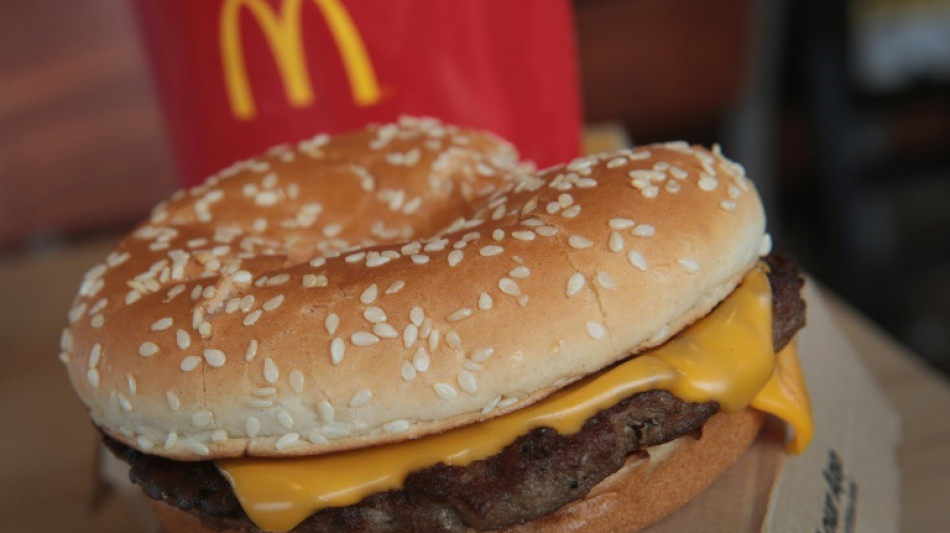
UK starts ban on junk food ads on daytime TV and online / Photo: SCOTT OLSON - GETTY IMAGES NORTH AMERICA/AFP
 Aston Villa Defy History With Rare Victory at Old Trafford

 Crowds Gather at San Francisco Park for Elizabeth Holmes Lookalike Tournament

 Making Your Home Safer for Aging Parents: Accessibility Renovations That Add Value

 iPS Cell Research Accelerates Drug Discovery for ALS and Spinal Cord Injury

 Rene Eyre Revisits Autobiographical Performance 'Say A Little Prayer' in London

 UAE's HCT Holds Record Graduation and Announces Major Training Expansion

 NASA Awards $10B Lunar Contract Framework to SpaceX, Blue Origin

New regulations come into force Monday in Britain banning daytime TV and online adverts for so-called junk foods, in what the government calls a "world-leading action" to tackle childhood obesity.
The ban -- targeting ads for products high in fat, salt or sugar -- is expected to remove up to 7.2 billion calories from children's diets each year, according to the health ministry.
Impacting ads airing before the 9:00pm watershed and anytime online, it will reduce the number of children living with obesity by 20,000 and deliver around £2 billion ($2.7 bln) in health benefits, the ministry added.
The implementation of the measure -- first announced in December 2024 -- follows other recent steps, including an extended sugar tax on pre-packaged items like milkshakes, ready-to-go coffees and sweetened yoghurt drinks.
Local authorities have also been given the power to stop fast food shops setting up outside schools.
The government argues evidence shows advertising influences what and when children eat, shaping preferences from a young age and increasing the risk of obesity and related illnesses.
It notes 22 percent of children starting primary schooling in England -- typically aged around five -- are overweight or obese, rising to more than a third by the time they progress to secondary schools aged 11.
Tooth decay is the leading cause of UK hospital admissions for young children, typically aged five to nine, according to officials.
"By restricting adverts for junk food before 9pm and banning paid adverts online, we can remove excessive exposure to unhealthy foods," health minister Ashley Dalton said in a statement.
He added the move was part of a strategy to make the state-funded National Health Service (NHS) focus on preventing as well as treating sickness, "so people can lead healthier lives".
Katharine Jenner, executive director of the Obesity Health Alliance, said it was "a welcome and long-awaited step towards better protecting children from unhealthy food and drink advertising that can harm their health and wellbeing".
The charity Diabetes UK also welcomed the ads ban, with its chief executive, Colette Marshall, noting that type 2 diabetes is on the rise in young people.
"Obesity is a major risk factor for type 2 diabetes, and the condition can lead to more severe consequences in young people -- leaving them at risk of serious complications like kidney failure and heart disease," she added.
A.Rodriguezv--AMWN

