
Changing Your Dog's Diet May Help the Planet More Than Changing Your Own, Study Finds
 Arsenal's Trossard says Leverkusen win ideal ahead of League Cup final

 Seven-year term sought for Norway princess's son for alleged rapes

 Head of victorious Nepal party hails 'win for the country'

 Israel says killed Iran intel chief, tells military to hunt down officials

 AFCON stripping of Senegal's title a 'disgrace for Africa' say fans

 Fernandez uncertain over Chelsea future after Champions League exit

 Russia slams Oscar-winning anti-Putin documentary

 Celtic keeper Schmeichel fears shoulder injury could end his career

 Deadly strikes across Mideast as Iran vows revenge on slain security chief

 Chinese tourists ditch Japan for third month running

 Chinese visitors to Japan plunge 45.2% in February

 'Special human' Slipper to break Super Rugby appearance record

 Iran to hold funeral for slain security chief as it vows vengeance

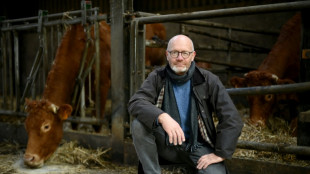 TotalEnergies faces ruling in Belgian farmer climate case

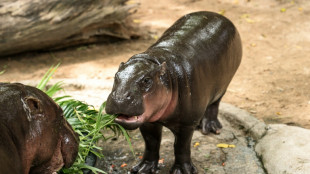 Trespasser caught in viral hippo Moo Deng's Thai zoo pen

 Venezuela stun United States to win World Baseball Classic

 Iran missile fire kills two in central Israel: medics

 'We will wait for each one': Ukrainians greet POWs with tears and cheers

 Trump faces impasse over Iran war

 Former Australian Test wicketkeeper Haddin to coach NSW

 Oscars audience drops, viewing figures show

 Gio Reyna picked for US squad as Pochettino says World Cup roster still 'open'

 SETO Holdings Acquires Preferred Brands USA to Expand National Sales and Brand Management Capabilities

 Sonoma Pharmaceuticals Announces Launch of New Dermatology Product Line under Person & Covey's Aquanil Brand for Sensitive Skin

 1606 Corp. Engages Moody Capital Solutions as Placement Agent

LONDON, UK / ACCESS Newswire / February 10, 2026 / Diets high in meat, eggs, and dairy products incur significant environmental costs. But a new study has revealed that, in many cases, switching your dog to a more sustainable diet may have a bigger impact on the planet and farmed animals than changing your own diet.
The research, published in the journal Animals by veterinary Professor Andrew Knight, found that the average dog consumes around 13 farmed land animals annually within its diet, compared with nine for the average person--a difference of roughly 40%. This gap exists largely because a greater proportion of a typical dog's dietary energy comes from animal-based ingredients--about 34%--compared to around 19% for people.
These figures represent global averages and vary by country. In high-income nations such as the United States, consumption is higher across the board. There, an average person consumes 24 farmed land animals annually, compared with 20 for a dog--a smaller difference of about 20%.
Traditional meat-based pet foods therefore have substantial environmental and animal welfare impacts. However, alternatives based on plants, microbial protein, and cultivated meat are becoming more widely available. Fully plant-based, or vegan, pet foods can now be easily purchased from online retailers in many countries. By early 2026, 14 studies and one systematic review had reported good health outcomes for dogs or cats fed such diets. However, pet diets should be produced by responsible manufacturers and fully supplemented to ensure all necessary nutrients are included.
The potential benefits are substantial. If all pet dogs switched to nutritionally sound vegan diets, six billion land animals could be spared from slaughter each year. Greenhouse gas savings would be 1.5 times the UK's annual emissions, and the food energy conserved could feed 450 million people--the population of the European Union. These calculations are based on 2018 data, and with dog populations growing faster than human populations, the potential benefits are even greater today.
After analysing survey responses from thousands of pet carers, Knight also estimated that at least 150 million dogs and cats could realistically be transitioned to nutritionally sound vegan diets. However, because the analysis assumed only one dog or cat per household, he noted that the true numbers are probably several times higher.
The study evaluated sustainable pet diets using the principles of effective altruism, a philosophy that prioritises issues based on scale, neglect, and solvability, in order to maximise benefits. It found sustainable pet diets to be highly neglected, with only about two full-time researchers worldwide outside pet food companies, and less than one percent of the farmed animal advocacy movement's annual budget devoted to it.
Knight concluded that plant-based pet diets represent a powerful but overlooked way to reduce farmed animal use, improve food security, and address climate and biodiversity challenges. He urged animal and environmental advocates to look beyond a solely human-focused approach to more sustainable diets. "It's ironic", he said, "that the animal advocacy movement has largely overlooked the diets of its own companion animals."
Prof. Andrew Knight
[email protected]
SOURCE: Sustainable Pet Food Foundation
View the original press release on ACCESS Newswire
Ch.Havering--AMWN