US cuts water allowance for some states, Mexico as drought bites / Photo: Patrick T. FALLON - AFP/File
 Anna Miltina Confronted with Racism Allegations on ProSieben Show

 German Auto Giants Face Existential Crisis as China Sales Plummet

 Cause of Death Revealed for 'Ellen' Producer Matthew Wright

 How to Enjoy Luxury Experiences on a Budget

 Pakistan Demands Grant-Based Climate Finance at COP31 to Avoid Debt Trap

 E Pellicci Pop-Up at Selfridges Brings Back Nostalgic School Cake

 Coronation Street's Debbie Webster Steps Down as Dementia Storyline Intensifies
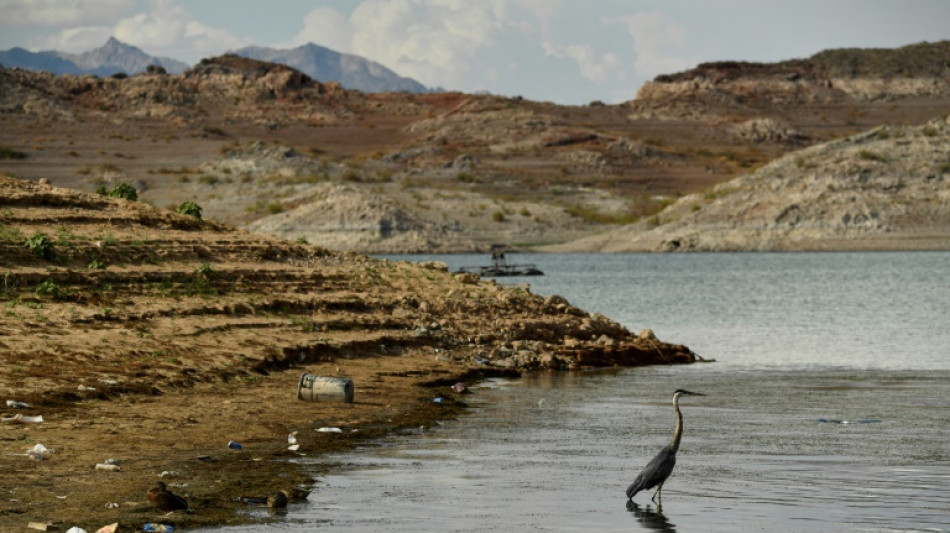
Some US states and Mexico must cut their water usage to avoid "catastrophic collapse" of the Colorado River, Washington officials said Tuesday, as a historic drought bites.
More than two decades of well below average rainfall have left the river -- the lifeblood of the western United States -- at critical levels, as human-caused climate change worsens the natural drought cycle.
Despite years of warnings, states that depend on the river have not managed to reduce their demands enough, and on Tuesday, the federal government said it was imposing cuts.
"In order to avoid a catastrophic collapse of the Colorado River System and a future of uncertainty and conflict, water use in the Basin must be reduced," said Tanya Trujillo, Assistant Secretary for Water and Science at the Interior Department.
Arizona's allocation from the river will fall by 21 percent in 2023, while Nevada will get eight percent less. Mexico's allotment will drop by seven percent.
California, the biggest user of the river's water and the most populous of the western states, will not be affected next year.
The Colorado River rises in the Rocky Mountains and snakes its way through Colorado, Utah, Arizona, Nevada, California and northern Mexico, where it empties into the Gulf of California.
It is fed chiefly by snowpack at high altitudes, which melts slowly throughout the warmer months.
But reduced precipitation and the higher temperatures caused by humanity's unchecked burning of fossil fuels means less snow is falling, and what snow exists, is melting faster.
As a consequence, there is not as much water in the river that supplies tens of millions of people and countless acres of farmland.
Deputy Secretary of the Interior, Tommy Beaudreau, said the department -- the part of government with responsibility for water resources -- was "using every resource available to conserve water and ensure that irrigators, Tribes and adjoining communities receive adequate assistance."
"The worsening drought crisis impacting the Colorado River Basin is driven by the effects of climate change, including extreme heat and low precipitation," he said.
"In turn, severe drought conditions exacerbate wildfire risk and ecosystems disruption, increasing the stress on communities and our landscapes."
The western United States is suffering under a drought that is now in its 23rd year, the worst episode in more than 1,000 years.
That drought has left swathes of the country dry and vulnerable to hotter, faster and more destructive wildfires.
Communities served by the Colorado River, including Los Angeles, have been ordered to save water, with unpopular restrictions in place on outdoor watering.
J.Oliveira--AMWN