
Japan takes 'half step' toward fixing slow retrial system / Photo: STR - JIJI Press/AFP/File
 Walter Koenig, who played original Chekov on 'Star Trek,' dies at 90

 Netanyahu, rivals trade attacks over Iran as clock counts down to Israel vote

 Townsend urges Scotland to use Nations Championship as World Cup springboard

 Microsoft offers voluntary exit packages to 60,000 staff

 S.Africa ambassador calls for talks with US over 'tense' ties

 'Smells of freedom': Serbians hopeful after landmark election

 South Africa select 'enforcer' Coetzee for Australia decider

 Botanists comb Gabon's rich rainforests with nature on the line

 New levy on non-EU parcels kicks in Sunday

 Stocks climb ahead of tech earnings, central bank calls

 Part of London's Oxford Street pedestrianised 'forever'

 Canadian youth seek climate action in landmark trial

 Trump blasts Norway over Nobel Peace Prize snub

 Japan PM vows swift response to wave of cyberattacks

 Stocks mostly rise before tech earnings, central bank calls

 France's Macron to visit Marseille after protest violence

 German union slams Audi boss's appearance at Trump rally

 UK set for 'limited' budget giveaways as borrowing costs surge

 Anthropic's AI model accessed US voter data: Axios

 Malaysia's Johor reopens schools as haze eases

 Carragher says Fernandes benching was intended as public punishment

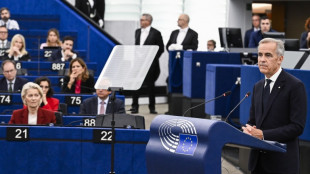 Canada-EU summit seeks deepened alliance as US ties fray

 Senegal to host Youth Games, Africa's first ever Olympics

 ITV drama Adultery examines temptation, class and family consequences

 New levy on non-EU parcels kicks in November 1

Japanese policymakers have approved a proposal to reduce the power of prosecutors to thwart a process for exonerating potential victims of wrongful convictions, following an outcry over the country's retrial system.
Often dubbed the "unopenable door", Japan's retrial process shaped a century ago is often so time-consuming that decades can slip by before someone is granted a shot at a legal do-over.
A case in point is 90-year-old Iwao Hakamada, formerly the world's longest-serving death-row prisoner, whose case took over 40 years to be reopened.
The retrial of his quadruple murder case led to his conviction being quashed in 2024, but after decades spent in solitary confinement the ex-boxer now lives in "a world of fantasy", according to his supporters.
Hakamada's ordeal has reignited scrutiny of the arduous nature of Japan's retrial process, pressuring the justice ministry to commit to reform.
On Wednesday, ruling Liberal Democratic Party lawmakers approved the ministry's reform plan that included the limitation of prosecutorial appeals against court decisions to retry those who may have been wrongfully incarcerated.
But while in principle prohibiting prosecutors from challenging retrial orders, the ministry's plan still leaves room for appeals if "sufficient grounds" exist.
This has upset the LDP, which had spent weeks wrangling with the ministry to push for prosecutors to be stripped outright of their power to appeal.
It was a "gut-wrenching" decision for the party to settle for this compromise, LDP lawmaker Masahiko Shibayama told reporters Wednesday.
But it was still better than no progress at all, he said, calling it "half a step forward".
The justice ministry oversees the Public Prosecutor's Office.
With the LDP's approval, the proposal is now set to be greenlit by the Cabinet of Prime Minister Sanae Takaichi, reportedly as early as Friday, before being sent to parliament as a bill for deliberation.
Prosecutorial appeals are not the only factor behind snail-paced retrials, but they play a big role.
In Hakamada's case, a court's original retrial order took nine years to be executed due to repeated pushbacks by prosecutors.
In an earlier interview with AFP, Hiroaki Murayama -- a former district court judge who issued that landmark retrial order for Hakamada in 2014 -- said he partly blames himself for failing to write a "more airtight ruling".
But judges can also slow down the process, sometimes sitting on retrial applications for years, generally seeing them as lower priority than ongoing criminal cases, he said.
A.Rodriguezv--AMWN