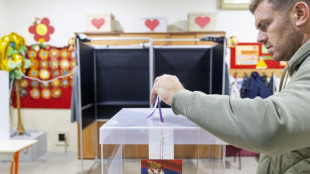
First attack on Arab nuclear site sends warning to Gulf, US / Photo: - - Barakah Nuclear Power Plant/AFP
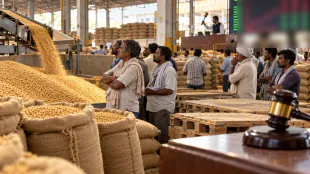 India trims weekly wheat auction volume despite strong miller demand

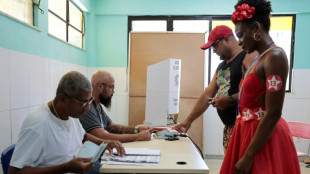 Brazil braces for result of knife-edge election after voting chaos

 Bleems adds UFFF toys and collectibles through Kuwait partnership

 Real Madrid beat Barcelona in La Liga Clasico

 Antonelli wins US Grand Prix to close on world title

 Israel plans West Bank crossing shutdown for election day

 Falcons hand 49ers first defeat of NFL season

 Kuwait regulators broaden beneficial-owner data cooperation
 Succession pressures put Gulf family companies at a crossroads
 IMF sees regional economy shrinking 1.3% in 2026 amid Iran war

 Brazil votes in tight election as Lula slams polling obstacles

 'I am here': Opposition leader Machado returns to Venezuela

 Villain intrigue: 'Clayface', Holmes doc lead N. America box office
 Bayern beat Freiburg to reclaim top spot after Kompany illness

 Nigeria widens hunt for possible Ebola cases
 Liverpool star Isak back to his best says Iraola

 Lula supporters cross fingers in Rio, a Bolsonaro bastion
 Flights resume at Riyadh airport as Houthis attack Saudi Arabia

 High-flying Betis held at Celta Vigo
 Shadab ton stuns England as Pakistan reach tri-series final

 'With you': Opposition leader Machado returns to Venezuela

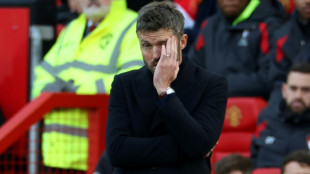 Carrick on the brink as Man Utd misery mounts, Isak stars for Liverpool

 Monaco hold Lille as both move to top of Ligue 1

 Isak extends hot streak as Liverpool sink Brighton

 Brazil chooses between Lula and Bolsonaro in nail-biter vote

The first attack targeting an Arab nuclear site has sent a symbolic warning to the United Arab Emirates and its allies, even as Iran and the US remain in negotiations to end the Middle East war, analysts say.
An unclaimed drone struck an electrical generator on Sunday near the Arab world's first nuclear power plant in Barakah in the emirate of Abu Dhabi, triggering a fire but causing no injuries nor radiation leak.
The UAE has yet to officially blame anyone for the attack, in which drones crossed its western border, but in the aftermath a top Emirati official pointed the finger at Iran or one of its proxies in the region.
The limited attack appeared to leave room for de-escalation, while sending a message to Gulf nations that the region remains vulnerable despite the ongoing US-Iran ceasefire and peace talks, in which Iran is using economic bargaining tools.
"This is highly significant symbolically, even if the physical damage appears limited," according to Andreas Krieg, a security expert at King's College London, who described it as "both a major escalation and a warning shot".
The Arab world's only nuclear plant, located near the UAE's western border with Saudi Arabia, is the country's largest source of electricity and produces around a quarter of national power.
"It was clearly designed to show that even the UAE's most sensitive and internationally protected infrastructure can be reached. That is the message," said Krieg.
"The attacker was signalling vulnerability without necessarily crossing the threshold into mass casualty or nuclear safety crisis."
- 'Psychological' threshold -
Iran has attacked the UAE and other Gulf nations since the US and Israel launched strikes on the country on February 28, particularly targeting energy and economic infrastructure.
But the nuclear site had been off limits until Sunday.
"Targeting or reaching the perimeter of a nuclear facility in the Gulf crosses a psychological and strategic threshold," said Karim Bitar, a lecturer at Sciences Po in Paris.
"Nuclear infrastructure has generally been treated as a red line in the region. The message is: no strategic infrastructure in the Gulf is completely immune."
The attack also came as relations hit an all-time low between Abu Dhabi and Tehran as Iran alleged that the UAE had targeted it during the war, an accusation the rich Gulf state has denied.
The UAE has since doubled down on its alliances with Iran's foes, the United States and Israel.
If the attack was confirmed to be from Iran or its allied groups like the Houthis in Yemen or Shia groups in Iraq, Bitar said Tehran was likely signalling its "discontent with the UAE's cooperation with Israel and the US".
Tehran could also be using it as a bargaining tool to pressure the wider Gulf region and its US ally, as diplomacy behind the scenes continues.
US President Donald Trump is also threatening renewed attacks and has said that "there won't be anything left" of Iran unless it agrees to a deal.
It suggests that "if the US were to escalate and attack civilian infrastructure or important critical infrastructure in Iran, Iran would do the same to the UAE and across the Gulf," said Dania Thafer, director of the Gulf International Forum research institute
- 'Room for de-escalation' -
The drone attack is also likely to harden the stance of the UAE, which has grown increasingly hawkish since the war began.
"Strategically, this will harden Abu Dhabi's view that passive defence is not enough," Krieg said.
"But the UAE will still be cautious. It wants to avoid being dragged into open escalation unless it has strong external backing."
The raid was the latest in a string of unclaimed attacks on the UAE since an April 8 ceasefire took effect in the war.
The site had been in Iran's crosshairs, with domestic media publishing a list of power plants as potential targets that included Barakah.
UAE presidential adviser Anwar Gargash appeared to refer to Iran and its proxies in the Middle East, saying the attack was carried out "by the principal perpetrator or through one of its agents".
The UAE has blamed Iran and Iraq-based groups which Tehran backs for attacks across the Gulf, but it has so far refrained from officially accusing anyone for Sunday's incident.
"Even when all suspicions point toward Iran or Iran-aligned groups, governments may avoid immediate public attribution because they want to preserve room for de-escalation and avoid being trapped into a military response," Bitar said.
Tehran's Houthi allies in Yemen have not taken aim at the Gulf during the war but they have attacked the UAE in the past.
If the Houthis are to blame, it would be "a major turn" and a "warning shot" of further escalation should attacks on Iran resume, said Thafer.
P.Silva--AMWN