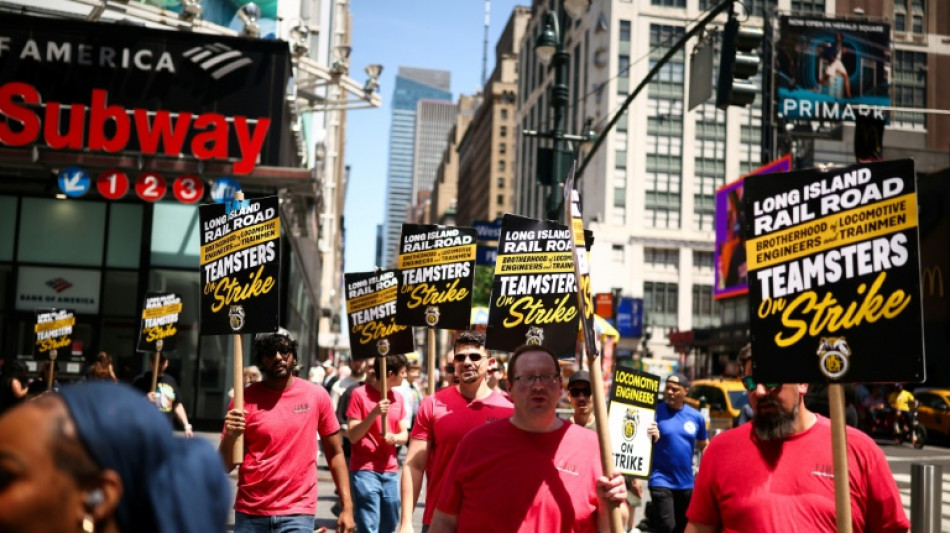
Top UN court says right to strike protected in key labour treaty / Photo: CHARLY TRIBALLEAU - AFP
 'Call of Duty' North Korea invasion edition tops sales charts in South
 Musk accuses Ukraine of violating Starlink's terms of service
 Fed expected to hold rates steady days ahead of US midterms

 More Lula, or back to the Bolsonaros? Brazil votes in cliffhanger
 Jorge Martin out of Australian MotoGP with fracture: team
 Antonelli storms to US Grand Prix pole on weekend he can take title

 Apologetic Alvarez fires Atletico to win against Deportivo

 Lens beat PFC in Ligue 1 matchday impacted by social unrest
 Valkyries hit back against Dream to level WNBA Finals
 'Fighting for our rights': Paris protesters determined to march on
 Clashes break out in Paris, other French cities amid fresh protests
 Spurs seal rare win at Chelsea as Palmer sees red

 Nearly 1,000 arrested in French protests marred by 'elevated' violence: minister
 France extends detention of suspected racist shooter

 Andrade and Nemour star as Biles cheers at world gymnastics champs
 Nigeria's Tinubu defends record as economy bites ahead of election
 'Guiding star' Fuellkrug bags Bremen brace, Leipzig win
 Man City's perfect start ended by Aston Villa, Arsenal go joint-top

 Arsenal sink Everton to join Man City at Premier League summit
 France protests: Latest developments
 French ice dancers Cizeron and Fournier make golden start to season
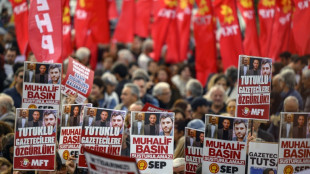 Thousands protest crackdown on media in Turkey
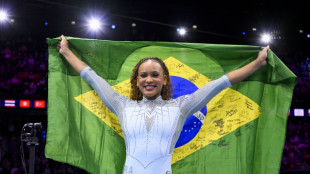 Brazil's Andrade returns to take vault gold at worlds
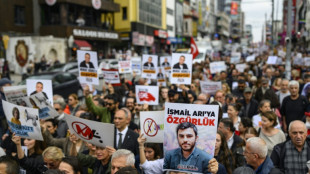
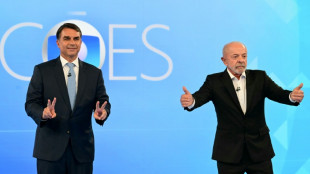 Lula, Bolsonaro hold final rallies ahead of Brazil election

 Ukraine has 'stable connection' to Starlink: govt

The top United Nations court ruled Thursday that the right to strike was protected in a key treaty of the International Labour Organisation (ILO), a decision that could have profound implications for global labour relations.
The International Court of Justice had been asked to deliver a so-called advisory opinion on whether an ILO treaty from 1948, known as Convention 87, implicitly enshrined workers' right to strike.
ICJ president Yuji Iwasawa said the court was "of the opinion that the right to strike of workers and their organisations is protected" under that convention.
However, judges said their opinion, which is not binding, should not be understood as laying out any other ground rules for strike action.
The conclusion "does not entail any determination on the precise content, scope or conditions for the exercise of that right", said Iwasawa.
ILO Convention 87 is an agreement between unions and employers including the right "in full freedom, to organise their administration and activities".
- Heated legal battle -
Unions at the ILO had argued that this by extension enshrined the right to industrial action, but employers disagreed, so they took the fight to the ICJ.
Behind the dry legal interpretation of a decades-old treaty lay a heated battle between unions and employer groups at the ILO, which played out in hearings in October 2025.
"This case is about more than legal abstractions," Harold Koh, representing the International Trade Union Confederation (ITUC), told the judges.
"It will affect the real rights of tens of millions of working people around the world," he added.
Koh warned that if the ICJ ruled the right to strike was not inherent in the Convention, companies and governments could start to unpick labour deals around the world.
"National employer groups would contest the right to strike country by country, focusing first on nations with compliant courts, weak civil societies and ineffective media," said Koh.
- 'Inflammatory and alarmist' -
On the other side of the argument, Roberto Suarez Santos, from the International Organisation of Employers, said the 1948 convention "neither explicitly nor implicitly covers the right to strike."
Santos noted that the rules surrounding industrial action varied widely from country to country -- whether emergency services were excluded, for example.
These differences "cannot be resolved by simply reading an abstract right to strike into Convention No.87 and trying to impose it on employers, workers and governments", said Santos.
Rita Yip, also representing the employers' groups, dismissed the union arguments as "inflammatory and alarmist".
The right to strike is still protected in national laws, argued Yip, and does not need to be enshrined in "boilerplate norms, imposed at the highest level".
Urging the court to answer "no" to the question before it, Yip said the case "goes to the credibility of the entire international labour system".
Both sides at least agreed on the importance of the case for labour relations.
"At first blush, this case may not seem momentous," said Koh from the trade union confederation.
"But your decision here will affect every worker in the world," he told the judges.
L.Harper--AMWN