
Feared global hunger crisis 'coming to pass' as Mideast war lingers: UN / Photo: Rian COPE - AFP
 South African rugby player's death due to 'aortic dissection'
 France's Macron lands in Riyadh on surprise 'solidarity' visit

 Around the world, far right blames immigrants for French protests

 South Africa eases fuel pain as growth slows

 Woody Allen shoots new movie in Madrid

 Nvidia's Huang urges Europe to go all in on AI

 Five things to know as French bond yield tops 5%

 'Complete threat' Ngumoha excites Liverpool captain Van Dijk

 'The fishing's terrible': Deforestation devastates C.Africa river

 France's tourism sector worried about impact of riots

 Macron takes aim at Trump for using France riots for election gain

 North Korea says 'new firepower units' in place, loudspeakers to return

 Indonesia leader hits out at market downgrade warning

 Macron slams 'stupid' comments based on AI videos by leaders on France riots

 'Public health crisis': Indonesians seek fire relief from state

 British Museum sells second set of Bayeux exhibition tickets
 Australian lawmaker loses both legs after 'targeted' attack

 UK approves drilling in controversial Jackdaw gas field

 Carrefour shares plunge after profit warning on French protests

 North Korea says 'new firepower units' in place after border threat

 Australia lawmaker loses both legs after 'targeted' attack

 Director Nick Paley channels childhood fears in new thriller 'Phony'

 'Daily struggle': Cubans dig wells in search of water

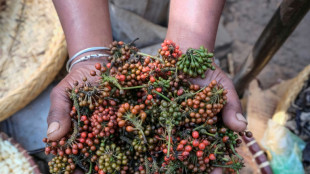 Prized wild pepper at risk in Madagascar's shrinking forests

 World falling 'dangerously short' on climate action: UN chief

"Pessimistic" predictions that the Middle East war could push tens of millions more people into acute hunger if drawn out are being proven right, the United Nations said Friday.
A few weeks after the US-Israeli strikes against Iran on February 28 sparked the conflict and plunged world energy markets into turmoil, the UN's World Food Programme warned that soaring oil prices were devastating global food security.
If oil prices were to remain around $100 per barrel until the end of June, an estimated 45 million more people worldwide would face acute hunger, the WFP warned in March.
They would come in addition to the nearly 320 million people considered acutely food insecure at the start of the year, it said.
Weeks of complicated talks marked by sharp rhetoric and flare-ups of violence have not managed to reach a deal to end the war and reopen the Strait of Hormuz, which is critical to oil supplies.
And now, nearly three months into the conflict, "the negative scenario is unfortunately materialising", Jean-Martin Bauer, the director of WFP's food and nutrition analysis service, told AFP.
"The closure of Hormuz is translating into increased hunger," he said, pointing to soaring costs for staples like rice and wheat.
"Unfortunately, the pessimistic projections that were made earlier this year are coming to pass, and we need to act."
- Millions could lose assistance -
According to the WFP's analysis, "the crisis is generating significant spillovers", which were being felt far beyond the Middle East, "particularly through fuel, food price and income shocks and trade disruptions".
"As these factors interact with pre-existing vulnerabilities they quickly translate into visible impacts on food security and livelihoods," it said.
The analysis looked at the situations in several countries with different levels of exposure to the crisis, including Somalia, where six million people are currently considered acutely food insecure.
It projected that 2.5 million more people would be unable to afford basic foodstuffs by the end of the year.
And nearly 60 percent of households in the unstable Horn of Africa nation would be unable to afford essential needs, up from 47 percent in 2025, the agency said.
"What's shaping up is the return of a global cost of living crisis of the likes that we experienced in 2022," after the start of Russia's full-scale invasion of Ukraine, Bauer warned.
But this time, the humanitarian system that jumped into action back then has been hard-hit by dramatic cuts to global aid funding, especially since US President Donald Trump's return to the White House.
In 2022, "humanitarian programmes were better funded. Humanitarians were in places where they are no longer", Bauer said.
On top of that, logistical challenges and price inflation linked to the Middle East war have put a strain on aid efforts worldwide.
"The humanitarian system faces a double squeeze: rising needs and rising delivery costs, implying coverage gaps," the WFP analysis warned.
The agency estimated that it would now serve 1.5 million fewer people in 2026 than originally planned.
It cautioned that if the conflict lasted six months, more than nine million people could lose assistance.
- 'Running out of food' -
For instance, the WFP risks basically "running out of food" to distribute in Somalia in a few months, Bauer said.
Speaking to reporters in Geneva on Friday, he said the agency was bracing for a "pipeline break" next month, meaning no food will be available for distribution.
"The ones who will experience the impact of this are going to be very vulnerable children under the age of five," he cautioned, also pointing out that there was already a risk of famine in one Somali district.
"This is a very serious situation that requires immediate attention," he said.
With no clear end in sight to the Middle East war, Bauer acknowledged that the global food security situation could worsen further.
And the impact of that war "is not the only cloud on the horizon", he said, pointing in particular to the high risk of a warming El Nino supercharging climate instability.
That could "also disrupt food markets and cause additional need and additional stress going into 2027", he warned.
M.A.Colin--AMWN