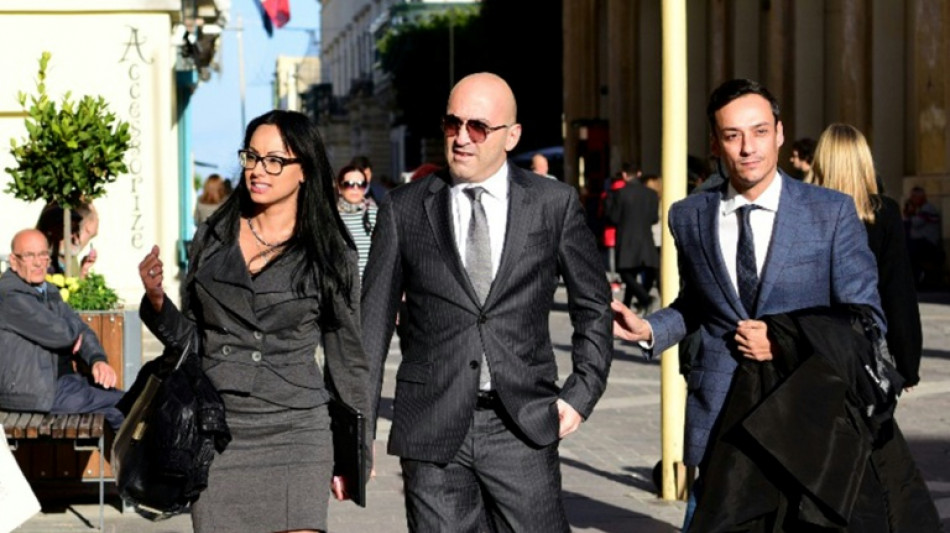
Trial begins for suspected mastermind of Malta journalist killing / Photo: STRINGER - AFP/File
 Argentine protesters, police clash at demo over university funding
 US stocks end higher as AI shares stabilize
 School roof collapse kills 32 children, teacher in Pakistan
 Lyon down Palace in Europa League, Sunderland leave it late

 UniCredit says receives ECB green light for Commerzbank takeover

 New York City pension fund asks Anthropic to delay IPO

 Venezuela's Maduro denies US torture charges as 'false accusations'

 Somalia sets May presidential election despite insecurity
 Chelsea's Caicedo eager to be more of a leader
 Rahm reaches separation deal with LIV in bankruptcy court
 UN chief urges nations to end 'war on nature'
 Newcastle boss Jaissle says Fernandez-Pardo just needs a goal

 Infantino offers apology but 'no answers' at FIFA meeting over World Cup plan
 Don't exclude Turkey from 'Made in Europe' plan: minister to AFP

 French duo Justice to score 'GTA VI': game maker
 El Nino a 'terrifying' threat to coral reefs: UN biodiversity expert
 Barcola must get used to Liverpool highs and lows, says Iraola

 Versus Trade Wins Best ECN/STP Broker APAC 2026, Marking Third UF Awards Recognition

 Three dead as Istanbul sees heaviest rainfall in 80 years

 US producer prices see biggest jump since 2022 in added challenge to Trump
 Swiatek avoids seed exodus to breeze into Wuhan last eight
 PM condemns 'chaos' as violent protests grip Albania

 'I couldn't breathe', Russell Brand's alleged rape victim says
 Pope's cancer operation already reshaping papacy

 Zverev cruises past De Minaur to reach Shanghai semi-finals
A Maltese tycoon went on trial on Wednesday accused of ordering the murder of a hard-hitting investigative journalist that rocked the island nation, brought down a government and drew global condemnation.
Suspect Yorgen Fenech is charged with orchestrating the assassination of Daphne Caruana Galizia, 53, a prominent public figure and vocal critic who was killed by a bomb placed in her car near her home.
"Nine years after my mother's murder, the man accused of commissioning it stands trial," the journalist's son, Paul Caruana Galizia, wrote on social media.
A lawyer for the family, Jason Azzopardi, confirmed to AFP that the trial had begun and that Fenech was in court.
Caruana Galizia had exposed corruption at the highest level in the country, shining a spotlight on murky links between Malta's business and political elites.
The death of the popular journalist and blogger described as a "one-woman WikiLeaks" sparked outrage around the world and put Malta, the European Union's smallest member state, in the spotlight over its apparent rule-of-law failings.
Her killing also led to a political crisis, and the resignation of then-premier Joseph Muscat in January 2020 after widespread anger and mass protests over his perceived efforts to protect friends and allies from the investigation.
A two-year public inquiry published in July 2021 concluded that the state should "shoulder responsibility" for the murder due to the "atmosphere of impunity" the government had created.
Fenech, a tycoon whose business interests spanned the energy and tourism sectors, was arrested on his yacht in 2019 as he tried to sail out of Malta after a middleman in the murder was offered a pardon to identify those involved.
Five people have been convicted so far in relation to the murder for supplying the explosives and carrying out the killing.
- Justice served? -
Press freedom watchdog Reporters Without Borders, which had a representative in court, wrote on social media that the trial "revives hope that justice will finally be served for a crime perpetrated nearly nine years ago".
Last September, a court rejected a bid by Fenech to void the statements he gave to police directly after his 2019 arrest. Fenech had argued he had made them under the influence of cocaine.
According to the prosecutors' indictment of Fenech cited by the Times of Malta, the businessman had ordered the journalist to be killed because she was on the brink of publishing a compromising article about his uncle.
In June 2025, Robert Agius and Jamie Vella were convicted of supplying the bomb that killed Caruana Galizia and sentenced to life in prison.
The three men who carried out the murder -- brothers George and Alfred Degiorgio together with Vince Muscat -- are serving prison sentences after being found guilty of their role.
The 437-page report written by a panel of three judges in 2021 found that the state had shirked its duty to protect Caruana Galizia and subjected her to personal attacks and verbal abuse from politicians.
The atmosphere created a "favourable climate" for her assassination, and there was "convincing evidence" that her killers knew they would be protected by "persons in the highest state positions".
J.Williams--AMWN