
Cerebral Palsy Guide Warns U.S. Still Lacks a National CP Screening Protocol
 Quarantine, unease and rumours: Russian city grapples with plague scare

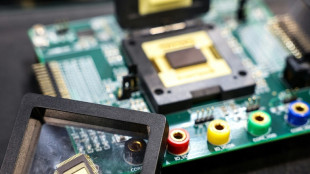 Taiwan says exports hit record in September on AI demand

 Marc Marquez vows to 'attack' Martin's lead at Indonesian MotoGP

 Diplomats, schools in Saudi take safety measures after blasts heard: sources to AFP

 In Beijing, EU trade envoy says deficit with China 'unsustainable'

 Sri Lanka's de Silva quits as Test captain

 Alcaraz feeling 'mentally fresh' ahead of Shanghai return

 Israel drastically reduces British diplomatic presence in Jerusalem

 Stocks fall further as oil surge fans fresh inflation worries

 North Korea demands South show 'utmost respect' to restore relations

 Saudi says three dead in airport attacks claimed by Houthis

 'Mad dream': New showcase for African film opens in London

 All Blacks coach Rennie says Wallabies exit 'part of the game'

 The growing protests against India's poll body - and PM Modi

 Stocks fall further as oil spike fans fresh inflation worries

 Bad COP, worse COP? EU tempers hopes for UN climate summit

 Rookie Henry named in Wallabies midfield to face All Blacks

 Housing crisis set to dominate Spain's snap election

 Gas, health care, utilities: high costs squeeze US midterm voters
 New Zealand Rugby seeks injunction over PNG Chiefs name

 Samsung expects 780% quarterly operating profit jump on AI boom

 Battery X Metals Announces Corporate Awareness Agreement

 Silver Range Resources Ltd. Options Alamo and Sand Springs to Resilience Minerals Limited

 As species decline, green turtles offer glimmer of hope

 Brothers Scott and Beauden Barrett named to start for All Blacks

Despite major advances in neonatal care, the United States still has no universal screening protocol for cerebral palsy, delaying diagnosis for many infants. Cerebral Palsy Guide examines the screening gap, the cost to families, and the growing push for earlier detection.
BOSTON, MA / ACCESS Newswire / July 22, 2026 / Many infants at risk for cerebral palsy (CP) can be identified before their first birthday. However, the United States still does not require hospitals to screen for CP in a consistent way, even though validated tools can help identify high-risk infants months before an official diagnosis.
Cerebral palsy is the most common motor disability in childhood, according to the Centers for Disease Control and Prevention (CDC). The CDC estimates about 2.4 out of every 1,000 U.S. children aged 8 years have cerebral palsy.
For many families, diagnosis still comes later than it could. The American Academy for Cerebral Palsy and Developmental Medicine notes that cerebral palsy has traditionally been diagnosed between 12 and 24 months of age because there is no laboratory biomarker for the condition. However, international early detection guidelines now support using standardized tools to identify cerebral palsy or high risk of cerebral palsy much earlier.
"Families should not have to wait years for answers when early screening tools already exist," said a representative for Cerebral Palsy Guide. "Earlier detection can help children access therapy sooner and give parents a clearer path forward."
Unlike newborn hearing and metabolic disorder screenings, cerebral palsy screening is not universally required across U.S. hospitals. Some NICUs and high-risk infant follow-up programs use structured early detection protocols. Others do not. As a result, a baby's chance of being screened early may depend on where they are born and whether families know what to ask for.
The tools already exist. The General Movements Assessment (GMA) uses an infant's natural movements to help identify early signs of cerebral palsy risk. The Hammersmith Infant Neurological Examination (HINE) helps clinicians assess neurological function during infancy. The American Academy for Cerebral Palsy and Developmental Medicine states that cerebral palsy, or high risk of cerebral palsy, can now be detected accurately and early using standardized assessment tools.
Hospitals that use these tools are already seeing results. A 2020 study in Pediatrics found that a hospital network using early detection guidelines reduced the average age of cerebral palsy diagnosis from 19.5 months to 9.5 months.
A 2025 quality improvement study in the Journal of Perinatology also found that structured screening helped move diagnosis earlier. After a hospital system implemented the General Movements Assessment and Hammersmith Infant Neurological Examination, the median age at cerebral palsy diagnosis dropped from 18.5 months adjusted age in 2021 to 7.5 months in 2022 and 8.9 months in 2023.
For families, those months can mean earlier therapy, earlier developmental support, and less time waiting for answers. Delayed diagnosis can leave parents watching symptoms of cerebral palsy become more obvious while appointments, referrals, and services take time to catch up.
The push for earlier screening is gaining momentum. The Cerebral Palsy Foundation's Early Detection & Intervention Network is working with NICUs, high-risk infant follow-up programs, and pediatric clinics to expand early detection. The foundation says the network is currently screening more than 50,000 infants each year.
This month, the Cerebral Palsy Foundation is also convening the 2026 Early Cerebral Palsy Health Summit in Baltimore on July 18 and 19. The event will bring together clinicians, researchers, therapists, and advocates focused on moving early detection from research into everyday care.
Federal support is also part of the conversation. In March 2025, Representatives Steve Cohen, Brian Fitzpatrick, and Emanuel Cleaver reintroduced the bipartisan Cerebral Palsy Research Program Authorization Act. The bill would create a cerebral palsy research program through the CDC and authorize $5 million annually from fiscal years 2026 through 2031 for research into prevention, diagnosis, treatment, and the societal costs of cerebral palsy.
Cerebral Palsy Guide encourages parents of infants in NICUs, high-risk follow-up programs, or early developmental care to ask whether their child has been screened using tools such as the GMA or HINE. Families can also ask whether their hospital has a structured early cerebral palsy detection protocol and whether a referral to a high-risk infant follow-up clinic or early intervention program is appropriate.
The science for earlier cerebral palsy detection exists. The challenge now is making sure families can access it, no matter where their child receives care.
Cerebral Palsy Guide will continue to track and report on legislative developments, advocacy milestones, and implementation progress as the movement toward universal CP screening advances.
For more information, visit cerebralpalsyguide.com.
About Cerebral Palsy Guide: Cerebral Palsy Guide (cerebralpalsyguide.com) is a national resource dedicated to providing clear, expert, and compassionate information about cerebral palsy to individuals and families at every stage of the CP journey. The organization's mission is to ensure that no family navigates a CP diagnosis without the knowledge, resources, and advocacy support they deserve.
CONTACT:
Katie Lavender
1330 Boylston St., Suite #400
Chestnut Hill, MA 02467
(855) 346-6101
[email protected]
SOURCE: Cerebral Palsy Guide
View the original press release on ACCESS Newswire
A.Malone--AMWN