
The 10 Most Counterfeited Foods in the World - and the Technology Letting Producers Fight Back
 Lula, Bolsonaro wrap up campaigns ahead of Brazil's knife-edge vote

 Toulouse edge Castres in Top 14 derby

 Murakami homer propels White Sox to MLB playoff win over Guardians

 Israel targets top Hamas leader in deadly Gaza strike on anniversary

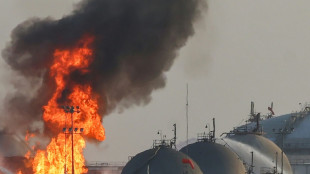 Houthis say struck oil facility near Riyadh, as Saudis hit Sanaa

 AI needs safety layers like nuclear plants: ex-OpenAI engineer

 MVP Judge will miss Yankees' MLB playoff series against Rays

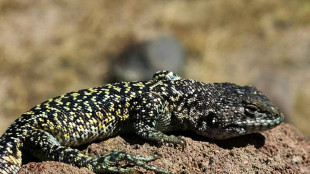 New lizard species discovered in Peru

 Fernandes hails Portugal's 'greatest symbol' Ronaldo, calls for unity

 Grandidier-Nkanang double takes Pau to Top 14 summit despite Vannes fightback

 Trainer Scott gets perfect Arc boost with top notch double

 Ex-PM says Putin cannot admit 'mistake' over Ukraine

 Houthis say Saudi Arabia launches dozens of strikes on Yemen capital

 Qatar and Abu Dhabi F1 Grand Prix to go ahead - F1 boss

 South Korea lift gloom with smash-and-grab Games football gold

 Ireland news conference before Israel game cut short amid tensions

 Protests over housing flare in Spain after relief measures rejected

 Zverev thrashes Shang to set up Djokovic quarter-final at China Open

 Turkey football ref chief jailed pending trial for graft

 North Korea says test of intermediate-range strategic missile included use of AI

 Rampant Sayers leads Hong Kong to third men's rugby gold in a row

 Ethiopia's Tigray rebels abandon regional capital as govt advances

 Bulgaria's Tsar Samuel returns 'home' after 1,000 years

 'Glad it's over': Kim powers to Games gold and military exemption

 After 11 World Cups, football finally comes home for one Indian fan

With food fraud now costing the industry an estimated $30-$40 billion a year and reported incidents up more than tenfold since 2020, Cerfinity brings unit-level, tap-to-verify authenticity to premium food producers.
NEWTON, NJ / ACCESS Newswire / August 6, 2026 / Some of the world's most trusted foods are also its most faked. From the extra-virgin olive oil on the shelf to the wild salmon on the menu, a growing share of premium food is diluted, substituted, or mislabeled before it reaches the consumer - and honest producers pay the price in lost sales and eroded trust. Cerfinity, a Digital Provenance Technology™ company, today released its ranking of the ten most counterfeited foods and announced an authentication platform that lets producers prove the authenticity of a single package - not just a batch - with a tap of a smartphone.
Food fraud - the intentional substitution, dilution, or mislabeling of food for economic gain - is estimated to cost the global industry between $30 billion and $40 billion each year, according to the U.S. Food and Drug Administration and a 2025 European Commission Joint Research Centre analysis. The problem is accelerating: independent analysis found reported food-fraud incidents rose more than 1,000% between 2020 and 2023.
The 10 Most Counterfeited Foods
Cerfinity compiled the ranking below from published food-authenticity research, including studies by Oceana, the UC Davis Olive Center, the Unique Mānuka Factor Honey Association, and the FDA. The most-faked foods share a common profile: a high price per unit, no way for a shopper to verify authenticity by sight, and a supply chain long enough for a cheaper substitute to slip in unnoticed.
# | Food | How it's faked | Documented scale |
1 | Olive oil | Extra-virgin cut with cheaper oils; false origin and grade claims | UC Davis found 69% of imported "extra-virgin" oils failed the standard |
2 | Milk & dairy | Water dilution; palm oil for milkfat; cheese filler or substitution | Named the most-adulterated food overall; 78% of Russian cheese reportedly fake (2015) |
3 | Honey | Diluted with rice, corn or beet syrup; false origin; synthetic potency | Up to 76% of store "honey" samples had no pollen; ~6 of 7 "Mānuka" jars can't be genuine |
4 | Seafood | Cheaper species sold as premium fish | Oceana: 1 in 5 fish mislabeled; sea bass 55%, snapper 42% |
5 | Spices | Bulked with fillers and dyes; saffron cut with safflower | Saffron - the priciest spice by weight - is a perennial fraud target |
6 | Coffee | Ground coffee bulked with husks, twigs, corn or soy; false single-origin | Among the most-forged ingredients in global authenticity surveys |
7 | Spirits & wine | Refilled premium bottles; counterfeit labels; illicit distillation | World Spirits Alliance: ~$9 billion in fiscal revenue lost yearly |
8 | Vanilla | Synthetic vanillin sold as pure; extract diluted | Short harvest against year-round demand makes it structurally fraud-prone |
9 | Maple syrup | Cut with cane or corn syrup | A recurring FDA economically-motivated-adulteration target, like honey |
10 | Wagyu, truffle & caviar | Cheaper breed or species sold as premium; synthetic truffle aroma; farmed-as-wild | Classic high-value profile: high price, no visual verification |
Figures are drawn from publicly reported industry and academic sources and reflect estimates of a deliberately concealed activity; ranges vary by study and region.
Why Certification Alone Doesn't Stop It
Many premium foods already carry certification - a grade, a geographic mark, a license number printed on the label. But a printed label is the one thing a counterfeiter can copy. Certification can confirm that a batch was authentic in the lab; it cannot confirm that the individual package in a shopper's hand contains that batch, or that no one has opened and refilled it since. That final gap - from a certified batch to a trusted package at the point of sale - is where fraud lives.
How Cerfinity Helps Producers
Cerfinity's Digital Provenance Technology™ platform makes authenticity a property of the individual package. It combines three elements into a single tap-to-verify experience:
A tamper-evident provenance seal on each package that proves it is genuine and records if the seal is ever broken.
A permanent provenance registry binding that specific package to its producer, batch, and certification, with a full chain of custody.
A tap-to-verify moment - the consumer taps the seal with any smartphone, no app required, and instantly sees the product's origin, its certification, and an opening certificate confirming the seal is intact.
For producers, existing certification stops being a line of text a counterfeiter can copy and becomes a per-package, consumer-facing proof only the producer can issue. Cerfinity verifies authenticity, origin, and tamper status - it does not test, grade, or make health claims about a product, and is designed to complement existing certification programs rather than replace them.
"The honest producer and the counterfeiter put the same words on the label - that's the whole problem. We let the real producer put something on the package the faker can't: a seal you tap to prove this exact jar, this exact bottle, is the genuine article and hasn't been touched. It turns the authenticity they've already earned into something a customer can check for themselves in two seconds."
- Stuart Fine, Founder & CEO, Cerfinity
The platform is built to deploy without disrupting a producer's operation: batches are registered through a simple dashboard, seals are shipped to the producer, and applying them fits an existing packaging line. Cerfinity is currently onboarding pilot producers across premium food categories including honey, spirits, and specialty meats.
About Cerfinity
Cerfinity is a Digital Provenance Technology™ company that helps producers of premium goods prove authenticity at the level of the individual item. Its platform pairs a tamper-evident provenance seal with a permanent provenance registry, giving consumers a simple tap-to-verify confirmation of a product's origin, certification, and chain of custody. Cerfinity serves premium categories including food and beverage, spirits, and collectibles. Learn more at cerfinity.com. Industry whitepapers can be found here.
Media and Investor Contact:
Stuart Fine
CEO
[email protected]
SOURCE: Remergify, Inc.
View the original press release on ACCESS Newswire
P.Santos--AMWN