
CORRECTION: SOD Sciences Welcomes Vivos Therapeutics as Strategic Investor and Partner in the ReBalU Primed Cell Test
 Hamilton takes record 105th pole and first for Ferrari, as Antonelli lurks

 German rioters loot shops as 'Gen Z' demos turn ugly

 Barca hammer Alaves to retain Liga top spot

 UK king to address Commonwealth with 'unflinching honesty' amid slavery focus

 US judge dismisses Trump lawsuit against Wall Steet Journal over Epstein letter

 Polish president holds crisis talks in court standoff

 NFL to review new allegations against Packers' Jacobs: reports

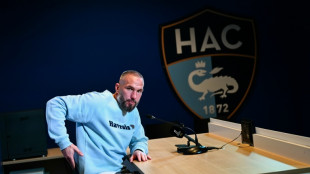 Le Havre owners sack coach after PSG thrashing

 De Minaur upsets Zverev and will face Alacaraz in Vienna final

 German police, protesters clash after 'Gen Z' demos

 Fresh frustration for Maresca as Man City lose to Brighton

 Norris fastest ahead of Antonelli in final Mexico practice

 Hammers boss Nuno under pressure after West Brom loss

 'Trump betrayed us': Arizona's Latino voters sour on president

 Fresh anti-government protest flares in Albania's capital

 Clashes break out as hundreds of thousands protest in France

 German police fire water cannon during tense 'Gen Z' protests

 Forced to eat grass, Oleshky evacuees say truce was a 'blessing'

 UK police arrest Palestine Action supporters ahead of Supreme Court hearing

 Harmer and Rabada wrap up South Africa series win over Australia

 Senegal kicks off Youth Games, Africa's first ever Olympics

 Russia says responding to US report of planned attack on Moscow

 Carrick expects Man Utd stay despite Chelsea defeat

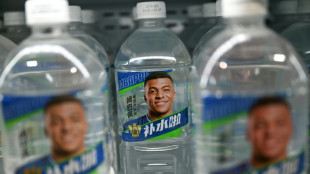 China state TV does not air first La Liga games since Mbappe furore

 Thousands turn up for France protests amid tight security

This release removes the mention of Cleveland Clinic Weston.
Partnership unites the ReBalU Protocol, Vivos's sleep platform, and a new test for cells primed for chronic disease, reaching nearly 500,000 chronic disease patients
VERO BEACH, FL / ACCESS Newswire / October 29, 2026 / SOD Sciences, Inc. ("SOD Sciences" or "SOD") today announced the closing of its strategic partnership with Vivo Therapeutics, Inc. (Nasdaq:VVOS) ("Vivos"). Vivos has acquired an 11% equity interest in SOD Sciences, a 50% ownership interest in SOD's pseudohypoxia patent, and a 50% ownership interest in SOD's pseudohypoxia early‑warning test, the ReBalU Primed Cell Test, in exchange for $12,000,000 of Vivos Series D Convertible Preferred Stock, convertible at $0.15 per share into 80,000,000 shares of Vivos common stock and subject to a 4.99%
beneficial ownership blocker. SOD retains ownership of its other patents and its ReBalU Protocol.
The partnership at a glance
The ReBalU Protocol
The ReBalU Protocol, SOD's lead product family, is built on SOD's founding principle: almost all chronic diseases stem from an imbalance in the body's antioxidant system. That imbalance begins with genetic insufficiencies in key antioxidant alleles. Life insults then drive key biomarkers in the wrong direction until the reduced glutathione reserve falls below the individual's critical point, and chronic disease follows. Chronic disease accounts for 90% of the nation's $5.3 trillion in annual health care spending.
The ReBalU Protocol works in three steps:
SOD is about to begin an Institutional Review Board study of the ReBalU Test/Treat/Retest Protocol at a large South Florida Hospital Chain, which SOD believes will demonstrate the protocol's ability to improve the reduced glutathione reserve through increased endogenous butyrate together with DHA.
Why sleep is the starting point
Sleep‑disturbance diseases are the earliest physical warning signs of chronic disease. That is why the partnership with Vivos places both companies at the forefront of personalized medicine. Each individual is tested against their own baseline, treated, and retested to see whether their reduced glutathione reserve has improved and their disease is retreating.
What pseudohypoxia is
Pseudohypoxia is a state in which a cell behaves as if it is starved of oxygen even when oxygen is present. The cell switches on its hypoxia survival program, led by the protein HIF‑1α, and shifts its metabolism away from mitochondrial respiration toward glycolysis, the same shift seen in chronic disease and cancer.
In obstructive sleep apnea, the driver is the repeated cycle of oxygen desaturation and reoxygenation that occurs every night. Intermittent hypoxia raises HIF‑1α and switches on its target genes, including those for glycolysis, and each reoxygenation sends a burst of oxidative and nitrosative stress through the cell that drains its glutathione reserve.
What the medical community knows today
Pseudohypoxia is well established in the research literature. Diabetes researchers described "hyperglycemic pseudohypoxia" as a driver of diabetic complications in 1993. Harvard researchers identified a pseudohypoxic state as a cause of mitochondrial decline in aging in 2013. Cancer biologists recognize HIF‑1α activation under normal oxygen as a core feature of tumor metabolism.
Sleep medicine is moving the same way. The field has long graded sleep apnea by counting breathing events, but NIH‑funded research has shown that the "hypoxic burden" of nightly desaturation explains much of the cardiovascular risk of sleep apnea.
Yet physicians have had no routine clinical test that tells a patient their cells are in a pseudohypoxic state. The science is mature, and the clinical tool has been missing. That is the gap this test fills.
How many Americans are affected
SOD Sciences estimates that more than 80 million American adults live with the nightly desaturation and reoxygenation cycles that drive pseudohypoxia. An estimated 80.6 million U.S. adults have obstructive sleep apnea, and about 80% of them have never been diagnosed. Another 40.1 million Americans have diabetes, the condition in which pseudohypoxia was first described, and 115.2 million adults have prediabetes.
The known consequences
The conditions that drive pseudohypoxia are linked to the most costly chronic diseases in America:
Why finding it early matters
Pseudohypoxia comes before the disease. By the time a patient has cancer, heart failure, or diabetic kidney disease, the damage is done. A test that identifies the primed cell finds the patient while there is still time to act, to stop the nightly desaturation cycles and rebuild the reserve they drain.
The ReBalU Primed Cell Test pairs SOD's ReBalU genotype and biomarker panel with a measurement of nocturnal oxygen desaturation and recovery, captured with Vivos's at‑home oxygen desaturation and re‑emergence test. AHA is the CLIA‑certified laboratory for the test, which runs on the pseudohypoxia patent that SOD and Vivos now own 50/50 and on SOD's proprietary algorithm.
The test identifies the problem, and the partners have the products to treat it. Vivos's FDA‑cleared oral appliances stop the desaturation cycles at their source. The ReBalU Protocol rebuilds the reduced glutathione reserve. The quarterly retest shows the change.
Management commentary
"We are thrilled to partner with Vivos and to welcome Vivos as a strategic investor in SOD Sciences. Pseudohypoxia is a state in which a cell behaves as if it is starved of oxygen even when oxygen is present," said Joseph M. Salvani, Chief Executive Officer of SOD Sciences. "The cell switches on its hypoxia survival program, led by HIF‑1α, and shifts its metabolism toward the pattern of chronic disease and cancer. Of all the ways hypoxia harms the body, the repeated cycle of desaturation and reoxygenation is the most important. It hits tens of millions of Americans every night, and most of them have no idea. Our test finds them early,
and Vivos's appliances and the ReBalU Protocol are ideally suited to treat exactly what the test finds. Vivo stops the cycles ,and ReBalU rebuilds the reserve."
"The most valuable patients in the U.S. medical system are the ones already diagnosed, already in a clinician's care, and already carrying the chronic conditions that drive cost, and today they are scattered across thousands of practices," said Daniel J. Walsh, Chief Operating Officer of SOD Sciences, Inc. "This transaction aggregates them. Vivos treats the airway, ReBalU restores the cell's antioxidant reserve, and the pseudohypoxia test shows whether it is working and brings the patient back every ninety days. No other company owns all three, and every new clinic we add increases the value of the whole. Between Vivos's products, ReBalU, and this test, we are positioned to lead a revaluation of Vivos."
About SOD Sciences
SOD Sciences, Inc. is a precision‑health company and the developer of the ReBalU Protocol, a genetics‑ and biomarker‑guided test/treat/retest medical food that measures and rebuilds the body's antioxidant reserve, and of the ReBalU Primed Cell Test, a pseudohypoxia early‑warning test performed by American Health Associates as its CLIA laboratory.
About Vivos Therapeutics
Vivos Therapeutics, Inc. (Nasdaq: VVOS) is a medical technology company focused on developing and commercializing innovative treatments for patients with sleep‑disordered breathing, including obstructive sleep apnea. Its FDA‑cleared oral appliances offer a non‑surgical, non‑invasive alternative to CPAP. For more information, visit www.vivos.com.
Media and investor contact
SOD Sciences, Inc.: Joseph Salvani, [email protected] 929-724-3017
Sources: obstructive sleep apnea prevalence (80.6 million U.S. adults, 2024), SLEEP 2025 abstract 0635, https://academic.oup.com/sleep/article-abstract/48/Supplement_1/A277/8135590; 80% undiagnosed, SLEEP 2025 abstract 0637, https://academic.oup.com/sleep/article/48/Supplement_1/A278/8135407; diabetes and prediabetes, CDC, https://www.cdc.gov/diabetes/communication-resources/diabetes-statistics.html; hyperglycemic pseudohypoxia, Williamson et al., Diabetes (1993), https://diabetesjournals.org/diabetes/article/42/6/801/8266/Hyperglycemic-Pseudohypoxia-and-Diabetic; pseudohypoxia in aging, Gomes et al., Cell (2013), https://scholars.duke.edu/publication/1225396; HIF‑1α activation in normoxia and cancer, https://pmc.ncbi.nlm.nih.gov/articles/PMC6501028/; intermittent hypoxia and HIF‑1, https://pmc.ncbi.nlm.nih.gov/articles/PMC6359625/; nocturnal hypoxemia and cancer, https://pmc.ncbi.nlm.nih.gov/articles/PMC9059590/; hypoxic burden and cardiovascular mortality, European Heart Journal
(2019), https://academic.oup.com/eurheartj/article/40/14/1149/5146754; NIH on hypoxic burden (2023), https://www.nih.gov/news-events/news-releases/nih-funded-study-explains-link-increased-cardiovascular-risks-people-obstructive-sleep-apnea; sleep apnea and five‑year diabetes incidence, https://pmc.ncbi.nlm.nih.gov/articles/PMC13173817/; sleep apnea and cardiovascular disease,
https://pmc.ncbi.nlm.nih.gov/articles/PMC11204961/; chronic disease and 90% of U.S. health care spending, CDC, https://www.cdc.gov/chronic-disease/data-research/facts-stats/index.html.
SOURCE: SOD Sciences, Inc.
View the original press release on ACCESS Newswire
Th.Berger--AMWN