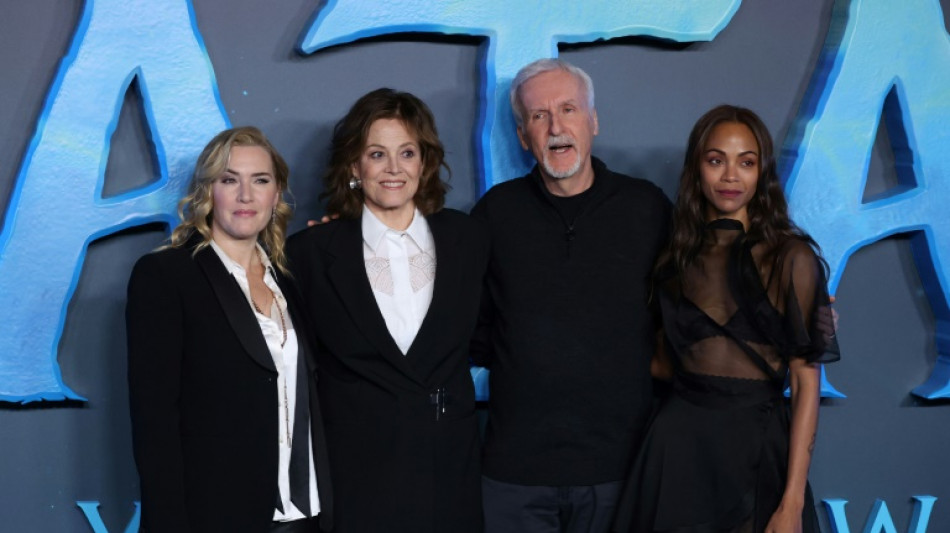
Avatar's James Cameron on art, AI and outrage / Photo: ISABEL INFANTES - AFP
 Italy's firefighting planes return home after scorching summer

 How airlines try to make sure pilots are safe to fly
 Bolivia's attorney general arrested for alleged money laundering and drug trafficking

 Zverev beats Norrie to kick off Sinner-less China Open

 Wall Street stocks rise after bond yield spike eases

 Finland investigates suspected break-ins at MPs homes

 London's Bayeux Tapestry show to offer audio tour for blind people

 Smouldering bins, halted trams as French pupils protest

 Malone Life and Pensions Expands Internationally Beyond the European Union

 England paceman Archer rested for ODI tri-series

 Queiroz exits Ghana as Black Stars crisis deepens
 ALEX BODI VE ALMAN ŞİRKETLER GRUBUNDAN HALLE’DE 166 DAİREYE YATIRIM

 อเล็กซ์ โบดี และกลุ่มบริษัทจากเยอรมนีลงทุนในอพาร์ตเมนต์ 166 ยูนิตที่เมืองฮัลเลอ

 ALEX BODI A NĚMECKÝ KONCERN INVESTUJÍ DO 166 BYTŮ V HALLE

 ALEX BODI OCH TYSK KONCERN INVESTERAR I 166 LÄGENHETER I HALLE

 England forward Toney pleads not guilty to nightclub assault

 Tom Kim finishes marathon Asian Games second round under floodlights

 Work on migrant return hubs progressing well, EU countries say

 ALEX BODI I NIEMIECKI KONCERN INWESTUJĄ W 166 MIESZKAŃ W HALLE

 Tearful Nishikori calls time on career with defeat at Japan Open

 أليكس بودي ومجموعة ألمانية يستثمران في 166 شقة في هاله

 알렉스 보디와 독일 기업 그룹, 할레 주택 166세대에 투자

 Verstappen wary of tyre wear as he eyes first F1 win of season

 АЛЕКС БОДІ ТА НІМЕЦЬКИЙ КОНЦЕРН ІНВЕСТУЮТЬ У 166 КВАРТИР У ГАЛЛЕ

 Kremlin critic Kasparov says US intelligence warned life 'in danger'

From "Terminator" to "Titanic" to "Avatar", director James Cameron has pushed Hollywood's technical wizardry to new limits, but human emotion must always come first, he told AFP.
In an era when special effects are much more accessible to filmmakers, and studios are willing to regularly spend hundreds of millions of dollars on blockbusters, it is the artistic talent that makes the difference, Cameron said during a visit to Paris.
Whether he can still strike the balance will be tested as the world finally gets to see "Avatar: The Way of Water" next week -- a sequel to his groundbreaking extraterrestrial epic that has been 13 years in the making.
"Anybody could buy a paintbrush. Not everybody can paint a picture," the Canadian director said. "The technology doesn't create art. Artists create art -- that's important."
It was originally hoped that a first sequel would be out in 2014, but Cameron's gargantuan ambitions led to repeated delays.
He does not come across like the sort of megalomaniac director of Hollywood lore -- describing his sets as "a big hippie commune with a bunch of really great artists."
But these hippies are armed with some powerful computers.
"We had over 3,200 shots, which is a lot to maintain high quality, high quality control," Cameron said.
"We brought in machine deep learning and plugged AI into various stages of the process to assist us... not to take the place of the actors at all but actually to be more truthful to what they had done," he said.
- 'Connection to nature' -
The challenge was managing to draw emotion out of performances that were largely shot in front of green screens, and where most of the scenery and props would only appear later in the effects booths.
"The heart, the soul, the emotion, the conflict, creativity... all that happens first, and then all the technical work begins," he said.
Cameron has always justified the vast sums he has asked of studios -- "Titanic" was both the most expensive and most profitable film of all time following its release in 1997, only to be topped by "Avatar" in 2009 -- and he feels that responsibility "every day".
"I can't be whimsical or impulsive, I have to be very focused and dedicated to creating something that's both pleasing to me artistically, and that I think will be pleasing to the public and commercial enough to make some money," he said.
"It can't be too intellectual, but I can make it satisfying to me by putting in secondary and tertiary levels of meaning that I know are there."
Clearly, much of the impulse of the Avatar series is drawing attention to humanity's impact on nature, but the sequel also focuses on Cameron's aquatic interests.
Long fascinated by the sea, from 1989's "The Abyss" to "Titanic", Cameron became a deep ocean explorer for National Geographic in the 2000s and was the first solo human to visit the deepest underwater trench, the Mariana Trough, in a purpose-built submarine.
He sees "Avatar" as "awakening that thing in all of us, that connection to nature.
"The movie asks you to feel something for nature... It's about maybe feeling a sense of outrage," Cameron said.
"These Navi characters... they don't look like us, they're blue, they've got the ears and tails. But they represent the better angels of our nature.
"Maybe for 10 minutes after the movie's over, you see the world a little differently," he added.
P.Silva--AMWN