US cheesemakers learn to live with raw-milk regulations / Photo: Brendan Smialowski - AFP
 Spotlight on UK-UAE ties amid Manchester City scandal

 Ethiopia and Eritrea break diplomatic ties over conflict

 Downing Street says Manchester City not 'above the rules'

 Hadjar wants to 'fight for the title' from next season

 Bolivia's attorney general arrested for alleged drug trafficking, money laundering

 German sugar tax sparks new government row

 Musk returns to US government for Pentagon war study

 Stocks slide as bond yields spike
 Thousands rally as EU chief urges respect for Kosovo war crimes court
 Man City sponsor Etihad says considering legal action against Premier League

 Family of woman killed by US immigration agent sues Trump administration

 French school protests spread as fires, blockades deepen unrest

 UK tribunal overturns ban on Naomi Campbell leading charities

 Louvre launches appeal as part of new fundraising drive

 Croatian ex-international Simic charged in graft case

 76% of Treasury Teams Hit by Fraud as Deepfake Attacks Rise, Treasury Dragons & nsKnox 2026 Index Finds
 Malawi ex-army chief arrested following allegations over Sudan arms

 German fuel price cuts kick in to ease Mideast energy shock
 'It's history': Zverev against shortening Grand Slam match format

 From Question to Action: Leverate Launches ASK, Its Native AI Assistant for Traders

 UN says strikes on Afghanistan kill 10 civilians

 Two Russian drones hit major bridge in Kyiv

 Alcaraz begins Japan Open defence with win over Michelsen

 ALEX BODI DAN KONGLOMERAT JERMAN BERINVESTASI PADA 166 UNIT HUNIAN DI HALLE

 Ronaldo's Portugal future in doubt after walkout

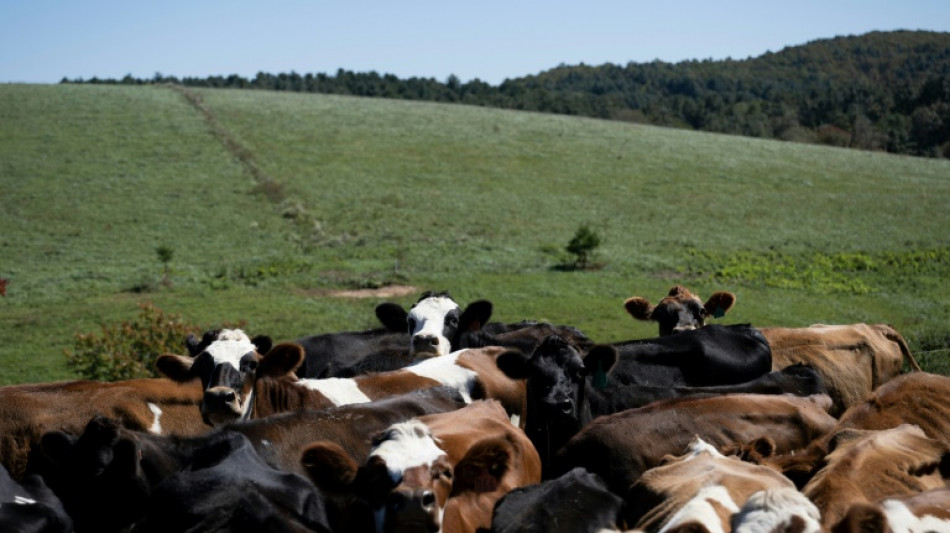
With its brown-and-white cows grazing on a grassy hillside high in the Appalachian Mountains, Meadow Creek Dairy is not like most other American cheesemakers: its products are made from unpasteurized, or "raw" milk.
The small family business in the eastern United States is a rarity in the nation's dairy market, dominated by industrial cheesemakers exclusively using pasteurized milk.
In their blue overalls and caps, Helen Feete and Ana Arguello work before huge vats, each containing hundreds of gallons of milk.
Feete, who founded the dairy with her husband in the 1990s, told AFP that when they started out "there weren't any models for us to follow" -- few small dairy farms were trying to make cheese from raw milk.
Methods viewed as traditional in Europe -- even the source of regional pride -- are seen as nearly taboo on the other side of the Atlantic.
The essential difference is that pasteurized milk has to be heated -- to 63 degrees centigrade (150 Fahrenheit) for 30 minutes, or 72 degrees centigrade (162 Fahrenheit) for 15 seconds.
That kills the microflora in the milk, which has a major impact on flavor -- and not for the better, say partisans of the raw-milk approach.
There is "a complexity of flavor and a uniqueness of flavor... that is only possible when the milk is unpasteurized," said Liz Thorpe, an American author of books on cheese.
- 60 days' aging -
Detractors of unpasteurized cheeses, on the other hand, say there is a higher risk of bacteria and microbes in raw milk, which can cause potentially lethal diseases such as salmonella and listeriosis.
The US Food and Drug Administration (FDA) requires the "mandatory pasteurization for all milk and milk products in final package form intended for direct human consumption."
But since the 1940s, the agency has allowed the sale of raw-milk cheeses so long as they have been aged at least 60 days at temperatures above 2 centigrade (36 Fahrenheit).
- 'Frustrating' -
"That's not so much a hurdle, it’s something that we have to build our cheeses around," said Kat Feete, who has worked much of her life with her parents and brother at Meadow Creek.
The FDA's 60-day rule is meant to provide time for all dangerous pathogens in raw milk to die off, but it prevents the sale of raw-milk-based soft cheeses that mature quicker than that.
"It can be frustrating that there are certain types of cheeses we can’t do," said Kat Feete. "A lot of people would love to have a raw-milk brie or something small like that."
Most of Meadow Creek's cheese are semi-hard. Produced seasonally -- depending on what the cows eat at different times of year -- they mature in the dairy's cellars, where the temperature and humidity is regulated.
A top seller, a semi-hard cheese called the "Grayson," might be compared to a Reblochon from the Alps, or to a Maroilles from the north of France.
- 'Not correct' -
Meadow Creek Dairy and other raw-milk cheesemakers in the US face another obstacle: many American consumers remain skittish about buying a product they think may be unsafe.
"So many people in the US think that raw-milk cheese patently is illegal, and that's not correct," said Thorpe. "There's a lot of misconceptions."
She said she works hard to inform the public that such cheeses are "perfectly healthy, safe and good," adding that it's important for a consumer to know where a cheese comes from.
In Meadow Creek's early days, "there was a little bit more trouble with educating the market to what we were doing because there was a perception that it was not very safe," Kat Feete said.
But that is beginning to change, she said.
"I think people are really starting to accept that raw-milk cheese is a safe and a good way for a farmstead small cheesemaker to produce cheese."
L.Mason--AMWN