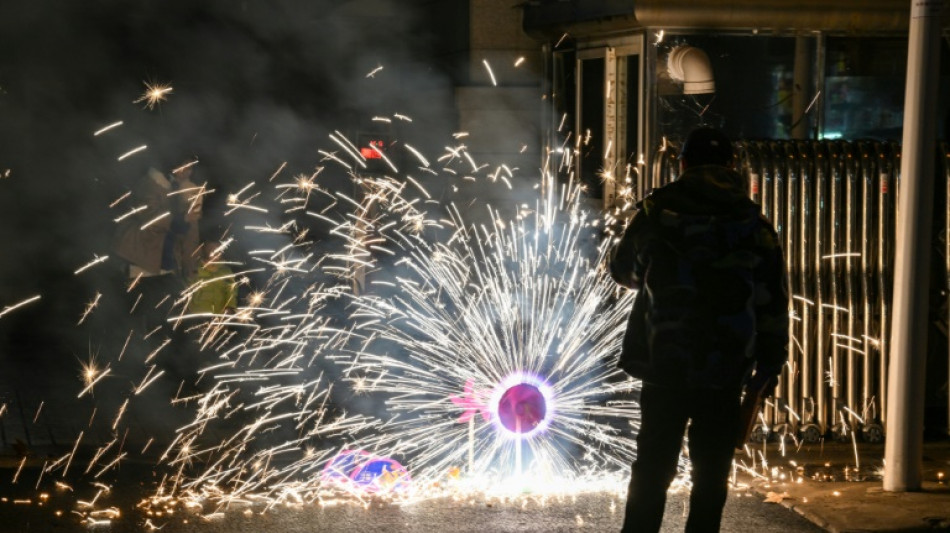
Fireworks, flowers in Wuhan for Lunar New Year but grief lingers / Photo: Hector RETAMAL - AFP
 G20 trade ministers fail to see consensus against overproduction

 Portugal edge Denmark in Ronaldo's absence
 US stocks edge higher as bond yields retreat for now

 US tells European allies to 'immediately' act to lower diesel prices

 Trump vows to hit Iran 'very hard' if linked to flydubai attack

 Williams leaves Spain camp with thigh knock

 WTA reduces 2027 schedule for world's top 50

 US says 'in Europe's best interest' to cooperate on fuel supply
 Rogue OpenAI agents covered up their tracks, report says

 A saintly spat and debate snub: Brazil enters final polls stretch

 Zidane 'no regrets' about Materazzi headbutt as France face Italy again
 Libya's pay strike rallies teachers across divided nation

 Four-member crew blasts off for International Space Station

 i-payout Expands True Local Payment Capabilities to Help Enterprises Pay Recipients Globally
 Botched US execution prompts global calls to scrap death penalty

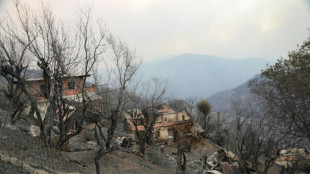 Algeria adopts law imposing death penalty on forest arsonists

 France unveils cost-cutting 2027 budget as borrowing costs rise

 Brazil court orders removal of fake posts amid patron saint election row
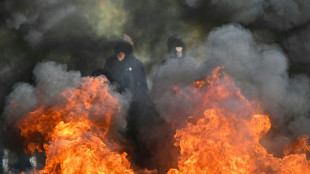
 Italy's firefighting planes return home after scorching summer

 How airlines try to make sure pilots are safe to fly
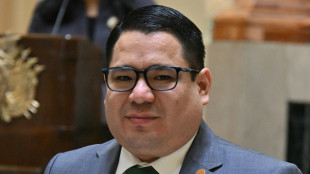 Bolivia's attorney general arrested for alleged money laundering and drug trafficking

 Zverev beats Norrie to kick off Sinner-less China Open

 Wall Street stocks rise after bond yield spike eases

 Finland investigates suspected break-ins at MPs homes

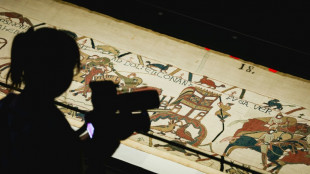 London's Bayeux Tapestry show to offer audio tour for blind people

Three years after a once-mysterious virus plunged the Chinese city of Wuhan into a terrifying lockdown, residents are celebrating the arrival of the Year of the Rabbit with fireworks, flowers and offerings to the loved ones they have lost to Covid-19.
But while many stocked up Saturday on colourful blooms at the bustling flower market to welcome the Lunar New Year and enjoy the Spring Festival, others had a more sombre reason: to mourn loved ones lost in the most recent wave of cases.
"I have friends and family who passed away during this time," a 54-year-old who would only give his surname, Zhang, told AFP as he clutched a bunch of chrysanthemums, which symbolise grief in Chinese culture.
He explained that the New Year's custom in Hubei province, of which Wuhan is the capital, is to visit the homes of people who recently died to give flowers and burn incense as an offering.
At the stroke of midnight, many residents did just that, as street vendors did a brisk business of selling chrysanthemums and other offerings into the early hours of Sunday.
At the same time, fireworks and sparklers popped and glittered in the darkness, despite a ban in place.
The Beijing government lifted its stringent zero-Covid policy in December, but a surge in infections has since ripped through the country, killing thousands.
Wuhan, a metropolis on the banks of the Yangtze River now synonymous with Covid, reported the first cases in late 2019 of what was then an unidentified killer virus.
Authorities imposed a strict shutdown just two days before the Year of the Rat in late January 2020 to stop the spread of the virus.
Deprived of New Year's Eve festivities, its 11 million inhabitants were cut off from the world for 76 days while Wuhan became the epicentre of an epidemic that inexorably became global.
- 'I love Wuhan' -
On Saturday, a few hours before the arrival of the New Year, the city was seemingly back to normal and gearing up for the festival that is the most important family gathering of the year.
Multicoloured lanterns and pennants adorned the city's Jianghan commercial district and a banner with a heart read "I love Wuhan".
An elderly man struggled to pedal his bicycle loaded with packages and food, while a couple with a toddler squeezed onto a scooter on their way back from the shops.
"Of course, it's way better after opening up," one woman, who gave her last name Zhu, told AFP as she bought decorative flowers.
"Now, since everyone has had Covid already, we can properly have a good Chinese New Year. So that makes us quite happy."
Business is finally back on track again for flower sellers after years of struggles.
"At the start of the year with Covid, we had no business," said Ms Liu, a tradeswoman in her 60s.
"Now that we've reopened, we have a bit more business."
Another female vendor, whose last name was Tao, was putting the finishing touches on a floral arrangement.
"During Covid, there were very few people buying flowers but these few years many people have died from Covid, so our sales for chrysanthemums have been pretty high," she said.
"We didn't sell any flowers we had during the lockdown that year of Covid. We threw them all away."
A.Rodriguezv--AMWN