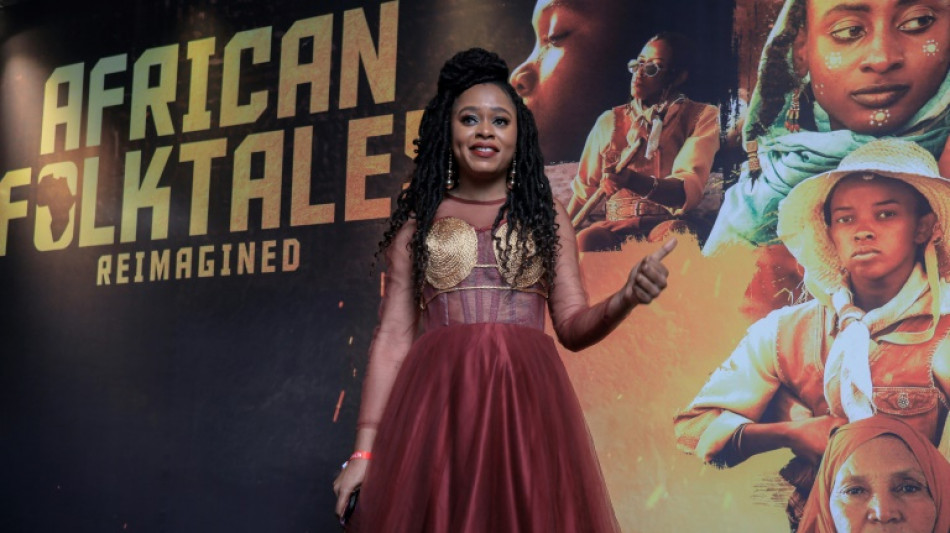
Netflix, UNESCO seek breakthrough for African cinema / Photo: Tony KARUMBA - AFP
 Taiwan gender-row boxer Lin Yu-ting wins 'monumental' Asian Games gold
 Taiwan receives its first US-made F-16V fighter jets

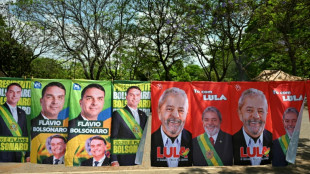 Lula, Bolsonaro trade scandal fire in final scramble for votes

 Not-so-brave new world: virtual taekwondo makes Asian Games debut
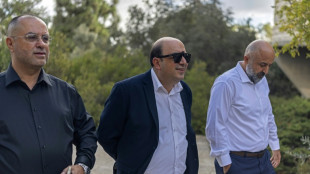 Arab Israeli candidate drops out of election race

 Israel courts Europe's far right, finding friends but also unease

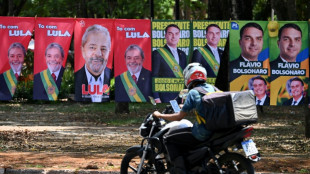 Lula, Bolsonaro both snub final debate before Brazil election
 Nepal's grim DNA puzzle to identify flood dead
 EU nations to hold emergency meeting on soaring diesel prices amid US pressure

 Anthropic's Dario Amodei: AI's most visible CEO and enigma

 OpenAI says three staffers fired for mishandling 'sensitive' info

 InterContinental Hotels Group PLC Announces Transaction in Own Shares - October 02

 Portugal win without Ronaldo as Klopp's Germany get first victory

 Wemby: 'Very sad' to see players endorse betting firms

 Manchester City Women scrape draw with Real Madrid

 India, Australia and Pakistan in same World Cup group
 Daryz's hopes of repeat Arc win boosted by draw
 Steelers ship disgruntled defender Porter to Cowboys

 Klopp gets first win as Germany boss

 Bolivia's attorney general arrested on drugs, money laundering charges

 Raiders host Chiefs in battle of unbeaten division rivals
 Lowest Fee Bitcoin ATMs Announces Launch of More Than 400 ATMs Nationwide

 G20 against 'weaponization' of food trade: French minister

 Female US inmate in critical condition after botched execution

 Spotlight on UK-UAE ties amid Manchester City scandal
It's a revenge thriller where a mother turns into a ruthless vigilante, tracking down and drowning a soldier who has killed her baby, in an explosion of violence and jubilation.
What might sound like the plot of the latest flick by Quentin Tarantino or another Hollywood auteur is actually the fruit of a partnership between streaming giant Netflix and the UN cultural agency UNESCO to give a platform to new voices in African cinema.
"Katera of the Punishment Island", directed by Ugandan Loukman Ali, is among six short films co-financed on the continent by the American platform and the UN agency.
"It's the revenge of a young girl, left to her own devices and yet who is going to smash up everything," said French producer Pape Boye, who served as a "mentor" to the director and praises the "jubilant violence" of the film.
Loukman Ali, he said, is a worthy representative of a new generation of African filmmakers, who grew up on a diet of mainstream cinema and "want to be seen by as many people as possible", scorning so-called genre films.
The director, 32, said he embraced cinema as a form of escapism and a way to forget the poverty surrounding him as he was growing up.
"Each time there was a film that reminded us of how poor we were or how bad situation the situation was, it was kind of like a no-no," he told AFP in a telephone interview. "I am more about entertainment. That's the model I follow."
- 'Stories I wanted to tell' -
Loukman Ali was chosen by the scheme last year, among 2,000 pitches received by UNESCO and Netflix, to direct his short film, with funding of some $75,000 dollars. "Katera of the Punishment Island" has been available since Wednesday on the platform.
Five other young African filmmakers have also enjoyed this privilege, including the Kenyan Voline Ogutu, whose "Anyango and the Ogre" is set in a futuristic world where women are divided into two categories, single or married -- with the latter group exposed to domestic violence.
"I always wanted to tell stories of horror and sci-fi. But the market I was in was not very accommodating," she said.
"This is a very good opportunity for me to actually now tell the stories I wanted to tell."
Decision makers can be bolder elsewhere, such as in South Africa, from where several daring series have recently emerged, and especially in Nigeria's so-called Nollywood, where 2,500 films are released each year, often at low cost.
But Steven Markovitz, the executive producer of the joint Netflix and UNESCO project, said dozens of young emerging African directors were challenging ideas of a "traditional" African film.
He said that in the 1970s and 80s, slower-paced African films on sober subjects were dominant.
"But if you look at a lot of filmmakers today, they're much more playful and provocative, they're more open to trying new forms, they try to build bigger audiences, wider audiences for their work."
He said that this change had been notable for some time but was now accelerating at pace partly due to new technology but also due to the fact today's Africans may be the third or fourth generation since the colonial era.
"They are more about asserting their identity in the present and the future. There's a philosophical shift amongst this generation, and that's why they're a lot more free in their thinking in the telling."
- 'Leap of faith' -
Tendeka Matatu, of Netflix Africa, said that there was now even a "golden age" of African filmmaking.
"The Africa of the 1970s is very different from the Africa of the 2020s," he said. "The filmmakers want to tell stories that reflect the society of this year."
Streaming platforms are playing a crucial role, investing heavily in a chronically underfunded and underequipped film industry on a continent where, according to UNESCO, around 40 percent of the countries do not have a single cinema.
Within eight years, the size of the African streaming market, today estimated at 3 million subscribers, will increase by sixfold, according to UNESCO's deputy director general Ernesto Ottone.
But this remains a modest figure compared to the 1.7 billion Africans, because hundreds of millions still have neither a sufficiently good internet connection nor the means to subscribe to a platform.
But filmmaker Leila Djansi of Ghana, the mentor for "Anyango and the Ogre" said the main problem is that African cinema is above all lacking acceptance.
"I agree it's a business. You are putting in millions. But give people a chance. Take a leap of faith.
"Poverty, HIV, war... there's more to Africa than that, but until African filmmakers are given the opportunity to tell these stories, the perception is always going to be negative," she said.
M.Fischer--AMWN