EU lawmakers take first step towards AI curbs / Photo: Lionel BONAVENTURE - AFP
 Ethiopia's conflict: the regional dimension

 Life expectancy almost back to pre-Covid levels, says WHO

 Turkey's football referee chief faces judge in graft probe

 Verstappen goes own way to avoid the rain

 Oil slides, bonds steady as EU addresses diesel price surge
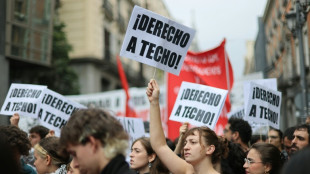 Spain housing package at risk in parliament, as protests mount

 Swedish Social Democrats leader to make new bid to form government

 North Korea calls Seoul 'despicable' after DMZ apology demand

 Taiwan boxer Lin wins gold as virtual taekwondo makes Games debut

 Man City face appeal deadline after explosive financial verdict

 Pole vault superstar Duplantis to skip indoor season

 Sri Lanka drop Asalanka from T20 against Pakistan

 Disney president says layoffs 'extremely painful' but necessary

 Indian flydubai pilot opened cockpit door to save passengers
 Alex Marquez clocks record lap at MotoGP Japan practice
 Tom Kim leads Asian Games golf in chase to avoid military service
 Asian stocks hit as oil spike fans rate hike bets, eyes on US jobs

 'We're losing our scientists': west Africa's STEM struggle

 World powers gather in Pacific to chart climate battle

 Return of swarming moth spectacle has Australia in a flutter

 Browns snuff out Rodgers fightback to beat Steelers 27-24

 Braves power past Phillies to set up Dodgers showdown

 Asian stocks drop as oil spike fans rate hike bets, eyes on US jobs

 Viral anti-vax posts weaponise Philippine inoculation fears

 Saudi coalition accuses Houthis of drone attack on Medina
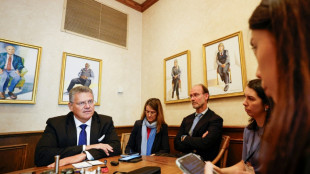
European Parliament lawmakers on Thursday took a crucial first step towards EU-wide regulation of ChatGPT and other artificial intelligence systems that Brussels hopes to put speedily in place.
Parliamentary committees on civil liberties and consumer protection overwhelmingly voted for a position text calling for curbs on how AI can be used in Europe, while still fostering innovation in the sector.
The text is to be put to the full parliament next month for adoption before negotiations with EU member states on a final law.
Lawmakers called Thursday's vote "historic" and hoped it would lead to "the world's first rules on artificial intelligence".
Their text picks up the main lines from a European Commission proposal made two years ago, but suggests adding bans on biometric surveillance, emotion recognition and predictive policing AI systems.
It seeks to put generative AI systems such as ChatGPT and Midjourney in a category requiring special transparency measures, such as notifications to users that the output was made by a machine, not a human.
The parliament's text also seeks additional criteria as to what constitutes a "high-risk" AI area of application, which could reduce the scope of that designation.
The commission proposed list covers AI in critical infrastructure, education, human resources, public order and migration management.
But the MEPs want an additional threshold to be met, requiring that threats to safety, health or fundamental rights are also deemed to be in play.
- Companies see innovation threat -
The CCIA, a European industry lobby group representing major tech companies, said that, while "the parliament made some useful improvements to the text", it was "abandoning the risk-based structure" of the European Commission's proposal.
"The best way for the EU to inspire other jurisdictions is by ensuring that new regulation will enable, rather than inhibit, the development of useful AI applications," said CCIA policy manager for Europe, Boniface de Champris.
The European Consumer Organisation though endorsed the parliament injecting "beefed-up protections for consumers" in its text compared to the commission one.
"Although AI may improve our lives in many ways, there are well-founded concerns that AI systems can also harm consumers. People must be properly protected against the risks of these new technologies," said Ursula Pachl, deputy director of the organisation.
While EU work towards legislation has been going on for some time, the potential -- and potential perils -- of AI has exploded into the public consciousness only in the last few months, since ChatGPT burst onto the scene at the end of last year.
Image-generation AI such as Midjourney and DALL-E have since sparked an online rush to make lookalike Van Goghs or a pope in a high fashion puffer jacket, while AI music sites have impressed with their ability to produce human-like singing.
"It's enough to turn on the TV since the last two, three months, almost every day, to see how important this file is becoming for citizens," said one of the lead MEPs on the European Parliament text, Drago Tudorache.
Policymakers in Europe and other regions in the world are increasingly concerned how the technology can be used for fakery, to fool people and sway public opinion and elections.
That has spurred Elon Musk and some researchers to urge a moratorium until legal frameworks can catch up.
In the commission proposal, AI companies would be required to maintain human control over their algorithms, provide technical documentation and have a risk-management system for "high-risk" applications.
Each EU member state would have a supervising authority to make sure the rules are abided by.
MEPs also want AI companies to put in place protections against illegal content and on copyrighted works that might be used to train their algorithms.
They also want to prevent the scraping of photos posted on the internet for training algorithms unless the authorisation of the people concerned is obtained.
J.Oliveira--AMWN