'The bottom line': Scuba divers help preserve historic Bangkok mansion
 'No limits': Marathon world record holder Sawe chasing history

 Countdown begins to biggest-ever Rugby World Cup
 Bangladesh women lose ground after quota reform

 Vietnam admits 'differing opinions' on Hanoi development
 Stocks temper gains as oil pares heavy losses, US data in focus

 New Zealand denies breaching climate commitments to EU

 Albert becomes youngest US scorer in 4-2 win over Chile

 Pirate island's plunging population shows Greece's demographic decline
 With elections ahead, Latvia's Russian-speakers reject Moscow's help

 Brazil football clubs face massive sponsorship blow from betting ban

 ChatGPT maker wants to be the App Store for AI as safety concerns grow

 Women fight fires and sexism in Indonesian Borneo

 Forsling's OT blast lifts Florida over Carolina in NHL opener

 Hurricane Polo sweeps over Mexico's Pacific coast, heads inland

 Grynspan pulls ahead in race to lead UN: diplomat

 Trump touts AI boss pledge to self-regulate

 Oil down, but stocks lower as bond yields rise

 England break down stubborn Czechs to claim first Nations League win

 UN Security Council extends Haiti anti-gang force by 6 months

 Manchester City guilty of Premier League charges: What comes next?

 Man City chief Soriano slams Premier League 'conspiracy theory'

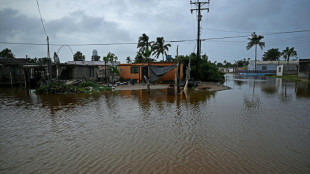 Hurricane Polo sweeps over Mexico's Pacific coast

 Man City must be relegated after guilty verdict says club's former chairman

 German far-right aims to lead Saxony-Anhalt govt in December
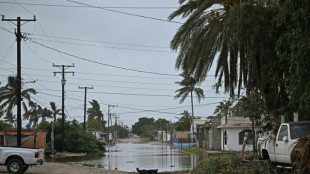 Little damage as Hurricane Polo sweeps over Mexico's Pacific coast

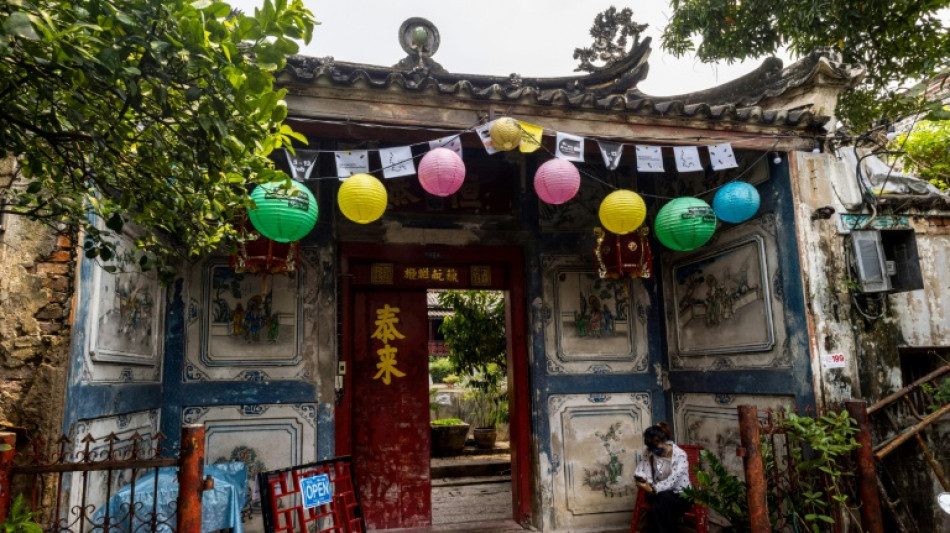
A 200-year-old Chinese mansion in Bangkok's heart isn't an obvious place for a scuba school, but in a city relentlessly demolishing its architectural heritage the business is helping preserve the historic home.
Dive instructor Poosak Posayachinda's family has owned the traditional teak-walled So Heng Tai for eight generations, but it lives on thanks largely to his decision to convert it into a scuba academy.
The survival of the building, originally built as a home and office for the family business trading birds' nests with China, is a rare success story in a city that harbours little sentiment -- or legal protections -- for historic architectural gems.
"It's because people want to make more money -- that's the bottom line," Bangkok-based American architect Bill Bensley told AFP.
The city's breakneck reinvention over recent years has seen gleaming malls and flashy condos fly up, and buildings like the art deco Scala movie theatre and 1920s British embassy come down.
Thai law only protects properties over 100 years old and there is limited political enthusiasm for safeguarding old architecture at the expense of profitable development.
For families with historic properties, the annual costs of maintenance can be a huge liability, according to historian and archaeologist Phacha Phanomvan.
"We don't have a lottery fund or trust body that comes in to save heritage," she said.
So in 2004 Poosak installed a four-metre-deep pool in the So Heng Tai courtyard, subsequently teaching more than 6,000 students.
The diving school has helped pay the bills on the property's upkeep, which Poosak estimates at up to $25,000 a year, but maintenance is a struggle.
"On a rainy day you find lots of water spots. Sooner or later we will have to do the whole roof again and that's a lot of money," Poosak told AFP.
- Historical theft -
While the culture ministry keeps a national heritage database, Phacha said many properties are not registered and fall through the cracks.
"For individual owners without state assistance... it's better for them to sell the property. Sell the individual building and then sell the (land)," she said.
Adding to the challenge is a growing collectors' market for teak from Thai wooden houses, she said -- some are even dismantled, relocated, and reassembled to become boutique hotels elsewhere.
"You want to keep these properties where they are... You're essentially robbing Bangkok of its (history)," she said.
Photographer Ben Davies spent five years documenting neighbourhoods for his book "Vanishing Bangkok", an experience that left him despondent.
"Something like (30-40 percent) of the buildings and communities I photographed had either disappeared or changed virtually beyond recognition," he told AFP.
And in the rush to develop, Davies says it is unclear how much of Bangkok's heritage will remain in a decade.
"I have a horrible feeling that one day Bangkok will be, outside of its temples and few palaces, (a) unrecognisable but (b) have lost so much of its identity and character so it will look like any other megacity around Asia," he said.
- A glimmer of hope? -
Elsewhere in the region offers Thailand possible solutions, notably Singapore which has won praise since the late 1980s for its heritage protection efforts.
Its strategy examines the entire city-island holistically with conservation going hand-in-hand with planning, says Yeo Kang Shua, an architectural history expert at the Singapore University of Technology and Design.
Underpinning the scheme is the "three R" principles: maximum retention of buildings, sensitive restoration and careful repair.
"In the 1980s a lot of owners deemed it a death sentence for their properties to be given conservation status, but today because of the rarity of such buildings in Singapore, the real estate prices are... enormous," he told AFP.
Despite the challenging environment, there are some signs of change in Bangkok.
In recent years a prominent Sino-Thai business family renovated dilapidated Chinese 1850s warehouses, turning them into the Lhong 1919 "riverside heritage destination".
It now houses a shrine and has become a space for exhibitions, concerts, pop-ups, cafes and food vans -- and there are plans for a wellness resort.
Back at So Heng Thai, Poosak takes his students through their paces.
Channelling the attitude of his ancestors -- who came to Thailand with "one pillow and one mattress" -- he's determined to save his family home.
"If someone comes to give me an offer, the answer is no, simple as that, no matter how much it is," he said.
A.Rodriguezv--AMWN