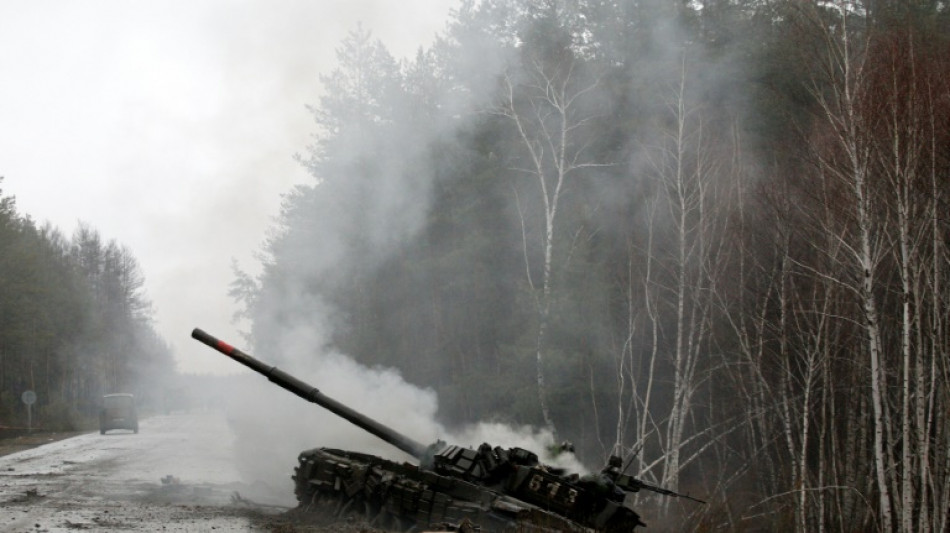
Ukraine memes proliferate despite grim realities of war
 Dangote to launch $16bn refinery in Kenya
 North Korean leader 'extremely obese': Seoul spy agency
 Yankees and pope-backed White Sox start MLB playoffs with wins
 Malaysia's ex-PM Mahathir in hospital for observation
 'No limits': Marathon world record holder Sawe chasing history
 Countdown begins to biggest-ever Rugby World Cup
 Bangladesh women lose ground after quota reform
 Vietnam admits 'differing opinions' on Hanoi development
 Stocks temper gains as oil pares heavy losses, US data in focus
 New Zealand denies breaching climate commitments to EU
 Albert becomes youngest US scorer in 4-2 win over Chile
 Pirate island's plunging population shows Greece's demographic decline
 With elections ahead, Latvia's Russian-speakers reject Moscow's help
 Brazil football clubs face massive sponsorship blow from betting ban
 ChatGPT maker wants to be the App Store for AI as safety concerns grow
 Women fight fires and sexism in Indonesian Borneo
 Forsling's OT blast lifts Florida over Carolina in NHL opener
 Alpha Growth Management Opens Rep Office in Japan
 NBA close to picking new $12-13bn Vegas team owners: report
 LA28 Olympics torch relay to visit all 50 states
 Spain brush aside Croatia in Nations League, England down Czechs
 Trump hails 'morally binding' AI self-regulation pledge
 Yamal inspires Spain to Croatia romp on World Cup homecoming
 UN to hold fourth informal poll of secretary-general candidates
 Who are the Emiratis behind crisis-hit Manchester City?
A giant Adolf Hitler bends down and pats a docile Vladimir Putin on the cheek, master to pupil, in a picture posted on Ukraine's official Twitter account on February 24 -- the day the invasion began.
The message that follows reads: "This is not a 'meme', but our and your reality right now."
Almost two million people have liked the tweet and many thousands have shared it, making it one of the defining viral takes of the war so far.
Yet the country's official messaging is only a tiny part of the story of memes in the Ukraine war.
For two weeks after the invasion, Ukraine's official account pivoted away from humour, allowing the internet to fill the void.
Dozens of dedicated accounts sprang up and social media platforms have been flooded with content -- from cats in cardboard tanks on TikTok to endless jokes about World War III and reworked scenes from Star Wars movies.
But beyond a few seconds of mirth, do memes have a wider role?
- 'Nihilistic japing' -
"I don't think memes are going to end the war," says Charlie Gere, a sociology professor from Lancaster University in the UK.
He describes memes in general as "nihilistic japing" likely to have minimal impact outside their own cultural sphere.
The war has given rise to one meme that has crossed from internet curiosity to real-world product.
The Saint Javelin meme -- depicting a Madonna figure in the style of a religious icon clutching a rocket launcher -- now features on T-shirts and various other merchandise sold by Canada-based marketer Christian Borys.
He says all his profit goes to the Ukrainian war effort and told the BBC he had raised more than $1 million (910,000 euros).
Memes are more commonly regarded as an effective way of spreading a message and engaging audiences.
Christian Dumais, a writer and comedian whose Twitter alter ego "Drunk Hulk" has been behind plenty of viral content over the years, says Ukraine has been incredibly clear in its use of memes.
"A meme's ability to re-contextualise what we're seeing in the world in order to subvert, inspire, provoke, and educate is redefining how we can reach people," he says.
- 'Express our outrage' -
Vincent Miller of Kent university in the UK, author of "Understanding Digital Culture", sees memes as a kind of conversation that can enable political debate to flourish.
"Given their anonymous nature and origins, memes allow people to avoid a lot of the friction and social divisiveness often involved with making political statements online," he told AFP.
Whether impactful or not, memes will continue to proliferate around the war.
Ukraine's official Twitter, after a two-week hiatus, returned to memes on the weekend, posting an image ridiculing Russian tanks and another highlighting the collapsing Russian economy.
Other Twitter users continued to post images hailing Ukrainian President Volodymyr Zelensky.
"At the moment in my feed he is being idolised," says Gere, "turned into this figure of nobility and courage and real manliness as opposed to ersatz manliness".
One of the most popular memes has been casting Zelensky as a Marvel superhero.
His Russian counterpart Vladimir Putin has not fared so well, variously depicted cowering behind his massive marble table, begging China for help or just looking ridiculous in a variety of ways.
"I know we're not talking about revolutionary tactics here,” says Dumais, "but memes in this context are significantly better than adding the Ukrainian flag to your social media profile".
He points out that creating memes requires at least some engagement with the subject.
"They allow us to express our outrage and help remove the feeling of helplessness," he says.
D.Cunningha--AMWN