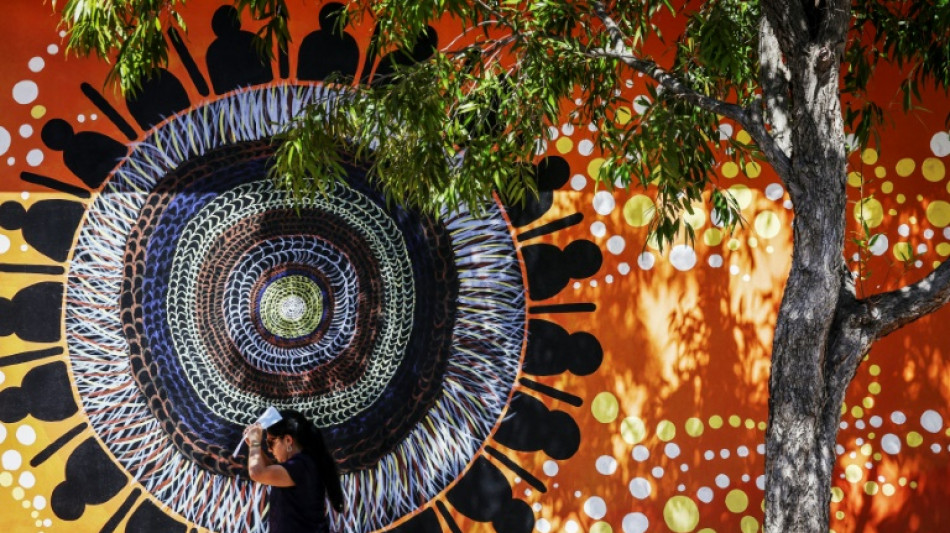
Misinformation mires Australia's Indigenous rights referendum / Photo: DAVID GRAY - AFP
 'Glad it's over': Kim powers to Games gold and military exemption
 After 11 World Cups, football finally comes home for one Indian fan
 Marc Marquez wins sprint at Japan MotoGP, Martin grabs pole
 Alcaraz fends off Arnaldi to reach Japan Open quarters
 Antonelli tops times in final practice at Bahrain GP
 Gauff digs deep to beat Osorio in China Open second round
 Fresh protests to hit Spain after housing measures defeated
 'He's here with me': Japan cycle queen dedicates gold to late brother
 Japan Olympic chief says 'lot more' athletes at Games than expected
 Asian carmakers besting US rivals at home, China poised to strike
 Widgets & Web Offers All-Inclusive Investor Relations Websites for Public Companies, IPOs and SPACs

 Adams named new US captain to 2030 World Cup
 China a better influence in Latin America than US: poll
 Judge pauses construction of border project in Texas national park
 Belgium's De Bruyne fires double to sink Turkey, France held by Italy
 US jobs data boosts stocks as oil prices dip

 US Supreme Court to hear high-stakes climate case
 Trump expected to name intel chief Clayton as AI czar: reports
 Argentina unveils passports-for-investment scheme
 Brazil election debate chaos sparks censorship row
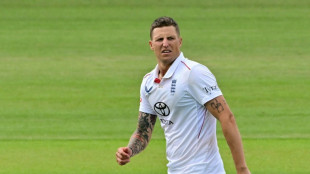 England's Carse charged by cricket body over nightclub incident

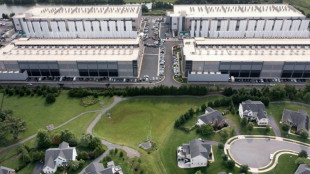 Amazon vows $1 bn for data center towns, decries 'myths'
 Oil prices drop on G7 fuel release, US jobs data boosts stocks
 G7 agrees deal to ease global energy supply concerns
 Spain's government dealt blow as lawmakers reject housing bills
Holed up in a makeshift studio in Sydney's Russian consulate, a pro-Putin activist on the run from Australian police is using the country's upcoming Indigenous rights referendum to push the Kremlin's agenda.
Simeon Boikov, 33, spends a chunk of his time perched in front of a printed bookshelf backdrop, weaving anti-Western rhetoric with conspiracy theories in regular video broadcasts.
The self-styled "Aussie Cossack" makes no secret of his loyalties: a Russian military symbol is pinned to his lapel.
He's not especially popular, garnering a few thousand views for most posts.
And, as someone convicted in absentia of assaulting a 76-year-old man at a protest, he is perhaps not the most compelling voice in any debate.
But experts describe Boikov as part of a potent ecosystem of "micro-influencers" that, collectively, have had a substantive impact on a referendum debate that will shape Australia's political future.
On Saturday almost 18 million Australians will decide whether to recognise Indigenous Australians in the constitution for the first time, and whether to create a permanent Indigenous consultative body.
'Yes' supporters believe the reform would help make amends for Australia's often brutal history of colonisation and race-based repression -- what many consider their nation's original sin.
But the referendum debate has been awash with misinformation, according to research by Queensland University of Technology's associate professor in digital media Timothy Graham.
After examining thousands of tweets on X, formally Twitter, Graham found that the vote's opponents often pushed misinformation designed to stir voter fears about what the proposed advisory body would do.
"People are fearful online –- they are worried and afraid of what will happen if the referendum is successful, based on misinformation they've seen," he told AFP.
Throughout the campaign, AFP has debunked numerous falsehoods, from claims the intended Indigenous advisory body would see landowners stripped of their properties to conspiracy theories decrying the vote as a United Nations plot to turn Australia into a totalitarian republic.
With a few days left in campaigning, the polls show the 'no' campaign with an almost unassailable lead.
- 'Disinformation and propaganda' -
If Australians vote 'no', it will not be because of Boikov.
But that does not mean he and others spreading misinformation don't have an impact.
Boikov can reach niche audiences, Sydney University researcher Olga Boichak told AFP.
And together, multiple niche audiences can form something like a coalition.
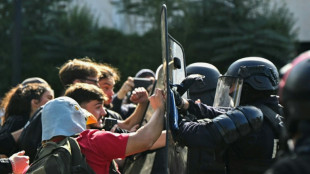
Last month hundreds of people gathered in Sydney, ostensibly to protest the referendum but carrying signs opposing Covid-19 vaccines and the United Nations -- or supporting QAnon conspiracy theories.
Boikov appeared to be a major driver of the protest.
He and similar actors can become a "catalyst" between groups that feel disenfranchised, according to Boichak.
Seen in this light, the Kremlin's interest in the referendum is obvious, researcher Boichak said. "It is in Russia's interest to make Australia a less democratic country."
And with this loose coalition it becomes "very easy to recruit certain populations into the Russian sphere of influence", she said.
Despite his temporary accommodation, Boikov downplayed his links to Moscow in a video call with AFP.
"The Voice (referendum) has nothing to do with Russia," he said. "This is all purely my personal initiative, there is no link between what I do, what I broadcast and the Kremlin."
Boikov regularly rails against Australian and US support for Ukrainian forces fighting against Russia.
Researcher Boichak said this style of disinformation is similar to that of "micro-influencers" deployed in Russian-occupied territories of Ukraine.
Sometimes, political micro-influencers may not even be aware they are part of a broader strategy, she said.
A.Rodriguezv--AMWN