-
 With elections ahead, Latvia's Russian-speakers reject Moscow's help
-
North Korea denies South's claim it was apparently behind DMZ mine blasts
-
 Brazil football clubs face massive sponsorship blow from betting ban
-
West Bank's violent settlers part of a new generation fuelled by ideology
-
 ChatGPT maker wants to be the App Store for AI as safety concerns grow
-
US-led coalition ends mission in Iraq
-
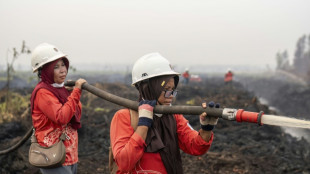 Women fight fires and sexism in Indonesian Borneo
-
Pope-backed White Sox join Braves with MLB playoff wins

-
 Forsling's OT blast lifts Florida over Carolina in NHL opener
-
NBA close to picking new $12-13bn Vegas team owners: report

-
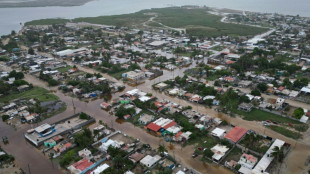 Hurricane Polo sweeps over Mexico's Pacific coast, heads inland
-
LA28 Olympics torch relay to visit all 50 states
-
 Grynspan pulls ahead in race to lead UN: diplomat
-
Spain brush aside Croatia in Nations League, England down Czechs

-
 Trump touts AI boss pledge to self-regulate
-
Trump hails 'morally binding' AI self-regulation pledge
-
 Oil down, but stocks lower as bond yields rise
-
Yamal inspires Spain to Croatia romp on World Cup homecoming

-
 England break down stubborn Czechs to claim first Nations League win
-
UN to hold fourth informal poll of secretary-general candidates
-
 UN Security Council extends Haiti anti-gang force by 6 months
-
Who are the Emiratis behind crisis-hit Manchester City?

-
 Manchester City guilty of Premier League charges: What comes next?
-
Singer Angelique Kidjo urges Africans to 'create together'
-
 Man City chief Soriano slams Premier League 'conspiracy theory'
-
Alleged Rihanna mansion shooter mentally fit for trial, says judge
-
 Hurricane Polo sweeps over Mexico's Pacific coast
-
Mystery over UK airbase scare as police find petrol not explosives

-
 Man City must be relegated after guilty verdict says club's former chairman
-
OpenAI unveils low-cost AI model, a day after shelving Astra upgrade

-
 German far-right aims to lead Saxony-Anhalt govt in December
-
Premier League confirms Man City guilty of serious financial breaches
-
 Little damage as Hurricane Polo sweeps over Mexico's Pacific coast
-
Brazil's Lula turns to Bad Bunny tune to criticise Trump ahead of polls

-
 Manchester City guilty of breaking financial rules - Premier League
-
Nigerian dancer eyes world record after seven-day marathon

-
 FIFA boss Infantino blasted as would-be 'emperor' by UEFA's Ceferin
-
Swiss regulator concludes Julius Baer bank probe

-
 Stocks move lower despite oil prices dropping
-
Brazil's patron saint pulled into latest election scrap
-
 AI driving up innovation investment: UN
-
Football overload leaves players near 'breaking point', warns Tebas

-
 UN Security Council extends Haiti mission by 6 months
-
Paris Eiffel Tower says chief to step down after uproar over removing women staff

-
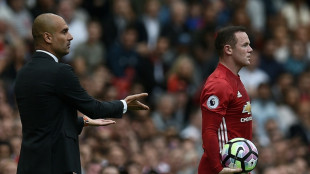 Man Utd do not deserve medals if Man City stripped of titles: Rooney
-
Amaze Holdings (NYSE: AMZE) Executes Binding LOI to Acquire BullionFX | Alchemy, a Decentralized Gold-Backed Financial Ecosystem for Valued at US$155 Million

-
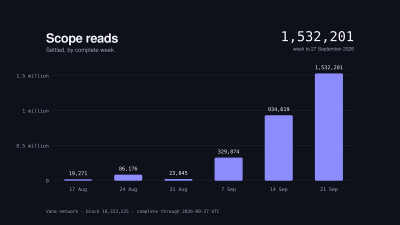 Vana Completes Expanded Staking as Part of the Vega Upgrade, Publishes Expanded VANA Token Economics
-
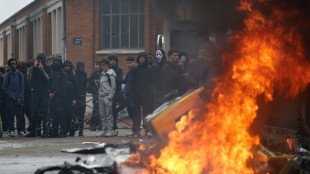
Clashes between French teens, police as school blockades intensify
-
 Spain to cap gas price hikes, extend fuel discounts
-
Stocks move sideways despite oil moving lower

Virtuoso keeps Afghan music alive despite Taliban ban
Homayoun Sakhi closes his eyes and runs his fingers along the long neck of his wooden instrument encrusted with mother-of-pearl.
"I feel like I have my Afghanistan in my hand," says Sakhi, one of the world's most renowned performers on the country's national instrument, the rubab.
He is jet-lagged after flying in from California to perform at London's Barbican concert hall to raise funds for emergency medicine and education in his homeland.
Along with the growing humanitarian crisis, Afghanistan's rich musical culture is under threat as the Taliban have banned music since their return to power last year.
Widely shared videos have shown them smashing and burning instruments. Musicians have fled the country.
"Right now we don't have music in Afghanistan," says Sakhi.
"It's really difficult because there's no concerts, there's no music, and (for musicians) it's very difficult to be without any money and without a job.
"That's why they're trying to go somewhere to play."
The Taliban clampdown is a repeat of the hardliners' previous time in power between 1996 and 2001, when they banned music as sinful, under a strict interpretation of Islamic law.
The rubab dates back thousands of years and has enjoyed a revival thanks to Sakhi, who is known as a musical innovator and has developed a more modern playing style.
BBC Music Magazine called him "one of the greatest performers" on the instrument.
Born in Kabul, he left Afghanistan with his family in 1992, in the chaotic aftermath of the Soviet withdrawal, moving to Pakistan.
He later settled in Fremont, California, which is known for its large Afghan community, and has launched an academy teaching the rubab.
"Each time I'm playing, I'm home, I feel like I'm in Afghanistan", he says.
- 'Cannot ban this' -
Music including pop was allowed a free rein during the past two decades in Afghanistan, with local television even showing a "Pop Idol" talent contest equivalent.
But following the Taliban's return to power, traditional Afghan music now relies on devotees overseas.
The "Songs of Hope" concert at the Barbican last Saturday was organised by Afghanistan International TV.
The London-based channel was set up by Volant media company, which also runs a Persian-language channel for Iranians.
It will screen a documentary about the concert in March.
In the first half, Sakhi plays classical Afghan pieces, followed by folk music that gets the audience clapping along.
He performs with UK-based virtuoso Shahbaz Hussain on tabla and Iranian musician Adib Rostami on the kamancheh, a bowed string instrument.
"I had the idea to do the concert -- that was the only thing I can do as a musician", said Rostami, one of the event's organisers.
"As we know, now the music is banned in Afghanistan -- they cannot ban this from the people around the world."
"We have to try as musicians, as music lovers, to find a way to keep this cultural heritage for the future".
The current situation for musicians under the Taliban is "back in the 1990s", he says.
"Again, you cannot be a musician in Afghanistan.
"As far as I know, most of the musicians... are trying to get out of the country."
A group of students and teachers from a national music school in Kabul arrived as refugees in Portugal in December, after the Taliban's takeover earlier last year.
Afghanistan's first all-female orchestra, Zohra, set up in 2016 and named after a Persian goddess of music, has moved to Qatar.
A.Malone--AMWN