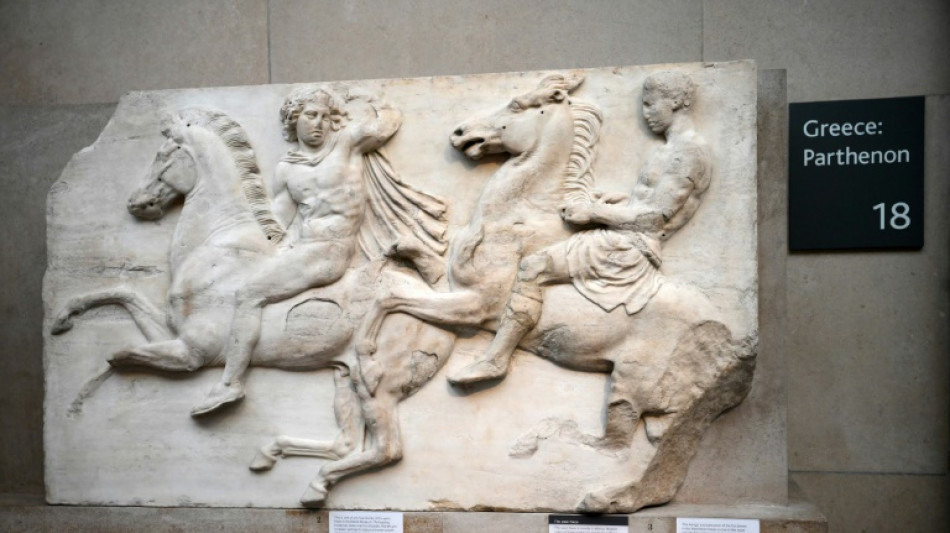
UK archives show Parthenon marbles role in 2012 Olympics lobbying / Photo: Daniel LEAL - AFP
 #IAmJaneDoe: online support campaign in US university rape case
 Brazil shine on Selecao's first visit to India
 Zverev sets up Djokovic quarter-final at China Open, Rybakina out

 Happier at home, Bordeaux hammer Lyon in Top 14
 Lula, Bolsonaro in final push for votes ahead of knife-edge election

 Boisterous fashion week barnstorms 'sleepy' Nigerian capital
 UAE investigators say flydubai co-pilot was planning 'terrorist act'
 Rahul smacks century in India v Windies ODI

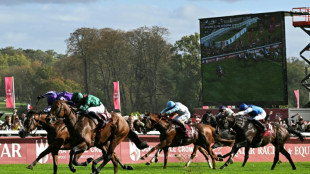 Daryz seeks to join exclusive club of dual Arc winners
 Russia warns diplomats to leave Kyiv over new strikes threat

 Olympic champ Zheng rebukes rowdy home crowd at China Open

 World No.1 Sinner pulls out of Shanghai Masters to delay return

 Red Bull's Verstappen grabs pole position for Bahrain GP

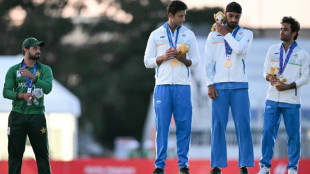 India beat Pakistan in blockbuster as golfer Kim wins 'crazy' gold
 India beat arch-rivals Pakistan to win Asian Games cricket gold

 Ethiopia's Tigray rebels abandon regional capital as govt advances: journalist

 Tom Kim powers to Games gold and exemption from military service

 Split loyalties for Indian football fans at Brazil friendly

 India-Pakistan blockbuster brings cricket fever to Japan baseball field

 Wong waiting on Rafa after winning Asian Games tennis gold
 With Russia next door and rising costs, Latvia goes to the polls

 Penalty hero rues empty seats as Games hosts Japan win football gold
 North Korea fires ballistic missile after Seoul's apology demand

 US regulator finds Boeing 737 MAX software bug 'not a safety concern'

 Ohtani 'managing' injuries as Dodgers launch MLB post-season

The UK government tried to help Greece secure the Parthenon Marbles on loan two decades ago in a bid to drum up support for London's 2012 Olympics' bid, according to files released Friday.
Internal British government correspondence from 2002 and 2003 about the Parthenon friezes, also known as the Elgin Marbles, were revealed as the issue continues to dog UK-Greece relations.
Just last month, the Elgin marbles caused a fresh diplomatic spat with UK Prime Minister Rishi Sunak axing a meeting with his Greek counterpart Kyriakos Mitsotakis at the last minute.
It followed a BBC interview with Mitsotakis the previous day in which he aired frustrations over the long-contentious issue.
The 2,500-year-old sculptures were taken from the Parthenon temple at the Acropolis in Athens in the early 19th century by British diplomat Thomas Bruce, the earl of Elgin, and subsequently handed to the British Museum.
Greece maintains the marbles -- a major draw for visitors at the world-famous London museum -- were stolen, while the UK insists they were obtained legally and should remain on display in the British capital.
In the early 2000s, progress on resolving the thorn in bilateral ties appeared imminent.
Greece proposed a then-novel solution, suggesting the friezes return to Athens in the form of a long-term loan, bypassing the issue of ownership.
The country was keen for the sculptures to go on display in the Greek capital -- at a new museum being built on the Acropolis -- to coincide with the 2004 Olympic Games set to be held there.
At the same time, then-UK leader Tony Blair and his government were stepping up lobbying efforts to secure the 2012 Olympics for London.
- 'Blinkered intransigence' -
Against that backdrop Sarah Hunter, Blair's lead adviser on culture, media and sport policy issues, sent him an April 2003 memo arguing "there are good reasons for us to change tack" on the marbles.
Several months earlier, Blair had discussed the loan proposal with his Greek counterpart Konstantinos Simitis, but had subsequently written to him saying "this is not an issue on which the UK govt (government) would seek to intervene" on.
London had long maintained it was a matter for the British Museum and its trustees alone.
But noting it could be a "powerful bargaining chip" in International Olympic Committee votes for the 2012 Games, Hunter now suggested the government "privately and publicly encourage" the museum "to find an accommodation over the next 12 months".
The top aide acknowledged the Greek case had "become more sophisticated" with its loan plan, and accused the museum of "blinkered intransigence to consider any compromises".
She goes on to suggest supporting a recent proposal from former British foreign secretary David Owen for a UK-Greece treaty governing the loan arrangement.
"It seems sensible: rational policy-making favours the Greeks," Hunter wrote, while adding the museum's trustees must ultimately make the decision.
Blair appears amenable, replying "yes" in a handwritten note on the memo.
He suggests putting Owen "in charge of negotiating this", adding that the veteran politician could "probably help with the BM (British Museum), whilst distancing it a little from govt".
However, the initiative appears to have quickly stalled, with the museum issuing a statement four months later in August 2003 saying "the trustees cannot envisage any circumstances under which they could accede to the Greek government's request".
Britain nonetheless succeeded in securing the 2012 Olympics, but two decades on, it remains at loggerheads with Athens over the Parthenon Marbles.
S.F.Warren--AMWN