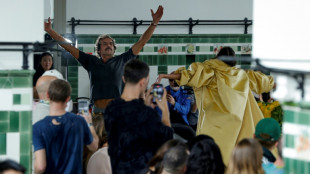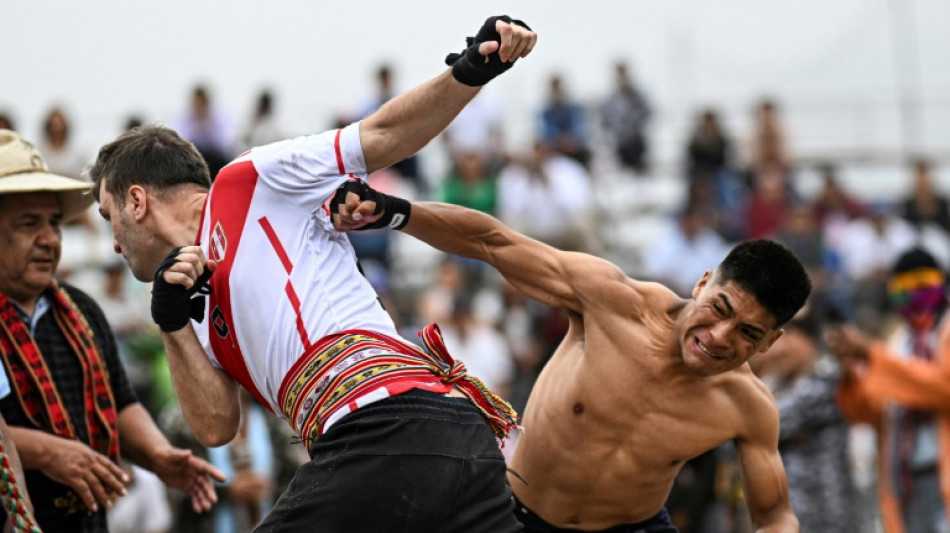
Takanakuy, the Andean 'fight club' that clears the air for a new year / Photo: ERNESTO BENAVIDES - AFP/File
 #IAmJaneDoe: online support campaign in US university rape case
 Brazil shine on Selecao's first visit to India
 Zverev sets up Djokovic quarter-final at China Open, Rybakina out
 Happier at home, Bordeaux hammer Lyon in Top 14
 Lula, Bolsonaro in final push for votes ahead of knife-edge election
 Boisterous fashion week barnstorms 'sleepy' Nigerian capital

 UAE investigators say flydubai co-pilot was planning 'terrorist act'
 Rahul smacks century in India v Windies ODI
 Daryz seeks to join exclusive club of dual Arc winners
 Russia warns diplomats to leave Kyiv over new strikes threat
 Olympic champ Zheng rebukes rowdy home crowd at China Open
 World No.1 Sinner pulls out of Shanghai Masters to delay return
 Red Bull's Verstappen grabs pole position for Bahrain GP
 India beat Pakistan in blockbuster as golfer Kim wins 'crazy' gold
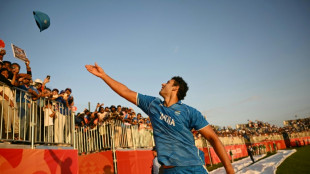 India beat arch-rivals Pakistan to win Asian Games cricket gold
 Ethiopia's Tigray rebels abandon regional capital as govt advances: journalist
 Tom Kim powers to Games gold and exemption from military service
 Split loyalties for Indian football fans at Brazil friendly

 India-Pakistan blockbuster brings cricket fever to Japan baseball field
 Wong waiting on Rafa after winning Asian Games tennis gold
 With Russia next door and rising costs, Latvia goes to the polls

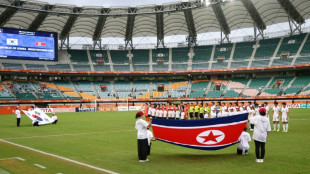 Penalty hero rues empty seats as Games hosts Japan win football gold
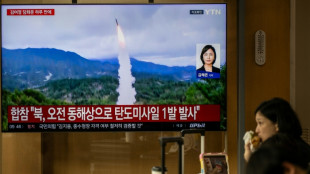 North Korea fires ballistic missile after Seoul's apology demand

 US regulator finds Boeing 737 MAX software bug 'not a safety concern'

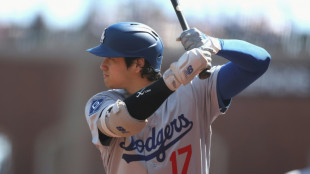 Ohtani 'managing' injuries as Dodgers launch MLB post-season

The fighting begins and ends with a hug, part of a singular ritual that has residents of the Peruvian Andes punching and kicking in a year-end fight competition known as Takanakuy.
Before the dueling starts in an open-air arena, male fighters remove their elaborate headgear -- stuffed birds, foxes or even goat heads worn as symbols of strength or to bring good luck.
Many participants in the holiday tradition come from the town of San Juan de Lurigancho in Chumbivilcas province, part of the Cusco department southeast of Peruvian capital Lima.
The atmosphere is more celebratory than grim. Wearing traditional costumes or leather jackets and boots, men and women join to do the Huaylia, a traditional Andean dance.
The party, however, will end in a fight.
- Settling neighborly disputes -
It's all part of the Takanakuy, a Quechua-language word that means "to hit each other."
The tradition, which dates to Spanish colonial times, evolved over the centuries to become a means of settling accounts between neighbors in areas where there was no authority.
Before, the fights were "about land disputes, and this was the way to resolve problems between families, between neighbors," 33-year-old hairdresser and fighter Froilan Rosas told AFP.
Some people fight to defend personal or family honor.
The Takanakuy takes place every December 25 in the Peruvian regions of Cusco, Apurimac, Huancavelica and Arequipa, as well as in the Bolivian Andes. Some regions stage a variation: the women-only Warmi Takanakuy.
The goal is to end the year in peace, residents say.
- 'Ends with a hug' -
The party pauses, and the fighting begins.
A fighter challenges another by calling out his or her first and last name. The person challenged is free to refuse, and may offer a substitute.
Before stepping into the ring, male fighters -- some shirtless -- bind their hands with cloth and swap their shoes for boots.
In this club, duels are brief, lasting no more than a minute, with only punching and kicking allowed.
A referee presides over the fight, and four judges decide the winner.
"This is a ritual," said Julio Boza, a burly 72-year-old and one of the organizers. "It starts with a fight and, after fighting, ends with a hug."
Above all, Boza added, "It is a way to resolve everything that we have had in the year. This is the time to resolve it."
On this day there were 10 fights before dozens of fans. Anyone, even foreigners, can join in.
Although Takanakuy once was based largely on existing rivalries, today it is more a sport for the young.
"We're boys, so we want to measure our strength, to know how we're doing," said Omar Huachaca, 30, a merchant from Cusco.
"More than anything, the blood in our veins brings us to the party."
F.Pedersen--AMWN