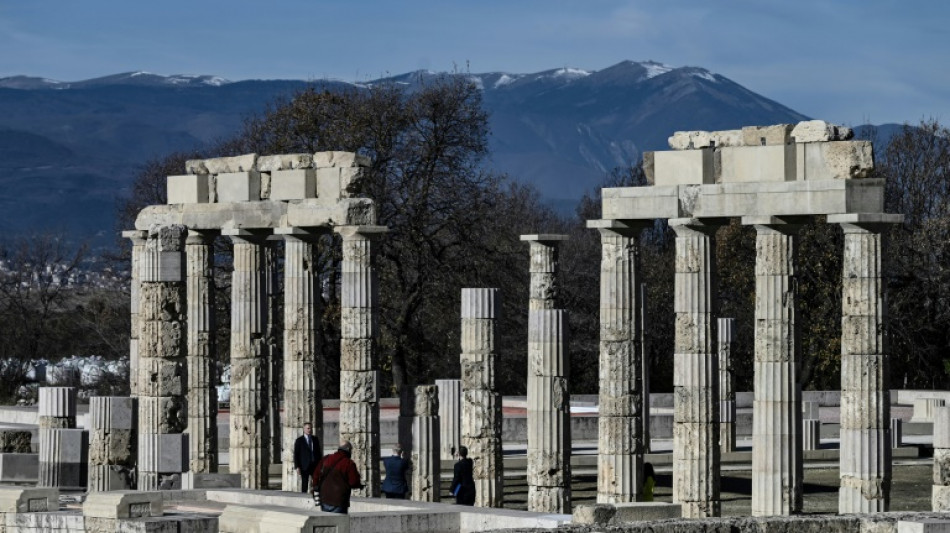
Greece revives 2,300 year-old palace where Alexander The Great was crowned / Photo: Sakis MITROLIDIS - AFP
 #IAmJaneDoe: online support campaign in US university rape case
 Brazil shine on Selecao's first visit to India
 Zverev sets up Djokovic quarter-final at China Open, Rybakina out
 Happier at home, Bordeaux hammer Lyon in Top 14
 Lula, Bolsonaro in final push for votes ahead of knife-edge election

 Boisterous fashion week barnstorms 'sleepy' Nigerian capital

 UAE investigators say flydubai co-pilot was planning 'terrorist act'
 Rahul smacks century in India v Windies ODI

 Daryz seeks to join exclusive club of dual Arc winners
 Russia warns diplomats to leave Kyiv over new strikes threat

 Olympic champ Zheng rebukes rowdy home crowd at China Open

 World No.1 Sinner pulls out of Shanghai Masters to delay return
 Red Bull's Verstappen grabs pole position for Bahrain GP

 India beat Pakistan in blockbuster as golfer Kim wins 'crazy' gold

 India beat arch-rivals Pakistan to win Asian Games cricket gold

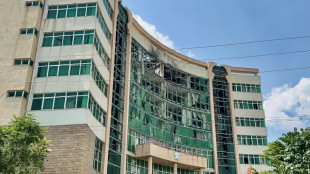 Ethiopia's Tigray rebels abandon regional capital as govt advances: journalist

 Tom Kim powers to Games gold and exemption from military service

 Split loyalties for Indian football fans at Brazil friendly

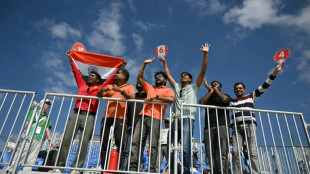 India-Pakistan blockbuster brings cricket fever to Japan baseball field

 Wong waiting on Rafa after winning Asian Games tennis gold
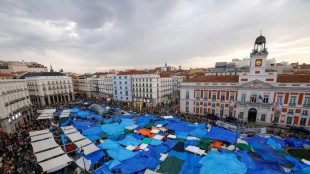
 With Russia next door and rising costs, Latvia goes to the polls

 Penalty hero rues empty seats as Games hosts Japan win football gold

 North Korea fires ballistic missile after Seoul's apology demand

 US regulator finds Boeing 737 MAX software bug 'not a safety concern'

 Ohtani 'managing' injuries as Dodgers launch MLB post-season

An ancient palace where Alexander The Great was crowned King of Macedonia will reopen to the public on Sunday after a 16-year 20 million euro renovation aiming to restore its past glory.
At a ceremony on Friday, Greek Prime Minister Kyriakos Mitsotakis called the Palace of Aigai a "monument of global importance."
The 4th century BC site spreads over 15,000 square meters was one of the most important in classical Greece alongside the Parthenon in Athens.
Aigai was capital of the Macedonian kingdom, the dominant military power of the time, and archeologists say the palace was the kingdom's spiritual centre.
Built by Philip II, the father of Alexander the Great, the tombs of Philip and other Macedonian kings are nearby.
After the assassination of his father, Alexander was crowned at the palace in 336 BC before launching a military campaign that created an empire stretching into modern-day India.
The palace "has a cultural and national character, because it confirms the Greek identity of Macedonia throughout the centuries," Mitsotakis said.
The site includes the royal palace and a colonnade that surrounded the palace and the agora, where ancient Macedonians debated important matters.
It was in the courtyard, with an 8,000 capacity, that Alexander was proclaimed king.
The Romans destroyed the palace in 148 BC. Excavations to uncover the site started in 1865 and continued into the 20th century.
The restoration project began in 2007 with help from the European Union.
Situated near the modern day Greek village of Vergina, the palace and the nearby tombs are listed as a World Heritage Site by UNESCO.
Greece has boosted investment in its many antique sites which have become an important source of tourist revenue.
For the past three decades, it has been demanding the return of sculptures taken from the Parthenon that are in the British Museum, saying they were looted in the 19th century when Greece was under Ottoman rule.
D.Kaufman--AMWN