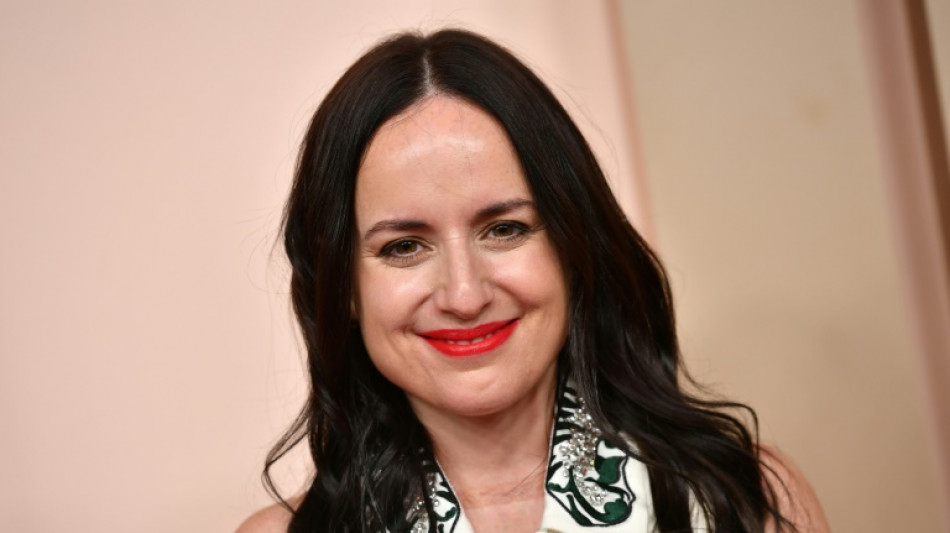
Love and Alzheimer's collide in Oscar-nominated 'Eternal Memory' / Photo: Valerie MACON - AFP/File
 ALEX BODI ȘI AMBASADORUL REPUBLICII SUDANUL DE SUD, GUM DOMINIC MATIOK, DISCUTĂ LA BERLIN DESPRE POSIBILITATEA ÎNFIINȚĂRII UNUI CONSULAT ONORIFIC LA BUCUREȘTI
 Dodgers step up World Series three-peat bid with 5-3 win over Braves

 Spain break down Czechs as England outclass Croatia in Nations League

 Yamal on target as Spain hold off Czech Republic

 Latvian exit polls suggest pro-European choice
 Lula, Bolsonaro wrap up campaigns ahead of knife-edge election

 Tuchel hails 'complete' England after Croatia demolition

 Fury to invite Trump to lead ring walk before Joshua showdown

 Fashion industry in 'precarious moment', says Vivienne Westwood supremo
 Seventh heaven for England in Nations League rout of Croatia

 Storms, flooding cause chaos on Greek holiday island of Crete

 #IAmJaneDoe: online support campaign in US university rape case

 Brazil shine on Selecao's first visit to India
 Zverev sets up Djokovic quarter-final at China Open, Rybakina out
 Happier at home, Bordeaux hammer Lyon in Top 14

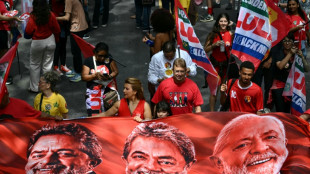 Lula, Bolsonaro in final push for votes ahead of knife-edge election

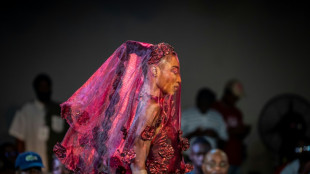 Boisterous fashion week barnstorms 'sleepy' Nigerian capital

 UAE investigators say flydubai co-pilot was planning 'terrorist act'
 Rahul smacks century in India v Windies ODI

 Daryz seeks to join exclusive club of dual Arc winners
 Russia warns diplomats to leave Kyiv over new strikes threat
 Olympic champ Zheng rebukes rowdy home crowd at China Open
 World No.1 Sinner pulls out of Shanghai Masters to delay return
 Red Bull's Verstappen grabs pole position for Bahrain GP
 India beat Pakistan in blockbuster as golfer Kim wins 'crazy' gold

As a journalist, Augusto Gongora fought to chronicle Chile's violent military dictatorship. But it was his battle to hold onto his own memories that made him the subject of an Oscar-nominated documentary.
"The Eternal Memory" charts the progression of Alzheimer's disease through the lens of a couple who had to work every day to keep alive the memory of their love, just as their country strives not to forget its own violent past.
"The film became a metaphor for the loss of memory of an entire country, told through what was happening to Gongora," its Chilean director Maite Alberdi told AFP.
"But it is also a great reminder that when you lose your rational memory, there is an emotional memory that transcends -- and that historic pain remains even when you lose your memory."
The movie, which will compete for best documentary at the Oscars on March 10, follows for five years the daily lives of Gongora, who has been diagnosed with Alzheimer's, and his wife Paulina Urrutia, an actress and former Chilean culture minister who became his caregiver.
Alberdi, 40, sought to bring a fresh perspective on the impact of a devastating disease.
"I saw a very special way of dealing with Alzheimer's through love -- without seeing Alzheimer's as a tragedy, but only as a context. And understanding that fragility is part of life," she said.
For the director -- who was also nominated for an Oscar in 2021 for "The Mole Agent," a documentary about loneliness in old age -- the experience of filming her latest project was bittersweet.
"It affected me, because I was experiencing his deterioration. But at the same time, it was a couple that I had a great time being with," she said.
"For me, it was not painful to film. It was a great lesson in love."
- 'I'm no longer here' -
As a journalist, Gongora had built his career in front of cameras. During Augusto Pinochet's brutal government, he was part of a clandestine news service.
He later co-wrote the book "Chile: La Memoria Prohibida" ("Chile: The Forbidden Memory"), which recounts the early years of the country's dictatorship.
After the regime ended in 1990, he went on to work in national television.
Having spent decades entering other people's homes to tell their stories, Gongora opened up the doors of his own for Alberdi's film, relinquishing his privacy at a highly vulnerable moment.
"He above all understood that he wanted to make this chronicle, that he wanted to tell the story of his fragility," said Alberdi.
"They threw themselves in, and got used to the presence of the camera."
The film intersperses scenes of the couple's daily routines following Gongora's diagnosis with archival images of their travels, important life events, and clips from his career.
In one scene, Urrutia reads to her husband the dedication that he signed in a copy of his book that he gave to her when they started dating in the 1990s.
It hauntingly reads: "Without memory we do not know who we are... Without memory, there is no identity."
The pandemic interrupted filming, but Alberdi improvised by sending a camera to Urrutia to continue the project in isolation.
"I initially thought we wouldn't be able to use the material," recalled the director. "But it turned out to be such deep material -- so intimate, so full of emotion -- that only a partner could have gotten it, when they were alone together.
"So this problem of the pandemic turned out to be a gift for the film."
The decision on when to stop filming was also a spontaneous response to circumstances.
"You see a scene in the movie where he says, 'I'm no longer here,'" said Alberdi.
"It was the first time in five years that I felt like he was uncomfortable with himself. And for me, when he felt that he was losing his identity, that was the limit."
Gongora died in May 2023, four months after the premiere of "The Eternal Memory" at the Sundance film festival, where it received the top jury prize for documentaries.
At next month's Academy Awards, it will contend with "20 Days in Mariupol," "Bobi Wine: The People's President," "To Kill a Tiger" and "Four Daughters."
M.Thompson--AMWN