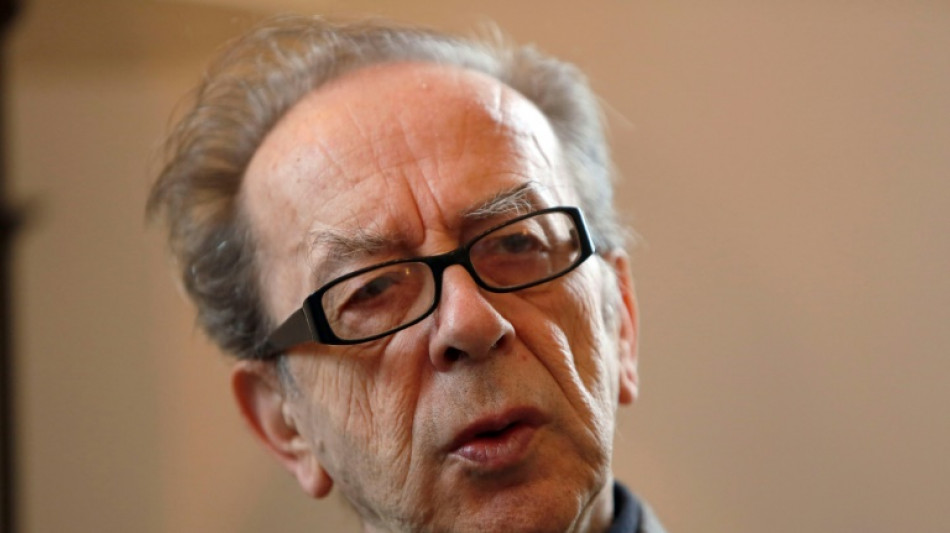
Albania's Kadare, whose novels defied dictatorship, dies aged 88 / Photo: Gali TIBBON - AFP/File
 'Act before it's too late': Tokyo residents fight for more trees

 'Disappointing' as South Korea flag mishap sees Games end on sour note

 Pre-COP host Tuvalu at frontline of climate change

 Hungary's dwindling paprika producers battle to save signature spice
 Cornell president vows review in wake of alleged student gang rape
 Latvian partial election results suggest pro-European choice
 In Egypt's Sinai, Gazan builds school for children displaced by war

 Trump tariffs a mixed bag for US auto industry

 Yemen government forces say struck Houthi targets

 Music links past, present for Pedro Pascal's cellist in 'Behemoth!'

 ALEX BODI ȘI AMBASADORUL REPUBLICII SUDANUL DE SUD, GUM DOMINIC MATIOK, DISCUTĂ LA BERLIN DESPRE POSIBILITATEA ÎNFIINȚĂRII UNUI CONSULAT ONORIFIC LA BUCUREȘTI

 Dodgers step up World Series three-peat bid with 5-3 win over Braves

 Spain break down Czechs as England outclass Croatia in Nations League

 Yamal on target as Spain hold off Czech Republic

 Latvian exit polls suggest pro-European choice
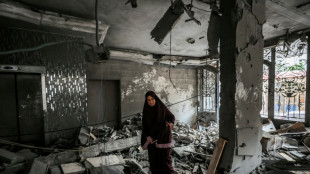
 Lula, Bolsonaro wrap up campaigns ahead of knife-edge election

 Tuchel hails 'complete' England after Croatia demolition

 Fury to invite Trump to lead ring walk before Joshua showdown

 Fashion industry in 'precarious moment', says Vivienne Westwood supremo
 Seventh heaven for England in Nations League rout of Croatia

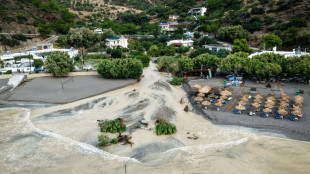 Storms, flooding cause chaos on Greek holiday island of Crete

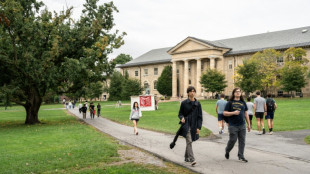 #IAmJaneDoe: online support campaign in US university rape case

 Brazil shine on Selecao's first visit to India
 Zverev sets up Djokovic quarter-final at China Open, Rybakina out
 Happier at home, Bordeaux hammer Lyon in Top 14
Acclaimed Albanian novelist Ismail Kadare -- an eternal bridesmaid for a Nobel literature prize -- died Monday of a heart attack aged 88, his editor and a Tirana hospital told AFP.
Doctors tried to revive the writer when he was brought to the hospital with "no signs of life", but he was declared dead at 8:40 am (0640 GMT) local time, the hospital said.
Editor and publisher Bujar Hudhri confirmed his death.
Through the epic sweep of novels like "Broken April" and "The General of the Dead Army", he used metaphor and quiet sarcasm to chronicle the grotesque fate of his country and its people under the paranoid communist dictator Enver Hoxha.
Despite being branded a traitor by Albania's communist leaders when he defected to France in 1990, Kadare was accused by some of enjoying a privileged position under Hoxha, who cut the Balkan country off from the rest of the world.
It was an accusation he dismissed with withering irony.
"Against whom was Enver Hoxha protecting me? Against Enver Hoxha?" Kadare told AFP in 2016.
"The hell of communism, like every other hell, was smothering in the worst sense of the term," Kadare told AFP in one of his last interviews in October.
"But literature transformed that into a life force, a force which helped you survive and hold your head up and win out over dictatorship.
"Which is why I am so grateful for literature, because it gives me the chance to overcome the impossible," said the writer, who despite being visibly frail, was still working.
S.Gregor--AMWN