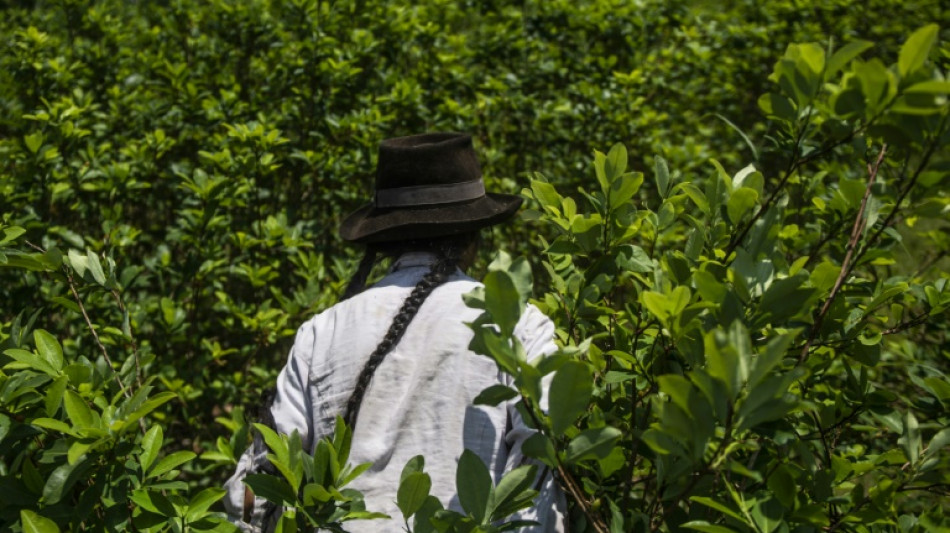
Peru to buy illegal coca crops to battle drug trafficking / Photo: ERNESTO BENAVIDES - AFP
 Xavi gets first win as Netherlands boss, Denmark beat Wales

 Madrid housing protest camp enters second night as PM vows action

 Tigray TV station hit by drone, rebels advance in north Ethiopia

 Banton hundred paves way for England ODI series win over Sri Lanka

 Milestone man Kohli powers India to big ODI win over West Indies

 Swiss reject plan to toughen neutrality

 Fitzpatrick closes out fourth win of year at French Open

 Zverev stars as Team Europe win Laver Cup

 UK PM urges 'calm' as thousands block flashpoint N.Ireland parade

 China's Yan one and done after golden Asian Games throw

 Kiss praises Wallabies' composure after wild Test finish

 एलेक्स बोडी और प्रो. डॉ. डायटर लाज़िक ने ALPHA WHEY और BODI एनर्जी ड्रिंक के लिए एक अनुबंध पर हस्ताक्षर किए

 Alex Bodi a prof. dr. Dieter Lazik podepsali smlouvu týkající se produktů ALPHA WHEY a BODI Energetický nápoj

 Banton takes England to 355-7 in Sri Lanka ODI decider

 أليكس بودي والبروفيسور الدكتور ديتر لازيك يوقعان عقدًا بشأن منتجي «ألفا ويل» و«بودي إنيرجي درينك»

 알렉스 보디와 디터 라지크 교수가 ALPHA WHEY 및 BODI 에너지드링크에 관한 계약을 체결했습니다.

 亞歷克斯·博迪(Alex Bodi)與迪特爾·拉齊克(Dieter Lazik)教授簽署關於 ALPHA WHEY 及 BODI 能量飲料的合約

 Алекс Боді та проф. д-р Дітер Лазік уклали договір щодо ALPHA WHEY та Боді Енергетичний напій

 Алекс Боди и проф. д-р Дитер Лазик заключили договор о выпуске продуктов ALPHA WHEY и BODI Энергетический напиток

 West Indies reach 295-7 after Greaves ton in India ODI

 England closing the gap on Spain says Kane

 Inspired Wallabies notch statement Test win over Springboks

 Assefa's world record bid at Berlin Marathon foiled by injury

 Alex Bodi and Prof. Dr Dieter Lazik sign a contract for ALPHA WHEY and BODI Energy Drink

 Swiss reject plan to toughen neutrality: projection

Peru's government has announced a plan to buy the nation's entire supply of illegal coca leaf -- the primary ingredient in cocaine -- for at least a year, as part of its battle against drug trafficking.
The South American country is one of the world's three largest producers of cocaine, alongside neighbors Colombia and Bolivia, according to the United Nations.
Peru currently produces an estimated 160,000 tons of coca leaf a year with 62,000 hectares of land dedicated to the crop.
But the vast majority of that, some 95 percent, is produced illegally and sold to drug-traffickers who turn it into about 400 tons of cocaine a year.
All legally grown coca must be sold to the state coca company ENACO but that amounts to only 2,500 tons a year.
Legal coca leaf producers are on a register that includes 95,000 growers. However, the government wants to create a new register for the other 400,000 unregistered producers.
"It is imperative, for at least a year, to buy coca leaf from existing registered producers and from those that will make up the newly created register," Cabinet Chief Anibal Torres said on Wednesday when presenting the initiative.
The plan would also see the demilitarization of Peru's main coca leaf growing valley, known by the acronym VRAEM.
Soldiers have been stationed in the south-central area since 2006, due to the continued presence of the Shining Path Maoist guerrilla movement, which is allied with drug trafficking groups.
Government opponents have criticized the new plan, saying it will increase drug trafficking.
"The message from the government is that it is legalizing coca leaf and it will buy illegal coca leaf. The message is grow coca, and that's very dangerous because we are talking about a primary material used in drug trafficking," former interior minister Ruben Vargas told AFP.
The coca leaf bought by ENACO is used to make sweets, herbal infusions, flour and for chewing like gum, which is an Andean tradition to help combat fatigue.
"By promoting the growing of coca leaf peasants will obviously have two markets: the state and drug traffickers," added Vargas.
"It will cause immeasurable damage not just to the environment but also the governability of the country."
Peru created the register of coca leaf producers in 1978 as part of a state policy to combat drug trafficking that also included the destruction of illegal crops.
Earlier this month, authorities began a weeks-long process of incinerating the 16.3 tons of illegal drugs already seized this year.
P.M.Smith--AMWN