French city rekindles burkini row with pool rule change / Photo: SAEED KHAN - AFP
 In Manchester, people say City scandal is 'shame for football'
 Stocks lacklustre as inflation data weighs on sentiment
 Israel-bound plane rerouted, pilots wounded in reported fight

 Truth commission on Sweden's Sami people seeks redress

 Energy costs spark inflation surges in France, Italy

 South Korea break China hearts to reach Asian Games football final

 Eala storms into Asian Games semi-finals to thrill adoring fans

 Turkey freezes ex-minister's assets as fund crisis grows

 What we know about the North Korean POW dispute
 Most equities rise after oil price plunge, US data in focus

 Polar oceans transformed as warming melts ice habitats: research
 Lost shark becomes viral star in South Korea

 Dangote to launch $16bn refinery in Kenya

 North Korean leader 'extremely obese': Seoul spy agency
 Yankees and pope-backed White Sox start MLB playoffs with wins

 Malaysia's ex-PM Mahathir in hospital for observation
 'No limits': Marathon world record holder Sawe chasing history
 Countdown begins to biggest-ever Rugby World Cup
 Bangladesh women lose ground after quota reform

 Vietnam admits 'differing opinions' on Hanoi development

 Stocks temper gains as oil pares heavy losses, US data in focus

 New Zealand denies breaching climate commitments to EU

 Albert becomes youngest US scorer in 4-2 win over Chile

 Pirate island's plunging population shows Greece's demographic decline
 With elections ahead, Latvia's Russian-speakers reject Moscow's help

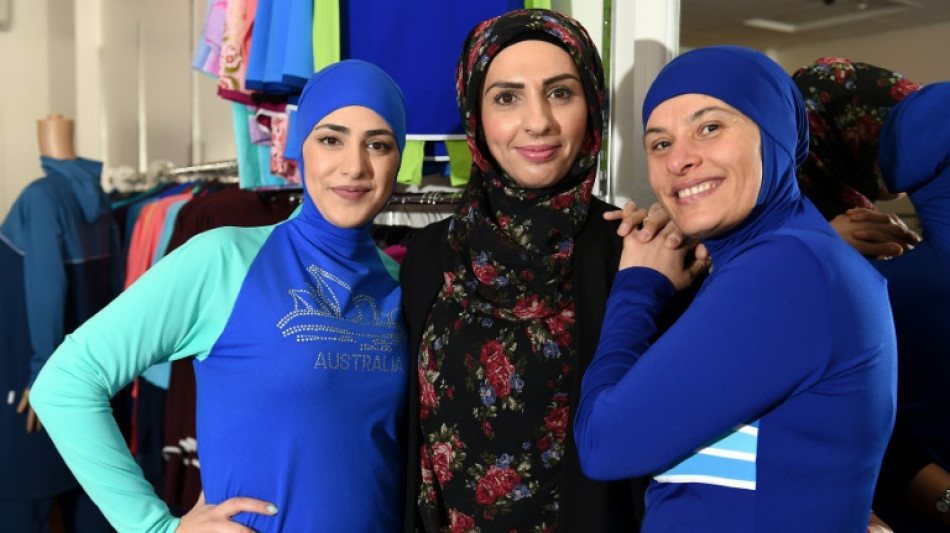
The Alpine city of Grenoble is set to reignite one of France's recurring summer debates on Monday when it votes to authorise the "burkini" in state-run swimming pools.
The all-in-one swimsuit, used by some Muslim women to cover their bodies and hair while bathing, has become almost as topical as ice cream and sun hats during the holiday season in recent years.
Seen as a symbol of creeping Islamism by its critics and an affront to France's secular traditions, many right-wingers and some feminists would like to ban it outright.
It is prohibited in most state-run pools -- for hygiene, not religious reasons -- where strict swimwear rules apply to all, including men who are required to squeeze into tight-fitting trunks.
Grenoble's city council, dominated by the EELV green party, is set to scrap its bathing dress code on Monday, effectively authorising long body coverings, beach shorts and topless bathing.
"Our intention is to remove all of the abnormal clothing restrictions," mayor Eric Piolle said recently. "The issue is not being for or against the burkini specifically."
Opponents see it differently, including the influential conservative head of the wider Auvergne-Rhone-Alpes region, Laurent Wauquiez, who has promised to withdraw funding from the city.
"I am convinced that what Mr Piolle is defending is a dreadful dead end for our country," Wauquiez said at the beginning of May, accusing him of "doing deals with political Islam" to "buy votes".
- Discriminatory -
The regional spat has put the burkini back in the headlines nationally, animating French talk shows and the political class ahead of parliamentary elections next month.
The issue of how people dress for the pool touches on highly sensitive topics in France, including fears about the influence of Islam and threats to the country's cherished secularism.
The right to worship freely is constitutionally protected, but the French state is also bound by law to be neutral in religious matters, including inside institutions.
"The burkini aims, purely and simply, to impose Islamist values at the heart of bathing areas and public leisure pursuits," an open letter written by opposition councillors in Grenoble said last week.
Attempts by several local mayors in the south of France to ban the burkini on Mediterranean beaches in the summer of 2016 kicked off the first firestorm around the bathing suit.
The rules, introduced after a string of terror attacks in France, were eventually struck down as discriminatory.
Three years later, a group of women in Grenoble caused a splash by forcing their way into a pool with burkinis, leading the prime minister at the time to insist that the rules should be followed.
French sports brand Decathlon also found itself at the centre of a similar row in 2019 when it announced plans to sell a "sports hijab" enabling Muslim women to cover their hair while running.
- For or against? -
Monday's vote in Grenoble "is an important moment for everyone concerned and their allies, but also in the fight against Islamophobia and control over women's bodies", local campaign group Citizens' Alliance wrote on its Facebook page.
Demonstrations supporting and opposing the move are also planned in the city following the council meeting where mayor Piolle is expected to succeed in pushing through the change.
French feminists are split, with some seeing the burkini as a symbol of male oppression and others such as Caroline De Haas writing that "no one should be stigmatised in a pool because of their choice of swimwear".
Grenoble would not be the first to change its rules, however.
The northwestern city of Rennes quietly updated its pool code in 2019 to allow burkinis and other types of swimwear.
The debate about the burkini comes as French Muslim women footballers are battling to overturn a ban on the wearing of religious symbols during competitive matches.
The French Football Federation currently prevents players from playing while wearing "ostentatious" religious symbols such as the Muslim hijab or the Jewish kippa.
A women's collective known as "les Hijabeuses" launched a legal challenge to the rules in November last year.
F.Schneider--AMWN