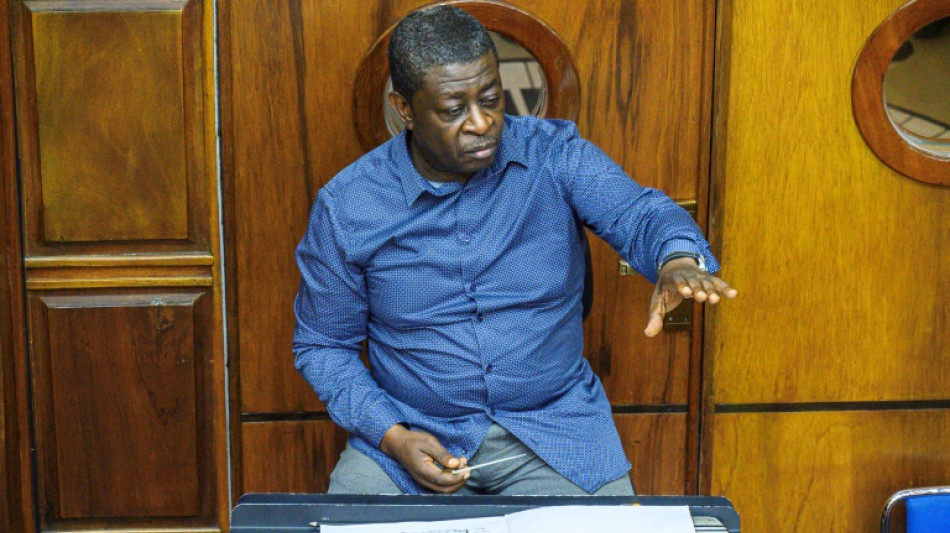
Top Africa orchestra began with brake cables for strings / Photo: Hardy BOPE - AFP
 Lula, Bolsonaro in final push for votes ahead of knife-edge election
 Boisterous fashion week barnstorms 'sleepy' Nigerian capital
 UAE investigators say flydubai co-pilot was planning 'terrorist act'
 Rahul smacks century in India v Windies ODI
 Daryz seeks to join exclusive club of dual Arc winners
 Russia warns diplomats to leave Kyiv over new strikes threat
 Olympic champ Zheng rebukes rowdy home crowd at China Open
 World No.1 Sinner pulls out of Shanghai Masters to delay return
 Red Bull's Verstappen grabs pole position for Bahrain GP
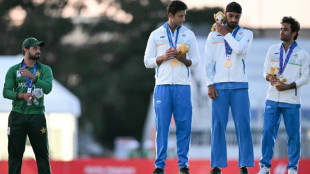 India beat Pakistan in blockbuster as golfer Kim wins 'crazy' gold
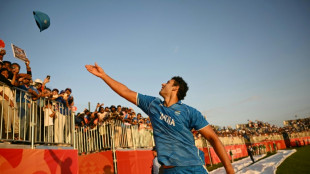 India beat arch-rivals Pakistan to win Asian Games cricket gold
 Ethiopia's Tigray rebels abandon regional capital as govt advances: journalist
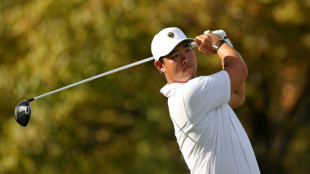
 Tom Kim powers to Games gold and exemption from military service
 Split loyalties for Indian football fans at Brazil friendly
 India-Pakistan blockbuster brings cricket fever to Japan baseball field
 Wong waiting on Rafa after winning Asian Games tennis gold
 With Russia next door and rising costs, Latvia goes to the polls
 Penalty hero rues empty seats as Games hosts Japan win football gold
 North Korea fires ballistic missile after Seoul's apology demand
 US regulator finds Boeing 737 MAX software bug 'not a safety concern'

 Ohtani 'managing' injuries as Dodgers launch MLB post-season
 New "What Is a Gold IRA?" Titled Guide Released for Consumers to Explain Rules, Steps and Best Providers
 Botched US execution leaves murderer unconscious on ventilator: lawyers
 Cornell rape case exposes sexual violence at US colleges
 France held by Italy in Zidane's homecoming after Olise stunner
When Armand Diangienda founded the Kimbanguist Symphony Orchestra -- one of the most famous in Africa -- in 1994, they had so few instruments that musicians had to share.
They got to play them for only 15 minutes before handing them on to the next person.
"When a string broke, we would replace it with bicycle (brake) cables," he told AFP.
With the Democratic Republic of Congo at war and in chaos for most of the orchestra's first decade, they had to mend and make do with the poor quality instruments they could find.
"We didn't know how to buy a violin, we didn't know how to buy a string," Diangienda said. "So when a violin broke we had to repair it."
But "we were motivated".
The orchestra, which began with a ragtag band of around a dozen string musicians, has since gone on to become a trailblazer for classical music in Africa, with fans all over the world.
"At the beginning it was really just a dream," Diangienda told AFP from a studio in its Kinshasa headquarters as musicians tuned up outside.
The orchestra now boasts 200 highly accomplished members, including a choir.
- 'Real learning curve' -
But at the beginning not everyone knew how to read music and the group had just a few instruments between them.
"It was a real learning curve," Diangienda said.
The instruments they had were in poor condition -- not helped by the hot and humid climate -- and there was little money.
But by 1999 everyone had their own instrument picked up here and there.
The idea for the orchestra was born in 1985 when Diangienda's father, Joseph, asked him to gather up different musical groups from within the Kimbanguist church.
The religious movement -- which is said to have millions of members in the DRC -- was founded in 1921 by Diangienda's grandfather, a visionary whose followers believe he was Jesus Christ's special envoy on Earth.
The orchestra gave its first concert almost exactly 30 years ago in December 1994.
Since its humble beginnings it has played in countries across the world including Germany and the United States and has met celebrities including Angelina Jolie and Lionel Richie.
It has also collaborated with other groups including Germany's Tuebingen Chamber Orchestra and regularly has international soloists play with it.
Its conservatory of music in Kinshasa is now home to a school for young people to learn to read and play music.
- Persistence pays -
But teaching musicians was not always so seamless, and many joined with absolutely no musical knowledge.
Pauleth Masamba, 43, joined up the year the orchestra was founded wanting to play the cello, but accidentally mixed up its name with the violin -- two very similar words in French.
But as the orchestra grew, so did her love for her instrument.
"I bring it everywhere, even if I go on a personal errand I go with my violin. It's my loyal friend," she said, holding the instrument as she talked.
Two years after the orchestra began, the DRC was plunged into the First Congo War, which saw dictator Mobutu Sese Seko ousted, and then the longer and even more bloody Second Congo War from 1998 to 2003.
But it has still managed to become one of the continent's leading classical music institutions.
Dauphine Mata, a 33-year-old violinist who joined at 19, hailed it for introducing classical music to the country and continent.
"Before (becoming famous) we had a small fan base, people weren't really interested in the music," she said.
"Now we are on the stage more people appreciate it," she added.
But no one is more proud of their work than Diangienda.
"We were patient and we persevered, we alway fought for our dreams," he said.
A.Jones--AMWN