British author says space inspired Booker Prize-winning novel / Photo: HENRY NICHOLLS - AFP
 Second-generation Mini Cooper SE set for India launch with 402km range
 Kojey Radical Launches Burger Collaboration at Dallas Burger Joint in Shoreditch
 Birmingham Rep’s Peter Pan Reimagines Classic for Festive Season
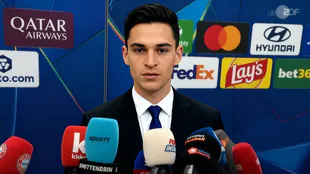
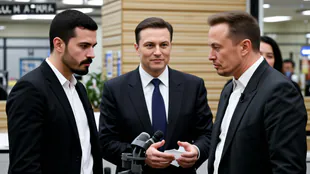 Musk Questions AI Development Viability as SpaceX Leasing Revenue Surges

 InterContinental Hotels Group PLC Announces Transaction in Own Shares - November 26

 NiobiumX Mining Explains How it Will Hunt for Niobium at Shipshaw: Magnetic Lows, Thorium Highs, and Machine Learning Built for a District With One Producing Mine

 Impauer Technologies Inc. Announces Third Quarter 2026 Financial Results and Equity Compensation Grants

 Beyond Wired Broadband: InHand 5G Routers Offer Businesses a More Flexible Connectivity Solution

 Emersoft Partners with MVB to Bring Direct Publisher Ordering via Pubeasy to Independent Bookstores on Shopify

 Colin Farrell Reveals Son James Prompted His Sober Journey in New Documentary
A lifelong fascination with outer space inspired British author Samantha Harvey to write her novel "Orbital", which this week won the prestigious Booker Prize.
"It seems a slightly eccentric choice because I didn't know anything about space but I've always been interested in it," Harvey told AFP in an interview on Thursday.
The 49-year-old author admitted that she had no specialist knowledge but was instead inspired by the live video feed from the International Space Station.
"You can sort of travel with the astronauts around the Earth," Harvey said. "That's what I did for years, I just travelled around each day."
At 136 pages, the book is the second-shortest to win the prize and covers the briefest timeframe of any on the shortlist -- just over 24 hours.
Touching on themes of mourning, desire and the climate crisis, it recounts a day aboard the ISS and the 16 sunrises seen by its astronauts as they circumnavigate the Earth.
Harvey, whose first book "The Wilderness" came out in 2009 and was longlisted for that year's Booker, admitted to being on a high since her win.
But she insisted: "I think this novel is really more about the Earth than it is about space itself.
"It allowed me to write about time, the upending of time, the strange experience of time, that is something I think I've been interested in all of my novels."
The chair of the judges, Edmund de Waal, described "Orbital" as "a book about a wounded world" and said he and his colleagues unanimously praised its "beauty and ambition".
The prize was awarded as the UN climate change conference was being held in Baku, Azerbaijan, and just after the re-election of climate sceptic Donald Trump as US president.
Harvey said she had no other agenda but was aware that the issue of climate change -- and the protection of space itself -- would crop up.
"We are exploiting and trashing space in the same way we have exploited and trashed this planet," she said but denied adopting a prescriptive approach to readers.
"My responsibility to the book is an aesthetic one," she went on.
"And if it were to have an impact that were positive, that could contribute towards changes in whatever tiny way, then I would be absolutely delighted. But I think that's something that's entirely beyond my remit."
- Validation -
When the author finished "Orbital," which was partly written during the Covid lockdown in 2020, Russia's full-scale invasion of Ukraine had not yet taken place.
But Harvey said it was "very evident" that the ISS "peace project" regrouping American, European and Russian astronauts was becoming "very strained".
"We know that the ISS is going to be de-orbited in a few years," she said.
"I definitely did want to write about that, because it felt like there was a something very poignant about the fact that this rather beautiful symbol of peace and cooperation, sort of post-Cold War cooperation, is really collapsing, or has now collapsed."
Harvey is working on her next novel and said she is struggling to anticipate what the impact of her Booker Prize win would be.
"There's no greater validation of a career, of someone's work, than this prize," she said. "So, I want to take all the confidence and courage that I can from that... without too much sense of pressure from the outside."
This year, a record five of the six Booker Prize finalists were women: Rachel Kushner, Anne Michaels, Charlotte Wood, Yael van der Wouden and Harvey herself.
Harvey is the first female author to win the prize since Margaret Atwood and Bernadine Evaristo in 2019.
"This is about change that has been taking place in the industry for the last two or three decades," Harvey said of female representation.
"This change is now manifesting, is actually bearing out, and I think we should all be really delighted about that. I certainly am."
Ch.Havering--AMWN