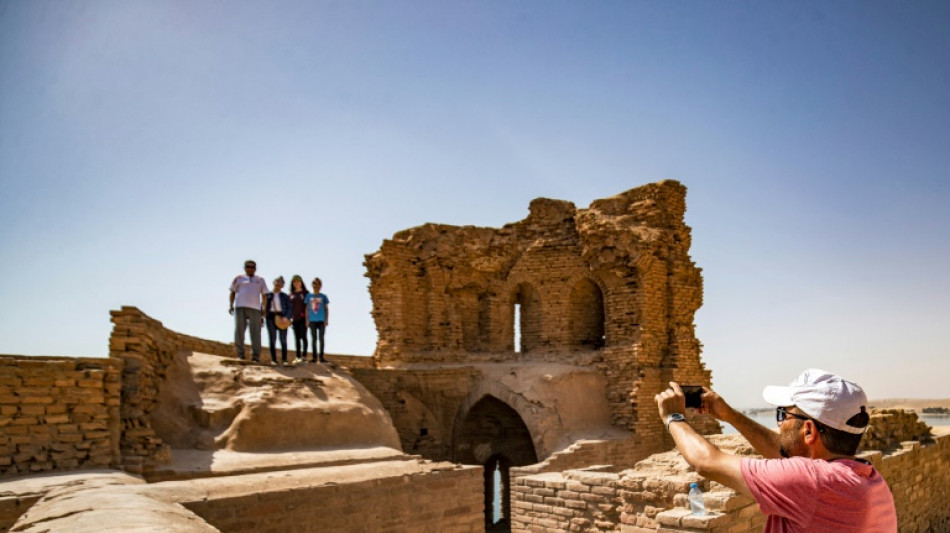
Visitors trickle back to Syria citadel used by jihadists / Photo: Delil SOULEIMAN - AFP
 Watchdog finds no criminal misconduct over US Fed renovations despite Trump probe

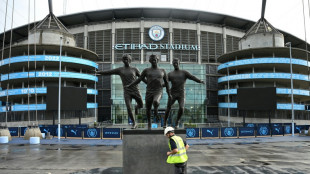
 In Manchester, City fans 'devastated' while rival fans call for relegation

 UK-France Channel migrant exchange deal scrapped: London

 Portugal boss denies 'incident' with Ronaldo

 Israel PM says one of the pilots of rerouted flight tried to crash plane

 Manchester City: Main points of damning judgement and possible sanctions

 Italy looking for 'identity' under Mancini says Scalvini
 The voices of Spain's housing camp protesters
 Romanian parliament rejects pro-EU PM candidate

 Court halts Tennessee's first execution of woman in 200 years

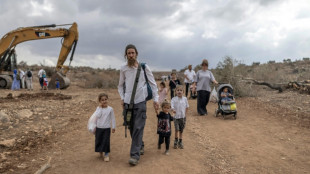 Israelis march between once-closed West Bank settlements

 'Welcome back,' says Macron, as UK PM opens door to EU return
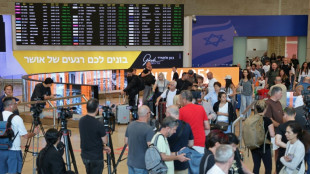 Israel PM says pilot of rerouted flight tried to crash plane

 Demuro hopes to deliver Japan a 'magical' Arc victory

 'Devastated' AI scandal author Orelien returns to Quebec

 US reports firm Q2 economic growth, inflation steady

 Energy costs spark inflation surge across Europe

 Parma appoint Italy World Cup winner Gilardino

 West Indies pile up record 405-7 in second ODI against India

 Romanian parliament rejects pro-EU PM candidate amid political deadlock

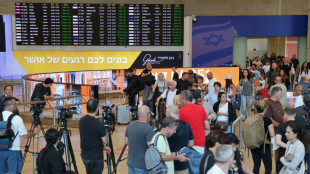 Passenger on rerouted flydubai flight says pilot tried to crash plane
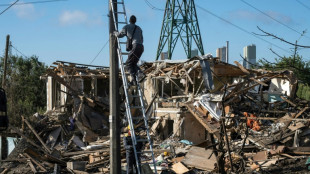 Russia targets Kyiv power supply as freezing winter approaches
 Haze pushes Kuala Lumpur, Singapore into world's most polluted cities

 Dangote's $16bn Kenya refinery 'new chapter' for Africa
 Ireland coach Hallgrimsson confirms second Israel game will go ahead

An ancient lake-side fortress once used by jihadists to launch attacks is slowly regaining its status as a key cultural destination, attracting visitors from across war-torn Syria.
Families posed for pictures under the hot June sun, some perched on an ancient brick wall overlooking the banks of Lake Assad, a man-made reservoir in northern Syria's Raqa province.
Abdullah al-Jaber was visiting Qalaat Jaabar with his children for the first time even though they live less than an hour away by car.
He said he would often show them photographs of his childhood trips to the citadel in the hope that they would one day visit it together.
"Their dream was to see Qalaat Jaabar," the 41-year-old said with a smile.
"Today I brought them here to see it."
The Islamic-era landmark has attracted a growing number of visitors since the start of summer as security has improved in recent years.
The historic fortified site dates back to the Seljuk and Mamluk periods and is considered one of Syria's most preeminent fortresses.
The castle became an island when Lake Assad was formed in 1974 by the completion of the Tabqa dam on the Euphrates River.
Qalaat Jaabar is connected to the mainland by a thin causeway. It has 35 bridges and a mosque and it used to shelter a museum with dozens of artefacts, but that was ransacked by the Islamic State group.
- Boat rides and picnics -
The site lies around 50 kilometres (30 miles) from Raqa city, once the de facto Syrian capital of IS's self-proclaimed caliphate.
In 2017, US-backed Kurdish fighters retook the fortress from the jihadists, who had ruled over the area since 2014.
The hilltop citadel, which overlooked IS' largest Syrian prison, was a strategic spot the group used to launch attacks and monitor movements around the detention facility.
On the outskirts of the citadel, IS "dug up trenches to train child soldiers," said Raqa resident Mohammad, 45, who asked to use a pseudonym due to security concerns.
"Residents were banned from visiting because it was a military area... but now it is recovering," he said.
Boat rides and picnics on Lake Assad's sandy shores have also helped turn the citadel back into a popular destination for families.
Outside the towering walls, young men laid a fruit spread and smoked hookah pipes in the shade, as loud Arabic music blasted around them.
Radwan Kahawati said he came all the way from the coastal city of Latakia, a five-hour drive by car, to visit Qalaat Jaabar with his family.
"We came here for tourism and for a change of scene," he said.
"My daughter told me: 'take us to Jaabar,' because she learnt about it at school."
F.Schneider--AMWN