Pussy Riot co-founder back in prison cell -- at LA museum / Photo: Robyn Beck - AFP
 Swedish Social Democrats leader to make new bid to form government
 North Korea calls Seoul 'despicable' after DMZ apology demand
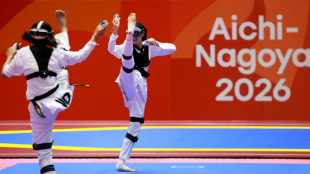
 Taiwan boxer Lin wins gold as virtual taekwondo makes Games debut
 Man City face appeal deadline after explosive financial verdict
 Pole vault superstar Duplantis to skip indoor season

 Sri Lanka drop Asalanka from T20 against Pakistan

 Disney president says layoffs 'extremely painful' but necessary

 Indian flydubai pilot opened cockpit door to save passengers
 Alex Marquez clocks record lap at MotoGP Japan practice
 Tom Kim leads Asian Games golf in chase to avoid military service
 Asian stocks hit as oil spike fans rate hike bets, eyes on US jobs
 'We're losing our scientists': west Africa's STEM struggle
 World powers gather in Pacific to chart climate battle
 Return of swarming moth spectacle has Australia in a flutter
 Browns snuff out Rodgers fightback to beat Steelers 27-24
 Braves power past Phillies to set up Dodgers showdown
 Asian stocks drop as oil spike fans rate hike bets, eyes on US jobs
 Viral anti-vax posts weaponise Philippine inoculation fears
 Saudi coalition accuses Houthis of drone attack on Medina
 Effective Altruism: the philosophy behind Silicon Valley's AI fears
 Chinese judoka accused of biting as home hope wins Asian Games gold

 Four-member crew docks at International Space Station
 Gabriel Resources Announces US$3.4 Million Private Placement
 Nike plans job cuts as it forecasts lower sales

 Ireland game interrupted twice by Gaza protests

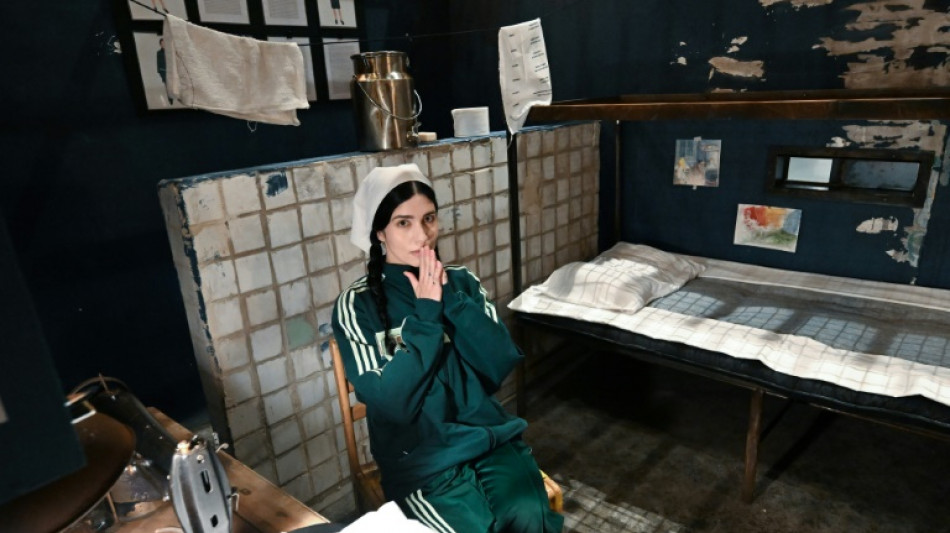
Nadya Tolokonnikova, the co-founder of the feminist art collective Pussy Riot, is back in a prison cell -- but this time, she has gone willingly.
At the Museum of Contemporary Art in Los Angeles, the Russian activist is staging "Police State" -- a two-week piece of performance art aimed at raising awareness about the dangers of authoritarianism and oppression.
Tolokonnikova -- who spent nearly two years in a Russian penal colony for performing a protest song against Vladimir Putin in a Moscow church in 2012 -- knows a bit about the topic.
Through the installation, which opened Thursday and runs through June 14, she says she hopes to teach visitors about what she believes to be the advent of a new means of control -- technology.
While she is in the mock cell, during all museum opening hours, she will eat, use the toilet, sew clothes as she once did in her real cell and create "soundscapes." Visitors can observe her through holes in the cell or on security camera footage.
"People don't treat authoritarianism seriously," Tolokonnikova told AFP.
Seated in a makeshift Russian prison cell, wearing a green tracksuit, the 35-year-old activist says in several countries, the concept of a "police state" is expanding.
"As someone who lived under authoritarian rule for over 25 years, I know how real it is and how it starts, step by step, on the arrest of one person. You think, 'Well, it's not about me'," she explained.
"And then next thing we know, the entire country is under the military boot."
- 'We all have to contribute' -
For Tolokonnikova, Donald Trump's return to the White House in January has sparked an "erosion of the system of checks and balances," which she deemed "very dangerous."
She says the artistic community, and society in general, should do more to counter governmental abuses of power, wherever they may occur, and stop "outsourcing politics and political action."
"I feel like it's as if there is someone else who's going to save us from everything. That's not what works really. We all have to contribute."
Some who visited the installation said they agreed with Tolokonnikova that society had become too passive.
"I feel like Americans don't want to believe that we could be in danger of losing our freedoms," said Jimmie Akin, a graphic designer who said she was worried about the policy changes since Trump took office.
"People need to wake up."
- Sewing machine and Navalny -
For 29-year-old Hannah Tyler, "Police State" was a bit of a shock to the system.
"We're living in a country where we aren't facing the same extreme oppression that she did in Russia, but getting close to it. I felt inspired to take more action than I have been," Tyler said.
Tolokonnikova's installation has some symbolic features.
She has books and artworks made by Russian, US and Belarusian prisoners, as well as a drawing by late Russian dissident Alexei Navalny. A sewing machine recalls the manual labor of her incarceration. Words of protest are carved into the walls.
For Alex Sloane, the museum's associate curator, the installation shows how "increased surveillance and government overreach" are becoming more and more widespread, and "freedoms are at risk."
"We should do all that we can to make sure" that such circumstances are kept at bay, Sloane said.
S.F.Warren--AMWN