Russia's USSR-era rival to 'decadent' Eurovision born anew / Photo: Olesya KURPYAYEVA - AFP
 Spotlight on UK-UAE ties amid Manchester City scandal
 Ethiopia and Eritrea break diplomatic ties over conflict

 Downing Street says Manchester City not 'above the rules'
 Hadjar wants to 'fight for the title' from next season
 Bolivia's attorney general arrested for alleged drug trafficking, money laundering
 German sugar tax sparks new government row
 Musk returns to US government for Pentagon war study

 Stocks slide as bond yields spike

 Thousands rally as EU chief urges respect for Kosovo war crimes court
 Man City sponsor Etihad says considering legal action against Premier League
 Family of woman killed by US immigration agent sues Trump administration
 French school protests spread as fires, blockades deepen unrest
 UK tribunal overturns ban on Naomi Campbell leading charities
 Louvre launches appeal as part of new fundraising drive
 Croatian ex-international Simic charged in graft case
 76% of Treasury Teams Hit by Fraud as Deepfake Attacks Rise, Treasury Dragons & nsKnox 2026 Index Finds
 Malawi ex-army chief arrested following allegations over Sudan arms
 German fuel price cuts kick in to ease Mideast energy shock
 'It's history': Zverev against shortening Grand Slam match format
 From Question to Action: Leverate Launches ASK, Its Native AI Assistant for Traders

 UN says strikes on Afghanistan kill 10 civilians
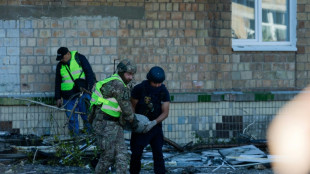 Two Russian drones hit major bridge in Kyiv
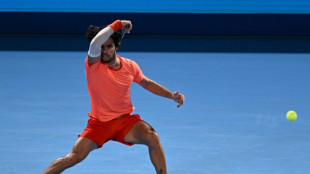 Alcaraz begins Japan Open defence with win over Michelsen
 ALEX BODI DAN KONGLOMERAT JERMAN BERINVESTASI PADA 166 UNIT HUNIAN DI HALLE
 Ronaldo's Portugal future in doubt after walkout
With artists from more than 20 countries and ambitions for a billion-plus viewers, Russia on Saturday revived its Intervision song contest, which Moscow hopes will compete with a "decadent" Eurovision.
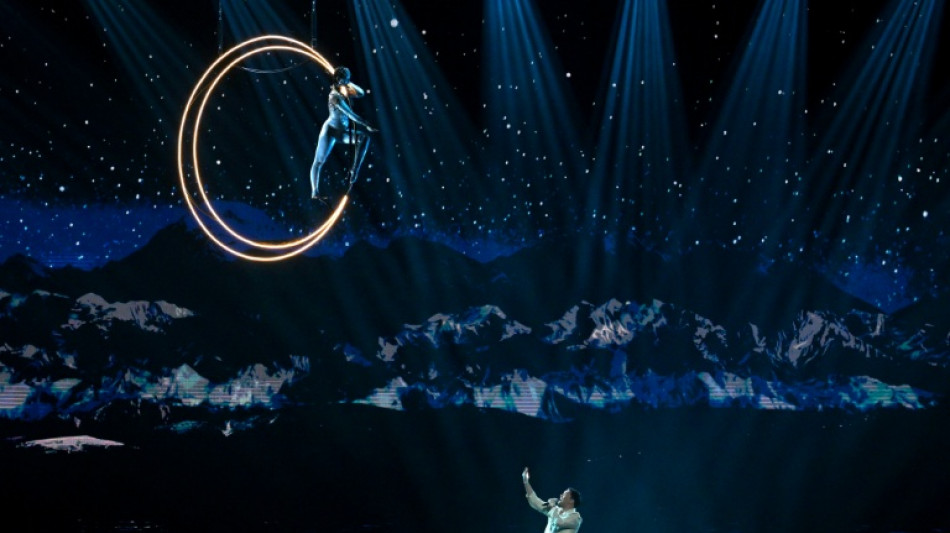
First held in the Soviet era and relaunched in February on President Vladimir Putin's orders, the concert-as-soft-power tool kicked off at 8:30 pm (1730 GMT) at an arena near the Russian capital, with the opening ceremony hitching future-looking technology to nostalgia for the USSR past.
With Russia banished from Eurovision, the annual song contest extravaganza, over its offensive in Ukraine, the Kremlin has pushed Intervision as a means to lay the anti-Western narratives on thick while striving for new cultural and political alliances.
In a video address to the participants, including traditional allies Brazil, India and China, Putin hailed the contest's "main theme" of "respecting traditional values and different cultures".
"Today, Intervision is gathering a second wind, while remaining faithful to its traditions," the veteran strongman added.
Twenty-three countries were originally slated to take part in the contest, including Russia's old Cold War foe the United States.
But the US representative -- Australian pop singer Vasiliki Karagiorgos, known as Vassy -- had to pull out at the last minute because of "unprecedented political pressure from the Government of Australia", the organisers said.
No performers from an EU country will take part.
But former Soviet republics Uzbekistan and Kazakhstan have dispatched artists to Russia for the spectacle, which has been hyped with installations in central Moscow.
Besides Putin, the contest's kick-off drew in Dima Bilan, Eurovision winner in 2008, and Polina Gagarina, the contest's runner-up in 2015.
Giant augmented-reality projections of dancing silhouettes in traditional costumes were displayed to represent each participant.
- A billion viewers? -
Each country's act will sing in their native language -- "unlike Eurovision, where most songs are often sung in English," the organisers have been at pains to point out.
Moscow has high hopes for the competition's viewership.
The participating countries represent 4.3 billion people -- or more than half the planet's population, according to the organisers.
"If at least one-in-three or at least one-in-four people watch the contest, it'll be an audience without precedent," said Konstantin Ernst, director general of the broadcaster Pervy Canal, ahead of the contest.
First organised in 1965 in Prague, the competition was suspended after the anti-Soviet uprising in Czechoslovakia three years later.
It was then revived in Poland in the 1970s and held across various cities of the former Communist bloc.
Another difference from Eurovision? No public vote. An international jury alone will decide the winner.
L.Davis--AMWN