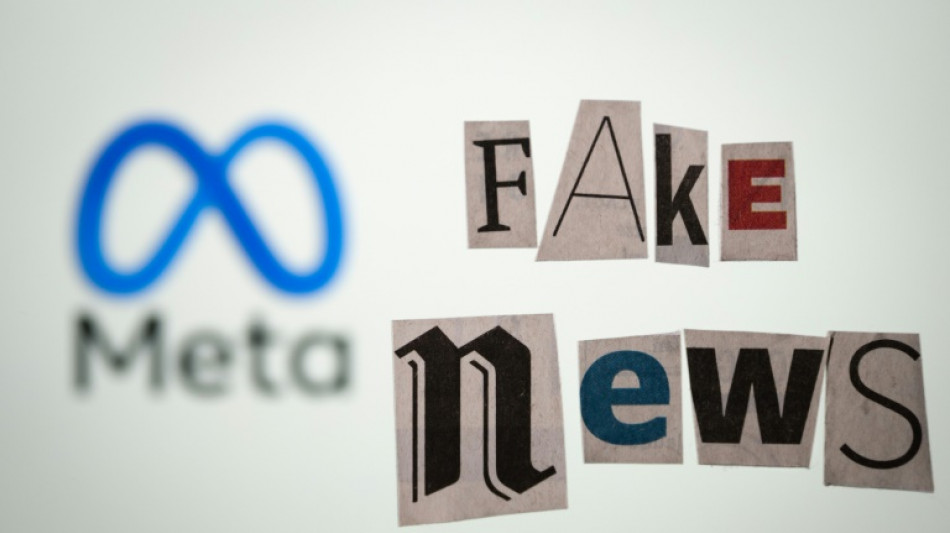
Deepfake political scam ads surge on Meta platforms, watchdog says / Photo: SEBASTIEN BOZON - AFP
 Libya's pay strike rallies teachers across divided nation

 Four-member crew blasts off for International Space Station

 i-payout Expands True Local Payment Capabilities to Help Enterprises Pay Recipients Globally
 Botched US execution prompts global calls to scrap death penalty

 Algeria adopts law imposing death penalty on forest arsonists

 France unveils cost-cutting 2027 budget as borrowing costs rise

 Brazil court orders removal of fake posts amid patron saint election row

 Italy's firefighting planes return home after scorching summer

 How airlines try to make sure pilots are safe to fly

 Bolivia's attorney general arrested for alleged money laundering and drug trafficking

 Zverev beats Norrie to kick off Sinner-less China Open

 Wall Street stocks rise after bond yield spike eases

 Finland investigates suspected break-ins at MPs homes

 London's Bayeux Tapestry show to offer audio tour for blind people

 Smouldering bins, halted trams as French pupils protest

 Malone Life and Pensions Expands Internationally Beyond the European Union

 England paceman Archer rested for ODI tri-series

 Queiroz exits Ghana as Black Stars crisis deepens

 ALEX BODI VE ALMAN ŞİRKETLER GRUBUNDAN HALLE’DE 166 DAİREYE YATIRIM

 อเล็กซ์ โบดี และกลุ่มบริษัทจากเยอรมนีลงทุนในอพาร์ตเมนต์ 166 ยูนิตที่เมืองฮัลเลอ

 ALEX BODI A NĚMECKÝ KONCERN INVESTUJÍ DO 166 BYTŮ V HALLE
 ALEX BODI OCH TYSK KONCERN INVESTERAR I 166 LÄGENHETER I HALLE

 England forward Toney pleads not guilty to nightclub assault

 Tom Kim finishes marathon Asian Games second round under floodlights

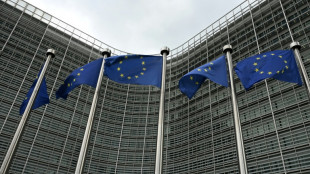 Work on migrant return hubs progressing well, EU countries say

Scammers are among the top political ad spenders on Meta's platforms, using deepfake videos of American politicians -- including President Donald Trump -- to promote fake government benefits, a watchdog group said Wednesday.
The nonprofit Tech Transparency Project said it identified 63 scam advertisers that collectively spent $49 million on Facebook and Instagram, often targeting seniors with ads promoting fake stimulus checks, government spending cards and healthcare payments.
The ads have reached tens of thousands of the platforms' users.
"The findings show how scammers are taking advantage of advances in artificial intelligence technology, public confusion around the status of social safety net programs, and lax Meta content moderation to target new victims," TTP said in a report.
"Meta is allowing this activity even though it prohibits scams and says it invests in scam prevention to keep users safe," it added.
Meta did not immediately respond to AFP's request for comment.
TTP's report quoted a Meta statement saying that the company would "invest in building new technical defenses" as scammers "constantly evolve their tactics to try to evade detection."
According to Meta's rules, advertisers who seek to run political ads in the United States have to undergo a special authorization process, which involves submitting an official ID such as a driver's license along with a US mailing address.
TTP said all of the 63 scam advertisers -- who accounted for over 150,600 political ads -- had their advertisements removed by Meta within the past 12 months for violating the tech giant's policies. Still, nearly half of them continued to advertise as of Tuesday.
Meta appeared to disable 35 ad accounts, but only after they ran dozens -- and in some cases hundreds -- of ads. Six of the accounts spent over $1 million before they were disabled or deleted, the report said.
One advertiser identified by TTP -- called the Relief Eligibility Center —- ran an ad on Meta platforms in April and May featuring a deepfake video of Trump falsely promising stimulus checks to Americans.
The video matched a speech by Trump in the White House's Rose Garden in early April, but TTP found that the words in the ad did not match the official transcript from the event.
The ad, which directed users to a website to get a "FREE $5,000 Check from Trump," appeared to target men and women over the age of 65 in more than 20 US states, TTP said.
For years, professional fact-checkers have warned about bogus stimulus check offers circulating on social media platforms.
The latest findings underscore the explosion of online fraud, with surveys showing a growing number of American adults experiencing internet scams or impersonation attacks.
In August, the Federal Trade Commission reported a more than four-fold increase since 2020 in complaints from older adults who lost $10,000 or more -- sometimes their entire life savings -- to scammers impersonating trusted government agencies or businesses.
D.Cunningha--AMWN