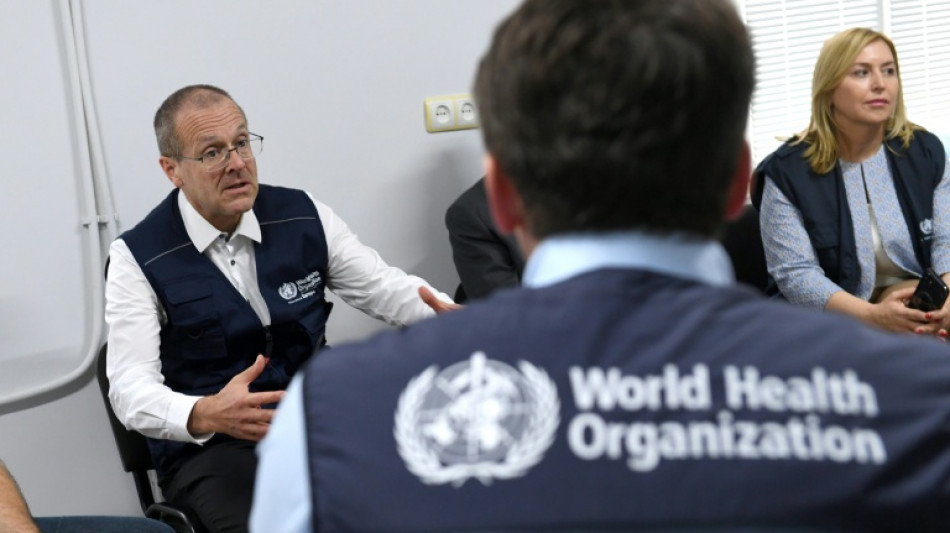
Europe must nurse itself after US aid cuts: WHO director / Photo: KAREN MINASYAN - AFP
 Italy's firefighting planes return home after scorching summer

 How airlines try to make sure pilots are safe to fly
 Bolivia's attorney general arrested for alleged money laundering and drug trafficking

 Zverev beats Norrie to kick off Sinner-less China Open

 Wall Street stocks rise after bond yield spike eases

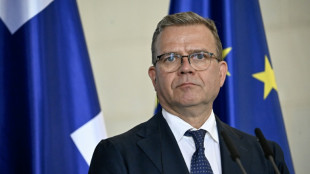 Finland investigates suspected break-ins at MPs homes

 London's Bayeux Tapestry show to offer audio tour for blind people
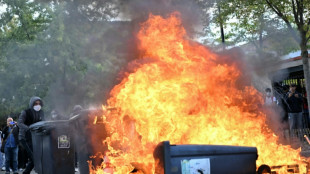 Smouldering bins, halted trams as French pupils protest
 Malone Life and Pensions Expands Internationally Beyond the European Union
 England paceman Archer rested for ODI tri-series
 Queiroz exits Ghana as Black Stars crisis deepens
 ALEX BODI VE ALMAN ŞİRKETLER GRUBUNDAN HALLE’DE 166 DAİREYE YATIRIM

 อเล็กซ์ โบดี และกลุ่มบริษัทจากเยอรมนีลงทุนในอพาร์ตเมนต์ 166 ยูนิตที่เมืองฮัลเลอ

 ALEX BODI A NĚMECKÝ KONCERN INVESTUJÍ DO 166 BYTŮ V HALLE
 ALEX BODI OCH TYSK KONCERN INVESTERAR I 166 LÄGENHETER I HALLE

 England forward Toney pleads not guilty to nightclub assault
 Tom Kim finishes marathon Asian Games second round under floodlights

 Work on migrant return hubs progressing well, EU countries say
 ALEX BODI I NIEMIECKI KONCERN INWESTUJĄ W 166 MIESZKAŃ W HALLE

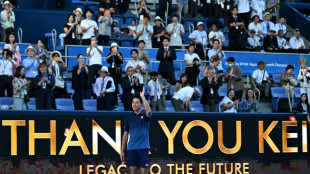 Tearful Nishikori calls time on career with defeat at Japan Open

 أليكس بودي ومجموعة ألمانية يستثمران في 166 شقة في هاله

 알렉스 보디와 독일 기업 그룹, 할레 주택 166세대에 투자
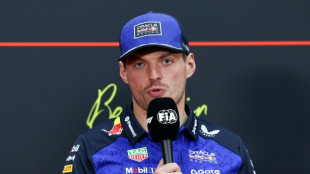 Verstappen wary of tyre wear as he eyes first F1 win of season

 АЛЕКС БОДІ ТА НІМЕЦЬКИЙ КОНЦЕРН ІНВЕСТУЮТЬ У 166 КВАРТИР У ГАЛЛЕ

 Kremlin critic Kasparov says US intelligence warned life 'in danger'
Drastic aid cuts, notably by the United States, have made it vital for Europe to better manage health resources, the director of WHO Europe told AFP.
"We have a huge challenge, because the majority of our programmes were funded by USAID and the US," Hans Kluge of the World Health Organization Europe told AFP in an interview days before a meeting of the 53 countries of the WHO European region.
Since taking office in January, US President Donald Trump has slashed US international aid and effectively dismantled USAID, the world's largest humanitarian aid agency.
Kluge said the WHO was experiencing an "existential" crisis with countries such as Britain, France and Germany, in addition to the United States, contributing significantly less.
Despite a 20-percent budget cut, WHO Europe wants to boost its role within domestic European health administrations.
"The WHO Europe of the future... is healthier, stronger, trusted, evidence-based, and politically neutral," he said.
Kluge's plan is based on restructuring the organisation and prioritising its missions.
- Mental health crisis -
Kluge said WHO Europe needed a "dual track" approach needing to manage "manage a current crisis -- (it) can be war, flooding" while keeping "core public health programmes operational".
"This is the biggest lesson learned from (the) Covid-19" pandemic, he said.
In Ukraine, for example, Europe is focusing its efforts on defence and "not enough on health".
Europe must also tackle its mental health problem, aggravated by war, loneliness, anxiety and the aftermath of the Covid pandemic, he said.
"That's one of the big things, the hottest issues," he said, stressing the need to build up "citizen resilience."
One European in six and one child in five will experience mental health problems at some point in their life, according to the WHO.
Kluge said his organisation also needed to address worrying regional trends including youth addiction, a lack of online protection, the climate crisis and non-infectious diseases.
"We can channel our few resources in those directions," he insisted.
Vaccinations are also crucial, he said, pointing out that in 2023, there were 366,000 children who had never received any kind of vaccine. In 2024, that number had risen to 440,000.
Mainly reasons such as the need to travel for vaccinations, costs and a lack of qualified health personnel led to this, he said, adding that medical misinformation was rampant as well.
Vaccination is "the most cost-effective public health tool which we have. So, we cannot afford to lose it."
Prevention was also key to ensuring Europeans' health, Kluge stressed.
"You put one euro in prevention, you get seven euros out of it," said the 56-year-old doctor.
"It is time that Europe should take care of Europe."
O.Karlsson--AMWN