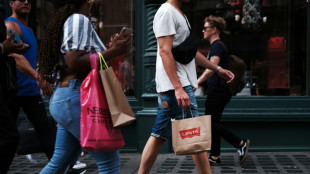
France eyes ban on social media for under-15s / Photo: Saeed KHAN - AFP
 Watchdog finds no criminal misconduct over US Fed renovations despite Trump probe

 In Manchester, City fans 'devastated' while rival fans call for relegation

 UK-France Channel migrant exchange deal scrapped: London

 Portugal boss denies 'incident' with Ronaldo

 Israel PM says one of the pilots of rerouted flight tried to crash plane

 Manchester City: Main points of damning judgement and possible sanctions

 Italy looking for 'identity' under Mancini says Scalvini

 The voices of Spain's housing camp protesters

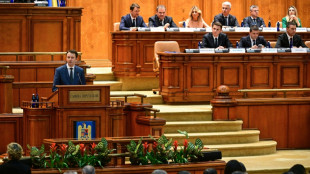 Romanian parliament rejects pro-EU PM candidate

 Court halts Tennessee's first execution of woman in 200 years

 Israelis march between once-closed West Bank settlements
 'Welcome back,' says Macron, as UK PM opens door to EU return
 Israel PM says pilot of rerouted flight tried to crash plane
 Demuro hopes to deliver Japan a 'magical' Arc victory

 'Devastated' AI scandal author Orelien returns to Quebec

 US reports firm Q2 economic growth, inflation steady

 Energy costs spark inflation surge across Europe

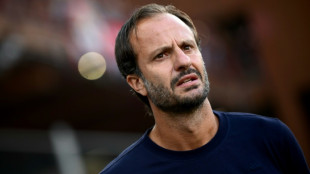 Parma appoint Italy World Cup winner Gilardino
 West Indies pile up record 405-7 in second ODI against India

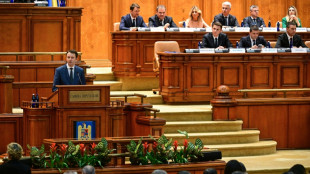 Romanian parliament rejects pro-EU PM candidate amid political deadlock
 Passenger on rerouted flydubai flight says pilot tried to crash plane

 Russia targets Kyiv power supply as freezing winter approaches

 Haze pushes Kuala Lumpur, Singapore into world's most polluted cities
 Dangote's $16bn Kenya refinery 'new chapter' for Africa

 Ireland coach Hallgrimsson confirms second Israel game will go ahead

President Emmanuel Macron is hoping France will become one of the first European Union countries to ban social media for under-15s, following similar moves in Australia and Indonesia.
Both houses of parliament seem to have different visions for the ban, meaning they will likely need to reach a compromise before it can become law.
But even if the legislation is adopted, questions remain over whether it could be enforced.
Here's what we know:
- What's in the bill? -
The lower house National Assembly in January passed legislation demanding all social media platforms refuse new users under 15 and suspend accounts belonging to children under that age.
Authorities want the bill -- which also provides for a ban on mobile phones in high schools -- to be enforced from September.
But the right-leaning Senate, which examines the bill on Tuesday, has expressed some reservations, which could delay the bill being adopted by both houses.
A committee in the upper house has instead suggested a two-tier system, distinguishing between platforms flagged as harmful to a child's "physical, mental, or moral development", and those that could still be accessed with parental consent.
Their revised version of the bill excludes online encyclopaedias and educational platforms.
- Why now?-
First Lady Brigitte Macron has been campaigning against cyberbullying for years.
France's public health watchdog last year said platforms such as TikTok, Snapchat and Instagram were detrimental to adolescents, particularly girls, though it was not the sole reason for their declining mental health.
The president has said the emotions of children and teenagers should not be "for sale or manipulated by American platforms and Chinese algorithms".
After Macron's government suspended a flagship pensions reform last year, a social media ban could be his last major domestic change before he steps down in April 2027.
- What do critics say? -
There are still opponents to any ban.
Nine child protection associations in January said lawmakers should hold the platforms responsible, not ban children from social media.
Hard-left lawmaker Arnaud Saint-Martin at the time said such a ban would amount to "digital paternalism" and be an "overly simplistic" response to the negative impacts of technology.
- Could a ban be implemented?-
Even if the French law passes, putting it into place will be tricky.
Work on an effective age verification system is underway at the EU level, but is not due to be introduced until early 2027.
While backing France's right to impose such a ban, the European Commission in January said that any enforcement would lie with the European Union, provided the bill conforms to the bloc's laws.
There are also concerns that under-15s will get around the age verification system by using virtual private networks or switching to newer platforms.
- What are other countries doing? -
In December, Australia became the first country in the world to require TikTok, YouTube, Snapchat and other top sites to remove accounts held by under-16s, or face heavy fines.
Indonesia began enforcing a social media ban for users under the age of 16 on Saturday, and has already issued summons letters to Google and Meta over their failure to comply with the law.
Austria announced last week it would soon ban social media for children up to the age of 14, with a plan to present a new law "as early as this summer".
Spain and Denmark have also announced their intention to introduce a digital age of majority for social networks.
X.Karnes--AMWN