Irish income scheme throws artists unique lifeline
/ Photo: Paul Faith - AFP
 Watchdog finds no criminal misconduct over US Fed renovations despite Trump probe
 In Manchester, City fans 'devastated' while rival fans call for relegation
 UK-France Channel migrant exchange deal scrapped: London
 Portugal boss denies 'incident' with Ronaldo
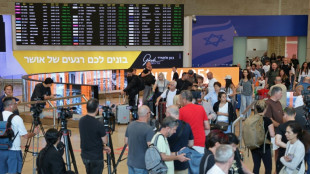
 Israel PM says one of the pilots of rerouted flight tried to crash plane
 Manchester City: Main points of damning judgement and possible sanctions
 Italy looking for 'identity' under Mancini says Scalvini
 The voices of Spain's housing camp protesters
 Romanian parliament rejects pro-EU PM candidate
 Court halts Tennessee's first execution of woman in 200 years

 Israelis march between once-closed West Bank settlements
 'Welcome back,' says Macron, as UK PM opens door to EU return
 Israel PM says pilot of rerouted flight tried to crash plane
 Demuro hopes to deliver Japan a 'magical' Arc victory

 'Devastated' AI scandal author Orelien returns to Quebec
 US reports firm Q2 economic growth, inflation steady
 Energy costs spark inflation surge across Europe
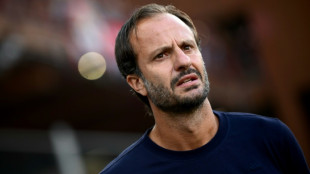 Parma appoint Italy World Cup winner Gilardino
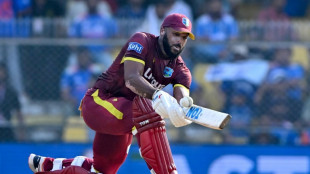 West Indies pile up record 405-7 in second ODI against India

 Romanian parliament rejects pro-EU PM candidate amid political deadlock
 Passenger on rerouted flydubai flight says pilot tried to crash plane
 Russia targets Kyiv power supply as freezing winter approaches
 Haze pushes Kuala Lumpur, Singapore into world's most polluted cities
 Dangote's $16bn Kenya refinery 'new chapter' for Africa
 Ireland coach Hallgrimsson confirms second Israel game will go ahead

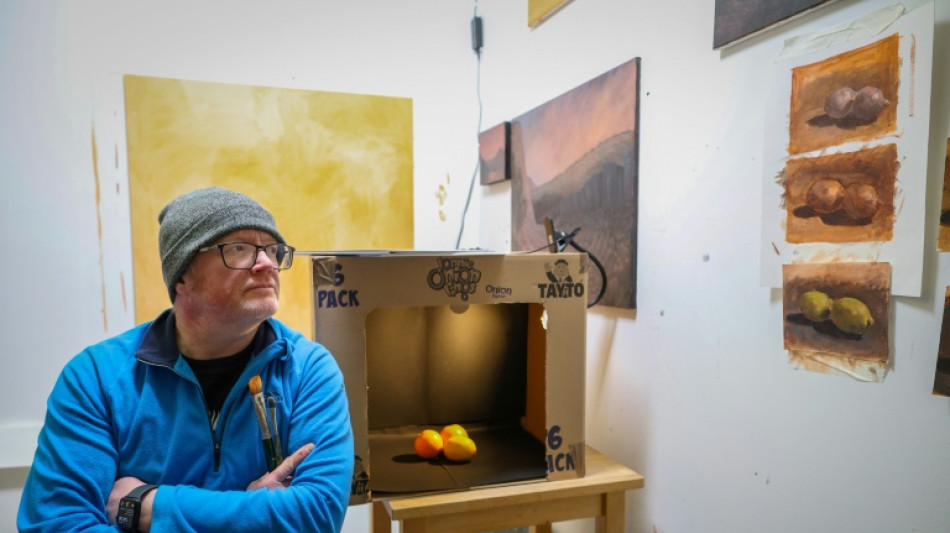
In a maze of plywood artists' studios built into a Dublin warehouse, author and filmmaker Seanan Kerr stitches together a career that -- until recently -- had little guarantee of stability.
That all changed in 2022, when Ireland began paying 2,000 practising artists, including Kerr, a no-strings-attached guaranteed weekly stipend of 325 euros for three years.
For the 45-year-old, who is also a performer, the groundbreaking scheme was nothing short of "radical".
"It's almost unbelievable it even happened," he told AFP in his tiny, box-like workshop amid piles of books, sketches and scribbles.
The "Basic Income for the Arts" (BIA) initiative is a first for Ireland, and unique in Europe, attracting interest from other nations such as Germany and Finland.
The scheme "sets Ireland apart in how we support our artists," Ireland's Minister for Culture, Patrick O'Donovan, said last month.
Framed as "recognition, at government level, of the important role of the arts in Irish society," the government has declared the pilot a success.
It was made permanent in February, and the government set aside around 18 million euros for 2026 to fund 2,000 artists from September for three years.
- Freed for 'total creativity' -
The benefits recorded in the culture ministry's data include increased productivity and reduced anxiety among participants.
Those chosen for the stipend can earn extra money on top, and pocket more than the average unemployment benefit of about 250 euros a week.
"Giving artists freedom to just take the money, do what you want, allows them to step into a mindset of pure, total creativity," Kerr said.
"It's allowed me to rebuild my sense of self as an artist, and set myself up for the future," he said.
Being able to afford a morning coffee, buy clothes or attend artists' workshops gave him "a basic level of decency", he said, before heading out to a poetry night.
In another of the box spaces which can be rented for between 150-300 euros a month, Kieran Guckian, 42, a landscape artist, said he was "excited" to apply before a May deadline.
"Everyone's always doing little side gigs, I teach and do workshops," he said.
"Having that basic income would free me up for more studio time," he added, glancing at half-finished canvases.
-'Precarity' -
While many hail the scheme as transformative, some worry its limited scale casts a shadow over its promise.
In a light-filled artists' studio complex in central Dublin, Caelainn Hogan, a journalist and author who has been building a reputation for her writings, described the scheme as "life-changing", but shared conflicting feelings.
The 37-year-old found out she was pregnant six months into the pilot payments.
"That was frightening as a writer, as someone without financial security," she told AFP.
Her last payment was in February, and with over 10,000 artists expected to apply in May her chances of being selected again in the future are slim.
Once they have determined the eligible candidates, they are all anonymised before a software using a randomised process selects the winners -- a kind of high-tech lottery.
"I'm raising a child and want to continue creative work, but even if I got lucky again it would only last for three years," said Hogan.
"That's precarity, not sustainable support," said Hogan. Arguing the scheme could be extended to all eligible artists, she warned of a divisive two-tier system of haves and have-nots.
With rents in Dublin among the highest in Europe, Hogan also blasted politicians "boasting about supporting artists" while overseeing a housing crisis.
- 'Social dividends' -
Across town, visual artist Day McGee, who lived in a subsidised studio-apartment during the pilot, will soon be moving out to a friend's spare room.
The "stability" of the payments helped Magee, 33, stage a first solo show and secure writing commissions.
The BIA "was a temporary chance to live," Magee said. "Now I don't know if I can continue leading a normal adult life."
Government research indicates artists are three times more likely to live in deprivation than others.
Even big names suffer precarity, said Carla Rogers of the National Campaign for the Arts.
"You might have a great run performing on a West End stage only to come home to couch-surf," she told AFP.
The NCFA also hopes payments will eventually reach all eligible artists.
The scheme can pay for itself, generating around 1.39 euros for every euro invested according to the government's own research, Rogers said.
"It's a financial investment that pays social dividends: creativity fuels culture, tourism, and communities," she said.
O'Donovan has hinted the scheme may be expanded, but with the lottery oversubscribed many will be disappointed.
"Not all eligible applicants will receive funding," a government spokesperson told AFP.
P.Costa--AMWN