-
 Energy costs spark inflation surges in France, Italy
-
Ocon to leave Haas at end of F1 season

-
 South Korea break China hearts to reach Asian Games football final
-
Indonesia razes poolside prison 'villas' where whisky, TVs seized

-
 Eala storms into Asian Games semi-finals to thrill adoring fans
-
Japan court rules human voice is protected in TikTok AI case
-
 Turkey freezes ex-minister's assets as fund crisis grows
-
French inflation jumps to 3% in September on energy costs

-
 What we know about the North Korean POW dispute
-
South Korea score late to reach Asian Games football final

-
 Most equities rise after oil price plunge, US data in focus
-
Tom Kim defies jet-lag, Kho cards ace as Asian Games golf begins

-
 Polar oceans transformed as warming melts ice habitats: research
-
Thai teen rocker Nene aims to tour, write music... and return to school

-
 Lost shark becomes viral star in South Korea
-
Ivory Coast clamps down on harmful illegal gold rush

-
 Dangote to launch $16bn refinery in Kenya
-
Nagoya mayor says sorry for Asian Games 'inconveniences'

-
 North Korean leader 'extremely obese': Seoul spy agency
-
G20 trade officials meet under shadow of tariffs, overcapacity

-
 Yankees and pope-backed White Sox start MLB playoffs with wins
-
India's fat dog vote goes viral

-
 Malaysia's ex-PM Mahathir in hospital for observation
-
Asian Games crowds in spotlight as 998 see hosts in 50,000 stadium

-
 'No limits': Marathon world record holder Sawe chasing history
-
The eight stadiums for the 2027 Rugby World Cup

-
 Countdown begins to biggest-ever Rugby World Cup
-
Thieves swipe drugs under nose of Fiji police, swap with flour

-
 Bangladesh women lose ground after quota reform
-
South Korea demands North apologise for DMZ mine blasts

-
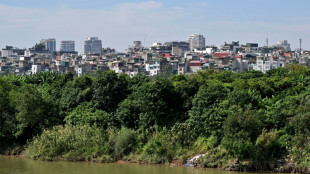 Vietnam admits 'differing opinions' on Hanoi development
-
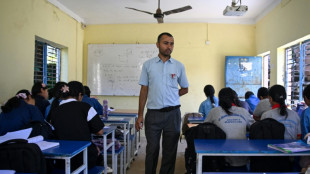
In Nepal's flood zone, teachers mourn students who never returned
-
 Stocks temper gains as oil pares heavy losses, US data in focus
-
US Supreme Court lifts limits on third-country deportations

-
 New Zealand denies breaching climate commitments to EU
-
Antonelli eager to 're-establish order' as F1 returns to Malaysia

-
 Albert becomes youngest US scorer in 4-2 win over Chile
-
Paw-fect candidate: Australia finds new koala rescue dog

-
 Pirate island's plunging population shows Greece's demographic decline
-
One third of world population exposed to harmful air pollution: monitor

-
 With elections ahead, Latvia's Russian-speakers reject Moscow's help
-
North Korea denies South's claim it was apparently behind DMZ mine blasts

-
 Brazil football clubs face massive sponsorship blow from betting ban
-
West Bank's violent settlers part of a new generation fuelled by ideology

-
 ChatGPT maker wants to be the App Store for AI as safety concerns grow
-
US-led coalition ends mission in Iraq

-
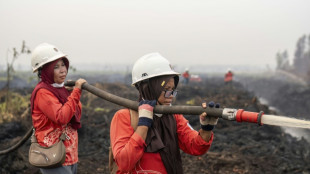 Women fight fires and sexism in Indonesian Borneo
-
Pope-backed White Sox join Braves with MLB playoff wins

-
 Forsling's OT blast lifts Florida over Carolina in NHL opener
-
IPC and Tenovi Collaborate to Advance Patient Care & Clinical Services in Independent Pharmacies

Meta lashes Australia's bid to make tech giants pay for news
Tech giant Meta on Thursday attacked Australia's "grossly unfair" bid to make social media companies pay for news, saying it is vehemently opposed to the draft laws.
Traditional media companies around the world are in a battle for survival as readers increasingly consume their news on social media.
Australia wants big tech companies to compensate local publishers for sharing articles that drive traffic on their platforms.
"Our position is clear: this law is poorly designed, grossly unfair, and will fail to deliver a diverse and sustainable news industry," said Meta, the parent company of Facebook and Instagram.
"We are vehemently opposed to this legislation.
"It is discriminatory, economically incoherent, and will not deliver the sustainable news sector that Australian journalists and audiences deserve."
The laws specifically target Meta, Google and TikTok.
Those companies will first be given a chance to strike content deals directly with local news publishers.
If they refuse, they faced a compulsory levy that amounted to 2.25 percent of their Australian revenue.
The three firms were singled out based on a combination of their Australian revenues and large numbers of domestic users.
"It is a discriminatory tax, applied only to a handful of foreign companies," Meta said.
"Call it what it is: a discriminatory, retroactive tax targeting a handful of foreign companies while competitors offering comparable services face no equivalent obligation."
- Struggling newsrooms -
The draft laws, unveiled earlier this year, aimed to close a loophole that allowed social media companies to simply strip news from their platforms.
When Canberra mooted similar laws in 2024, Meta announced that Australian users would no longer be able to access the "news" tab.
Meta had previously announced it would not renew content deals with news publishers in the United States, Britain, France and Germany.
Supporters of such laws argue that social media companies attract users with news stories and hoover up online advertising revenue that would otherwise go to struggling newsrooms.
"Large digital platforms cannot avoid their obligations under the news media bargaining code," Australian Prime Minister Anthony Albanese said in April.
Journalism needed to have a "monetary value attached to it", Albanese said at the time.
"It shouldn't be able to be taken by a large multinational corporation and used to generate profits with no compensation."
Australia's University of Canberra has found that more than half the country uses social media as a source of news.
The draft laws will be introduced into parliament later this year.
Australia has been at the forefront of global efforts to regulate big tech companies and social media platforms.
In December, it banned under 16s from a raft of popular social media platforms, launching a world-first crackdown designed to protect children from online bullying and "predatory algorithms".
X.Karnes--AMWN