US regulators sue firm selling sensitive location data / Photo: Jason Connolly - AFP/File
 Japan tightens rules for foreigners wanting permanent residency
 'Happiest moment': China's Mu first woman to win eSports Games gold

 EU talks deportations as five nations seek migrant centre in Africa
 Kenneth Branagh examines the scars of Iraq war in 'Atonement'

 Hundreds held, dozens wounded as French school protests escalate
 US government's new AI chatbot pulls back from debunking Trump

 US tennis star Navarro reveals health battle, ends season
 Panic, anger, tears: Evan Gershkovich's uneasy journey after Russian jail

 UK PM says 'strong indications' Iran involved in airbase incident

 Google restricts access to new AI model over safety concerns
 Watchdog clears former US Fed chief Powell in renovation probe

 Israel PM hails Indian pilot of rerouted flight for averting disaster
 Fury, Joshua kick off 'battle of Britain' in good spirits
 Ronaldo leaves Portugal training camp after coach says he is dropped

 Florence Pugh stars in 'East of Eden' adaption on Netflix

 Watchdog finds no criminal misconduct over US Fed renovations despite Trump probe
 In Manchester, City fans 'devastated' while rival fans call for relegation

 UK-France Channel migrant exchange deal scrapped: London

 Portugal boss denies 'incident' with Ronaldo

 Israel PM says one of the pilots of rerouted flight tried to crash plane

 Manchester City: Main points of damning judgement and possible sanctions

 Italy looking for 'identity' under Mancini says Scalvini
 The voices of Spain's housing camp protesters
 Romanian parliament rejects pro-EU PM candidate
 Court halts Tennessee's first execution of woman in 200 years

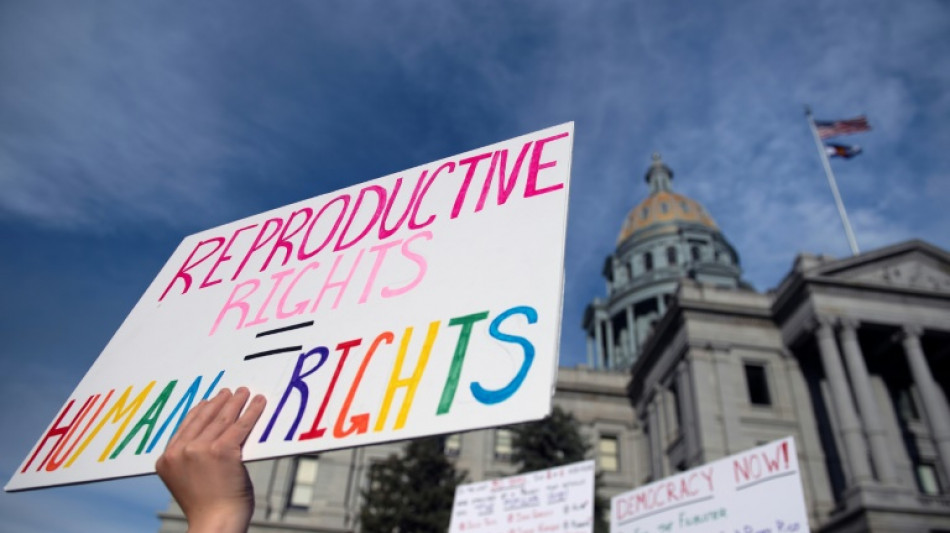
US regulators on Monday filed a lawsuit to stop data broker Kochava from selling smartphone location information that could help trace visits to "sensitive locations" like reproductive health clinics.
The action by the Federal Trade Commission comes as privacy rights advocates fear that massive troves of information collected from people's smartphone or internet use could serve to track down women seeking abortion care.
Geolocation data purchased by Idaho-based Kochava comes from hundreds of millions of mobile devices, and could be used to trace people's movements to or from health clinics, places of worship, drug-addiction centers, or domestic violence shelters, the FTC said in a press release.
"Where consumers seek out health care, receive counseling, or celebrate their faith is private information that shouldn’t be sold to the highest bidder," Samuel Levine, head of the FTC's bureau of consumer protection said in a press release.
The FTC lawsuit argues that Kochava is making it possible to identify people based on their health care decisions or religion, then exposing them to "threats of stigma, stalking, discrimination, job loss and even physical violence."
The FTC is asking a federal court in Idaho to order Kochava to stop selling sensitive geolocation data and to delete whatever data of that kind it has collected.
Kochava did not immediately respond to a request for comment.
Kochava buys location information gathered from mobile devices, then packages it in ways that can identify specific devices and show precisely where they were at given times, according to the FTC.
"For example, the location of a mobile device at night is likely the user's home address and could be combined with property records to uncover their identity," the FTC said.
People are typically unaware that their location data is being bought and sold by Kochava, according to the suit.
Privacy advocates have called on internet firms to stop collecting data on users that could be demanded by prosecutors or others out to prosecute women for reproductive health care decisions.
The lawsuit comes just months after the Supreme Court overturned the landmark 1973 Roe v. Wade ruling that guaranteed women's right an abortion.
O.Norris--AMWN