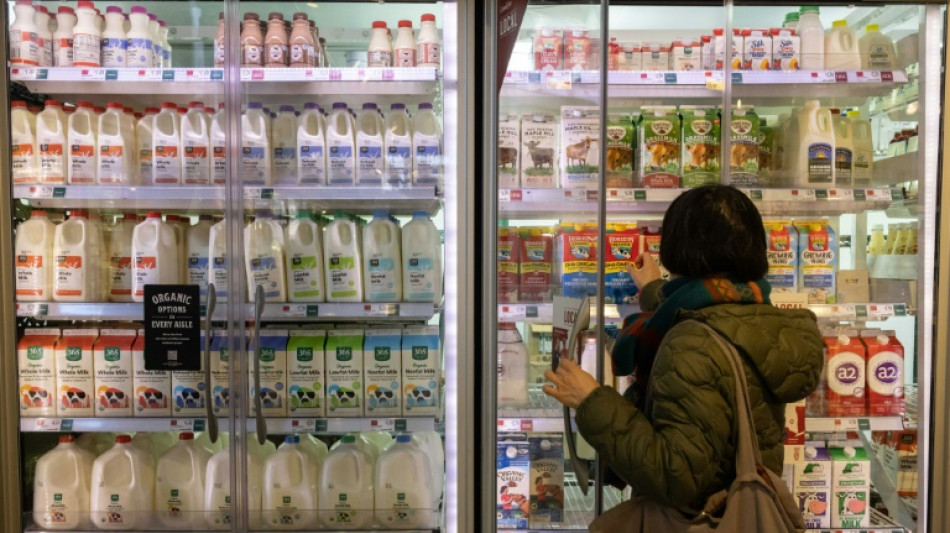
US Fed's preferred inflation gauge eases in November / Photo: Yuki IWAMURA - AFP/File
 Teatro Mayor Unveils 152-Performance 2027 Season Highlighting Beethoven and García Márquez

 Rutgers Defeats NJIT 101-64 Behind Francis and Mark Scores
 Guardian Metal Resources PLC Announces Proposed Spin-Out of Non-Tungsten Projects

 Fulcrum Metals PLC Announces New Critical Mineral Recoveries Expand Potential

 Thukukile Zuma Resigns from ANC Johannesburg Leadership Amid Disciplinary Dispute

 CM Mohan Yadav Meets Bohra Spiritual Leader to Discuss Simhastha 2028 and Development

 Eli Crane Defeats Jonathan Nez in Tight Arizona Congressional Race

A key indicator of US inflation edged down from a year ago in November, according to government data released Friday, in welcome news to households grappling with soaring costs while spending slowed.
This extends a downward inflation trend in recent months as officials try to cool the world's biggest economy, though it is unlikely to bring quick relief from an aggressive campaign to rein in prices.
The US Federal Reserve's preferred inflation measure, the personal consumption expenditures (PCE) price index, rose 5.5 percent last month from November 2021, Commerce Department data showed.
This was slightly below October's level but remains significantly higher than policymakers' target of two percent inflation.
From October to November, the PCE price index increased 0.1 percent, boosted by food prices.
- 'Softening' -
But expenditures appear to be "softening" with a drop in auto spending, although spending on services shows few signs of faltering just yet, said Ian Shepherdson of Pantheon Macroeconomics.
Household spending, which has proven resilient in the face of decades-high inflation, jumped 0.1 percent from October to November, official data showed.
While there may be holiday distortions to the latest figures, "it seems reasonable to expect people to become more cautious," Shepherdson added.
This is because consumers would have "run down about half of their accumulated pandemic savings, and labor market conditions are softening," he said.
Meanwhile, personal incomes rose 0.4 percent from October.
"High interest rates and elevated inflation caused consumers to take a breather on spending in November, but income gains and excess savings offered support," said Oren Klachkin of Oxford Economics.
Consumer prices have surged this year, exacerbated by supply chain snarls and Russia's invasion of Ukraine, leading the Fed to hike interest rates rapidly in hopes of easing demand.
The central bank has raised the benchmark lending rate seven times this year, with higher borrowing rates already battering sectors like housing.
But spending has been resilient and prices remain stubbornly high.
Excluding the volatile food and energy segments, the PCE price index rose 4.7 percent from a year ago, down from October as well.
Inflation may be expected to "retreat" next year, but it should stay well above the Fed's target and "keep the central bank in an aggressive policy stance," said Klachkin.
"The recession isn't here today but one will arrive next year," he added.
Th.Berger--AMWN